
Domestic travel remains India’s biggest opportunity despite global uncertainties: ixigo’s Aloke Bajpai
ADVERTISEMENT
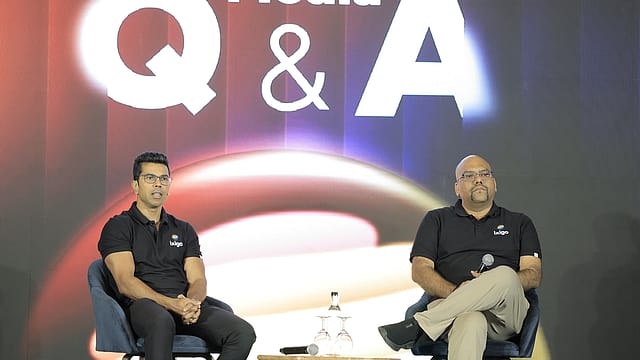
India’s domestic travel market will benefit from a shift away from international travel, ixigo group CEO Aloke Bajpai said, as higher overseas travel costs and Prime Minister Narendra Modi’s recent call to reduce foreign travel reshape consumer behaviour.
Speaking about the impact on the travel industry, Bajpai said outbound travel was always a much smaller segment compared to domestic tourism and that substitution towards local destinations had already begun.
“Leisure travel, the domestic market size was always way bigger than international,” Bajpai said. “If you look at even the numbers, an order of magnitude bigger number of people travel domestically. The number of trips a year is approximately five to six billion for domestic. International is a very tiny portion.”
The government has recently encouraged Indians to reduce avoidable overseas expenditure. Rising airfares and geopolitical tensions in parts of the Middle East have also added pressure on outbound travel demand.
For ixigo, the exposure to international travel remains limited. Bajpai said international bookings accounted for 20% of the gross transaction value of ixigo’s flights business in the December quarter, making it a relatively smaller share of the company’s overall operations.
“Domestic is an opportunity. We see that substitution. You already see some substitution happening, by the way,” he said. “It’s already started even before the announcement was made because the prices for international have also gone up a lot.”
At the same time, he said domestic travel sentiment remains resilient despite inflationary pressures and higher aviation turbine fuel prices. “Not seeing any sentiment blip at this point,” he added.
Reimagining Ixigo with AI at its core
Despite cautionary tailwinds, ixigo is now betting heavily on artificial intelligence (AI) to reinvent its platform and user experience.
Bajpai said the company had spent more than two quarters rebuilding the app with AI integrated at the core rather than treating it as an add-on feature.
“A lot of companies which are trying to become AI-native are basically just slapping on an AI chatbot or assistant and trying to say that it’s a reinvention,” he said. “What we have done instead is we have put AI at the core of how the product works.”
The company’s AI assistant, Tara, has now been deeply integrated into the app to help users manage bookings, plan trips, access contextual travel information and receive personalised recommendations through voice and conversational interactions.
Bajpai said the AI layer combines user preferences, real-time travel information and large language models to simplify trip planning. For instance, travellers can ask for an afternoon flight, hotels with kids’ play areas or transit visa information without manually applying filters or searching across multiple websites.
The company has also built AI-powered tools for automated hotel booking reconfirmations, web check-ins and WhatsApp boarding pass delivery. On trains, it recently launched an AI seat finder that scans combinations across routes and classes to help users locate confirmed seats.
Rajnish Kumar, group co-CEO at ixigo, said the company was trying to create a more intuitive and personalised travel experience powered by AI.
“Over the last two decades, ixigo has focused on building products that reduce anxiety and bring peace of mind to travellers,” Kumar said. “With the new AI-native version of our app, we are reimagining travel as a conversational, intuitive and deeply personalised experience powered by AI.”
He added that the app had been rebuilt “from the ground up as an AI-native travel platform” with AI integrated across the entire travel journey instead of being layered on top later.
What's the next phase
The AI rollout has currently started with flights and hotels because those users are already more exposed to AI-led interfaces and digital interactions, Bajpai said. He added that these categories also provide a scalable testing ground for the company to learn and refine the product before expanding further.
The company plans to gradually extend these AI capabilities to trains and buses as well, though Bajpai did not commit to a timeline. He said the next phase would require deeper localisation, including support for more Indian languages and travel nuances.
On trains, ixigo has already launched an AI seat finder that scans combinations across routes and classes to help users locate confirmed seats.
Bajpai believes the long-term opportunity could become especially meaningful for users in tier 2, tier 3 and tier 4 towns, where voice-led interactions may lower barriers for first-time online travel users.
“My sense is that if this moves in the right direction, they will use it even more,” he said. “This is the first time they will experience it and they might believe this is the new way.”