
Explained: How India’s BMI Pool will help domestic shipping amid soaring Hormuz war-risk premiums
ADVERTISEMENT
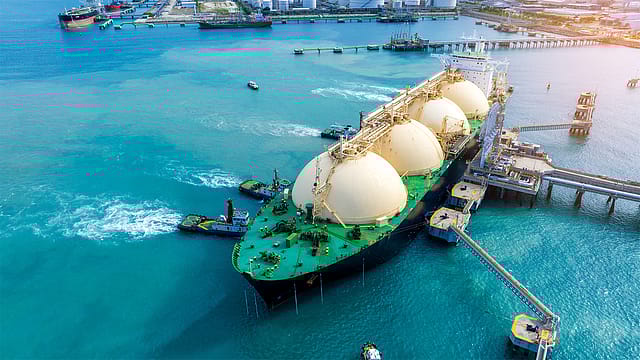
War-risk insurance premiums for vessels transiting the Strait of Hormuz are likely to remain elevated in the near term, even if shipping lanes remain open, according to Balasundaram R., Head of Marine Insurance at Policybazaar for Business.
Speaking to Fortune India, Balasundaram R. said insurers remain cautious as the Strait of Hormuz continues to be one of the world’s most sensitive maritime chokepoints.
“This route is one of the world’s most sensitive maritime corridors, and insurers price war-risk premiums based on real-time geopolitical tensions, threat perception, and recent incidents in the region. Even if there are no immediate disruptions, the underlying risk environment hasn’t fully eased, so underwriters tend to stay cautious," he said.
"Premiums may soften slightly if there’s sustained stability, but any escalation can quickly push rates up again. The domestic pool will be managed by GIC Re with other willing insurers pooling in capacity, the initial capacity being around $100 million (₹950 crores). The highlight, however, will be that the government will provide sovereign guarantee to the extent of around $1.4 billion (₹12,980 crores),” he said.
Why is India exposed to West Asia shipping risks
India has significant maritime exposure to West Asia because a large share of its crude oil and gas imports moves through these routes. There is also steady movement of container and bulk cargo linked to Indian ports.
“This means a substantial number of vessels connected to Indian trade regularly operate in or pass through the region. As a result, any disruption—whether due to geopolitical tensions, conflict, or shipping risks—can have a direct impact on freight costs, insurance premiums (especially war risk), and supply chain stability for India-linked shipments,” Balasundaram R. said.
What does the sovereign guarantee mean
The Union Cabinet has approved the creation of a domestic maritime insurance pool with a sovereign guarantee of ₹12,980 crore. The move is aimed at reducing India’s dependence on foreign underwriters and ensuring uninterrupted insurance cover for Indian shipping.
Balasundaram R. said the sovereign backing sends a strong strategic signal. “I will take this to mean that if retrocession by the pool will be limited/restricted, the government will step in as the insurer of last resort. The objectives stated for providing the sovereign guarantee is what makes for a powerful statement of intent which includes self-reliance, sanctions resilience, and greater sovereign control,” he added.
What is the Bharat Maritime Insurance Pool
The proposed Bharat Maritime Insurance Pool (BMI Pool) is a collective insurance mechanism designed to provide marine insurance cover for Indian-owned, Indian-controlled, or India-linked vessels.
According to Balasundaram R., the pool will provide coverage across almost the entire spectrum of marine insurance requirements.
What will the BMI Pool cover
The BMI Pool will offer comprehensive marine insurance cover for vessels that are Indian-owned, controlled, or linked to Indian trade routes. The coverage will include hull and machinery insurance for physical damage to the vessel, cargo insurance for goods being transported, war-risk cover for losses arising from war or similar perils, and Protection and Indemnity (P&I) insurance covering third-party liabilities such as injury, pollution, or collision. Almost the full gamut of marine insurance protection will be available under one unified framework.
Why the move matters
India’s maritime sector handles over 70% of the country’s trade by volume and nearly 95% by value, yet insurance cover for much of this ecosystem has remained in foreign hands, according to government data.
This vulnerability became visible during disruptions in the Red Sea, Strait of Hormuz, and Gulf of Oman, when several global insurers sharply raised premiums or withdrew coverage.
The BMI Pool is expected to bridge that gap by ensuring continuity of cover regardless of geopolitical tensions, stabilising trade flows and reducing cost pressures for exporters and logistics stakeholders.
Union Minister for Ports, Shipping and Waterways Sarbananda Sonowal described the decision as a transformational step for India’s maritime resilience. “For decades, Indian shipping has remained exposed to external uncertainties dictated by foreign insurance markets. Now, under the visionary and decisive leadership of Prime Minister Narendra Modi ji, this landmark decision ensures that India now has the sovereign capacity to safeguard its maritime trade, even in the most challenging global scenarios,” Sonowal said.