
Explainer: Can Sun Pharma balance global scale with rising debt after $11.75 bn Organon deal?
ADVERTISEMENT
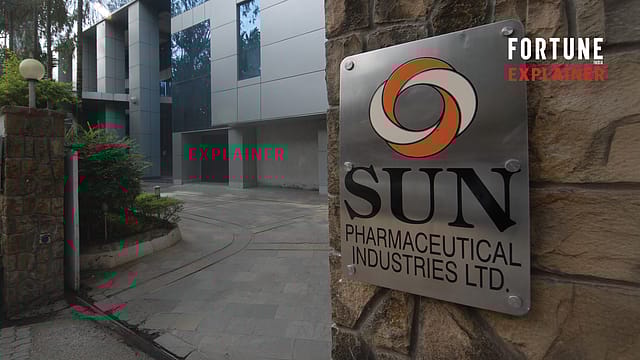
On April 27, Dilip Shanghvi-led Sun Pharmaceutical Industries grabbed headlines after announcing a major acquisition of U.S.-based Organon & Co. in an all-cash deal valued at $11.75 billion, making it the largest-ever takeover by an Indian pharmaceutical company. As part of the deal, Sun Pharma will acquire all outstanding shares of Organon for $14 per share, at a premium of over 24% to the stock’s last closing price on Friday. The transaction will be largely funded through borrowings of nearly $10 billion.
The mega deal is being hailed by analysts as a transformative leap in scale, but one that comes with a sharp rise in leverage. The key question now is whether Sun Pharma can successfully integrate the business while keeping its balance sheet under control.
Brokerages describe the acquisition as a “transformational fit,” saying that the move accelerates Sun’s transition toward entry into the global women’s health market, with a diversified revenue base and reduced dependence on any single geography or therapy.
How stretched will the balance sheet be?
The deal will be funded through a mix of internal accruals and debt, with Sun expected to raise around $9-10 billion. The acquisition will be financed with $2-2.5 billion of cash on hand, and the remaining $9.25-9.75 billion will be funded through committed financing from banks.
Organon has gross debt of $8.5 billion and cash of $0.9b, with the cost of debt at around 5.5%, which Sun Pharma expects to refinance at a lower rate by leveraging its stronger credit profile.
At a post-deal press conference on Monday, Dilip Shanghvi, founder of Sun Pharma, said the company is generally debt-averse but is comfortable taking on leverage if it helps scale the business and alter its growth trajectory.
Sun Pharma’s chief financial officer, Jayashree Satagopan, told the media that the balance sheet and the financials of the combined entity will become stronger and enable us to repay the debt in a shorter timeframe.
Sun Pharma currently has over $3.1 billion in cash on hand. The acquisition is expected to close in the next 6-9 months, by early January 2027, subject to approval by Organon shareholders and other regulatory clearances.
While this marks a shift from Sun Pharma’s net cash position, analysts broadly view the leverage as manageable. Motilal Oswal Financial Services pointed out that the combined EBITDA and strong annual free cash flow, estimated at over $3.7 billion, would be more than sufficient to pay for the interest outgo related to Organon debt, as well as the debt taken by the company to fund the acquisition.
Echoing a broadly constructive view, Elara Capital said the deal marks a strategic step-up in scale for Sun Pharmaceutical Industries, with the resulting leverage seen as manageable given the combined entity’s strong cash flows and earnings visibility. Post-transaction, the consolidated net debt-to-EBITDA ratio is expected to be about 2.3x, which remains within manageable limits, it said.
What are the key risks analysts are flagging?
While the deal will enable Sun Pharma to enter the fast-growing biosimilars segment at scale, brokerages are cautious about near-term execution.
HDFC Securities said it expects the combined entity’s growth to moderate to mid-single digits, compared with 10-12% for Sun Pharmaceutical Industries on a standalone basis, making it a key near-term overhang.
The brokerage highlighted several concerns, including the integration of two large businesses, especially given Organon & Co. has over 10,000 employees and operations in more than 140 countries. It also flagged growth challenges in Organon’s established brands and generics portfolio.
In addition, scaling up in the highly competitive biosimilars segment, reviving growth in the women’s health portfolio, and servicing around $8.5 billion of debt are likely to remain key execution challenges.
ICICI Securities said Sun Pharma has a strong track record of acquiring undervalued assets such as Taro Pharmaceutical Industries. It has also successfully turned around distressed businesses like Ranbaxy Laboratories.
This track record lends confidence in the management’s ability to tackle key challenges. Growth has remained flat over the past three years. Debt levels are also expected to rise. These are estimated at around $8 billion by the end of CY25 following the Organon & Co. deal, it said.
Can Sun Pharma deliver on synergies and growth?
The acquisition will make Sun Pharma the third-largest player in the women’s health category across the globe. Management expects cost synergies of around $350 million over the next 2-4 years, driven by efficiencies in procurement, supply chain, and workforce optimisation.
The management said that Sun Pharma will initially focus on integrating the two businesses. It expects Organon acquisition to initially scale this business from $6.2 billion sales and having the potential to turn around the business from a single-digit declining business to a double-digit growth story.
Sun Pharma is also looking to accelerate growth of Organon in branded generics, in therapies like cardio, derma, bone health, and opthal.
Analysts believe there is also scope to unlock growth through cross-selling, expanding Organon’s portfolio in emerging markets, and leveraging Sun’s specialty capabilities.
Elara Capital said the acquisition is strategically significant for Sun Pharma as it enables entry into branded generics in women’s health and biosimilars—two segments where the company previously had limited presence.
These segments typically face lower competition in fast-growing markets compared to the traditional generics business in regulated markets. The deal also strengthens Sun Pharma’s presence in key geographies such as China and South Korea.
What does Organon bring to the table?
The American pharmaceutical company, headquartered in New Jersey, adds scale, stability, and diversification to Sun Pharma, with a portfolio of over 70 products spanning women’s health, established brands, and biosimilars.
Brokerages highlight three key benefits: entry into women’s health, a relatively underpenetrated segment for Sun; expansion into biosimilars, which offers strong long-term growth potential; and access to a global commercial footprint across more than 140 countries, including key markets such as China, Europe, and Latin America.
Motilal Oswal said that the transaction enhances Sun’s global positioning and portfolio diversification, with a stronger presence in women’s health, innovative medicines, and biosimilars. It also significantly scales up the company’s footprint across key international markets.
ICICI Securities noted that the deal strengthens Sun’s position in specialty and branded generics while opening up new growth avenues through cross-selling and in-licensing opportunities.