
Gold, crude yet to factor in escalation or a long-haul Israel-Iran war: Experts
ADVERTISEMENT
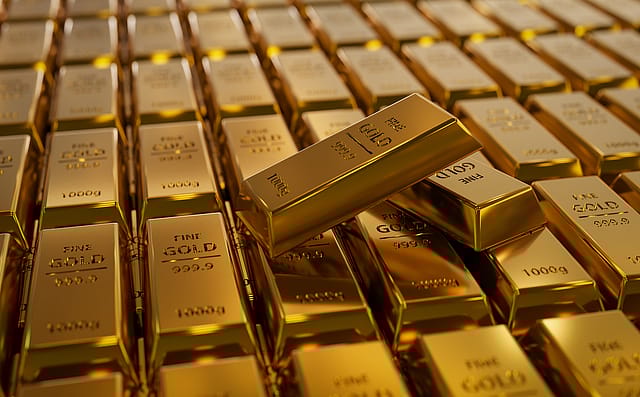
Three months into 2026, precious metals have been providing the most to investors -- their inherent value as a safe-haven commodity -- as a war-type conflict rages across the Middle-east region. That is the good news. The bad news is there is unlikely to be a surge in gold prices, as seen in 2025. If the conflict escalates or even extends several weeks ahead, experts say gold and crude oil prices have yet to factor in these extreme situations.
It is quite likely then that, globally, gold and silver prices, could well face some amount of consolidation and stay range bound. Margin calls across markets have forced investors to sell assets, including gold. It has meant that crude oil and inflation concerns continue to rise, amid fears of a prolonged disruption of supply, as energy flows stay exposed through the Strait of Hormuz.
Experts believe that nearly a fifth of global oil consumption and large volumes of gas pass through it annually. Iranian media reports in early March warned that it will target vessels attempting to pass through this strategic waterway.
Long-haul war still to be priced in
“The degree of geo-political risk is unknown at this stage. The risk of disruption has been priced in with current crude levels (Brent $81.2 per bbl). But the risk of an escalation or a prolonged war-type situation which runs into 4-5 weeks or more, is yet to be priced in,” says Kaynat Chainwala, AVP, Commodity Research, Kotak Securities.
“Even beyond two weeks, we could see a premium in the oil price,” she said.
Globally, gold prices breached the $5,400 per ounce level, then slipped below the $5,000 level before climbing back up to $5,186 levels on March 4. “Some losses have been covered but if there is no de-escalation in the conflict, interest rate cuts from central banks could get delayed. The dollar will rise and gold and silver might consolidate in a range,” she added.
Already JP Morgan Global Research expects the US Federal Reserve designate Kevin Warsh to keep interest rates on hold in 2026.
“Gold could see a strong floor at $4,800 and if it were to peak a level of $5,600. But if the geo-political situation worsens, the upside for gold should get capped. For it to test 5$,600for something dramatic, which the world has not evaluated should happen, Chainwala said.
Gold provided returns of averagely 70% in 2026 and around 25% in 2024.
Naveen Mathur, director – Commodities, Currencies and International Business at Anand Rathi Share and Stock Brokers says “The safe haven play is not taking place. Instead, investors are shifting their attention to safer currencies such as dollar, yen and Swiss franc,” he said.
The Dollar Index DXY has risen 1.36 percent to 98.86 levels in the last one month. Mathur also agrees with Chainwala on the fact that gold prices are yet to factor in a “long haul” in the current war.
While the Russia-Ukraine war has impacted oil and mineral prices globally – and sovereignty issues for Ukraine -- the Middle-East conflict has greater implications in the form of crude oil, inflation, fuel stoppages. “The impact on the global economic architecture around this scenario is much worse,” Mathur said.
Satish Dondapati, fund manager at Kotak Mahindra AMC, tracking ETF, said prices had fallen tracking volatile international gold trends. Most of the top gold traded ETFs in India, including those from Nippon India, Groww, Kotak, Zerodha, ICICI Prudential, HDFC Bank, SBI and Birla Sun Life have all been trading down between 0.2 percent to 3.9 percent, in terms of one-day returns.

Silver: Commentary from China
The price dynamics and volatility for silver, an industrial metal, used in solar energy, electric vehicles and electronics, continues to be very different from gold, which is largely a monetary metal.
The Cboe Silver ETF Volatility index has risen to a 81.36 level on March 5, 2026 from a much lower 26.31 level on August 1, 2025, though volatility has dropped of from the recent high of 111 levels on January 29, 2026.
Chainwala estimates that silver prices could continue to trade in the $70-90 range, and prices appear to have found a floor at the lower end but have been unable to rise beyond the $90 level.
Even though Mexico is the largest producer of silver, accounting for a fifth of the global output of 6,300 metric tonnes, China accounts for about 50-60 percent of the refining of silver.
Though demand for silver is expected to remain strong through much of 2026, investors and the market will eye the commentary which will emerge from the ongoing China’s annual parliamentary meeting (From March 4 to 11, 2026), where economic growth targets and stimulus plans for the year would be announced.
In January this year, China’s government had announced the names of 44 companies which will be allowed to export silver, tungsten and antimony for FY27.