
Gulf remittance slowdown, not just crude, could reopen India’s external gap: ADB
ADVERTISEMENT
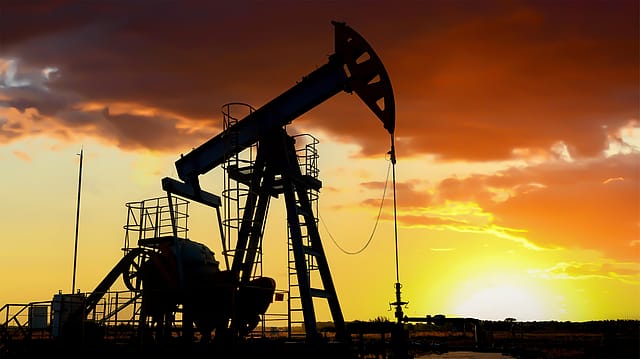
India’s external sector could face renewed pressure from a slowdown in remittances from Gulf economies, adding to risks traditionally associated with crude oil price shocks, the Asian Development Bank (ADB) has warned in its latest outlook.
In the Asian Development Outlook (ADO) April 2026, the ADB flagged that India’s current account dynamics are becoming increasingly sensitive not just to energy imports but also to income flows from overseas workers—particularly in the Gulf Cooperation Council (GCC) region.
“A moderation in remittance inflows from Gulf economies, alongside elevated oil prices, could widen India’s current account deficit,” the ADB said.
Remittances emerging as a key vulnerability
India remains the world’s largest recipient of remittances, with inflows exceeding $120 billion annually. A sizeable portion of it originates from Indian workers in GCC countries such as Saudi Arabia, the UAE, and Qatar.
The ADB noted that while remittances have historically acted as a stabilising force for India’s external account, this buffer may weaken under current global conditions.
“Remittance inflows, which have provided resilience to India’s external balance, may soften if economic conditions in host countries deteriorate,” the report stated.
The warning comes amid signs of economic recalibration in Gulf economies, driven by fluctuating oil revenues, fiscal consolidation, and labour market nationalisation policies.
A sustained slowdown in remittance inflows could compound the impact of a rising import bill, particularly if crude oil prices remain elevated.
Oil prices still central to external risk
Despite highlighting remittances, the ADB stressed that crude oil remains the dominant driver of India’s external vulnerability.
India imports over 85% of its crude oil requirements, making its trade balance highly sensitive to global price movements.
“Higher global oil prices are expected to increase India’s import bill and exert pressure on the current account deficit,” the ADB noted.
The report estimates that every $10 per barrel increase in crude oil prices can substantially widen India’s current account deficit as a percentage of GDP.
This dual pressure—from oil and remittances—raises the likelihood of a reopening of India’s external gap, which had narrowed in recent quarters due to strong services exports and resilient capital inflows.
Growth moderation adds to external pressures
The ADB also flagged a moderation in India’s economic growth trajectory, which could further complicate external sector dynamics.
India’s GDP growth is projected to ease slightly, reflecting weaker global demand, tighter financial conditions, and domestic investment constraints.
“Growth is expected to moderate as external demand softens and financial conditions remain tight,” the report said.
A slowdown in exports—particularly in goods—could reduce foreign exchange earnings, limiting India’s ability to offset higher import costs.
While services exports, especially IT and business services, continue to perform relatively well, the ADB cautioned that they may not fully compensate for broader trade imbalances.
Inflation risks from oil and supply disruptions
Elevated oil prices also pose inflationary risks, with potential spillovers across transportation, manufacturing, and household consumption.
“Rising energy prices could feed into broader inflationary pressures, complicating monetary policy management,” the ADB warned.
In addition to crude oil, the report highlighted vulnerabilities in fertilizer supply chains, which are closely linked to global energy markets.
India relies heavily on imported fertilizers, and any disruption—whether due to geopolitical tensions or price volatility—could affect agricultural output and rural incomes.
This, in turn, could create second-order effects on consumption demand and inflation.
Financial tightening and capital flow risks
The ADB also pointed to global financial tightening as a key external risk for India.
Higher interest rates in advanced economies could lead to capital outflows from emerging markets, including India, putting pressure on the rupee and foreign exchange reserves.
“Tighter global financial conditions could reduce capital inflows and increase exchange rate volatility,” the report noted.
Such dynamics could exacerbate the impact of a widening current account deficit, making external financing more challenging.
While India’s foreign exchange reserves remain robust, the ADB cautioned that sustained external pressures could test the country’s macroeconomic stability.
Regional comparison: India relatively resilient, but not immune
Compared to other Asian economies, India is seen as relatively resilient due to its strong domestic demand base and diversified economic structure.
However, the ADB said that this resilience does not make India immune to external shocks.
“India’s growth outlook remains robust relative to regional peers, but vulnerabilities to external shocks persist,” the report said.
Economies with higher export dependence may face sharper growth slowdowns, but India’s exposure to oil imports and remittance flows presents a distinct set of risks.
The ADB suggested that policymakers may need to closely monitor both commodity price trends and remittance flows to manage external sector risks effectively.
Strengthening export competitiveness, diversifying energy sources, and maintaining adequate foreign exchange buffers will be critical.
At the same time, sustaining remittance inflows will depend on labour market conditions in host countries, particularly in the Gulf.
External balance at a turning point
The ADB’s assessment indicates that India’s external sector may be entering a more fragile phase, where multiple risk factors converge.
“The interplay of oil price movements, remittance trends, and global financial conditions will be crucial in shaping India’s external balance,” the report concluded.