
India set to become a global defence manufacturing hub: FICCI session highlights export potential
ADVERTISEMENT
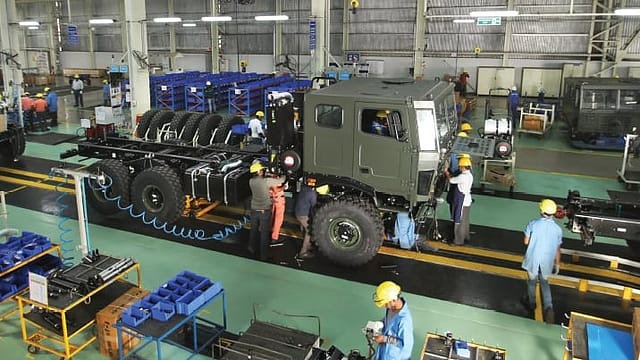
The Federation of Indian Chambers of Commerce and Industry (FICCI) organised a session on ‘Catalyzing Bharat’s Prowess in Defence Manufacturing & Exports: Make in India–Make for the World’, bringing together representatives from the Ministry of Defence, Armed Forces, Defence Attachés, the Indian defence industry and other stakeholders to strengthen international cooperation and expand India’s role in the global defence ecosystem.
Addressing the session, Vivek Virmani, Deputy Director General, Department of Defence Production, Ministry of Defence, Government of India, provided an overview of India’s evolving defence sector, highlighting the country’s growing production and exports, capabilities across land, naval and air platforms, and its emergence as an increasingly competitive defence manufacturing nation.
Virmani highlighted the breadth of India’s defence industrial base and the growing opportunities for international partnerships. He asked Defence Attachés to act as key enablers in building bridges of cooperation between India and their respective countries, facilitating greater exchanges among defence forces, Ministries of Defence and industry, while identifying opportunities for joint innovation, co-development, co-production and technology partnerships.
Ashish Kansal, Co-Chair, FICCI Defence and Homeland Security Committee and CEO & Whole Time Director, SMPP Ltd, said that a key driver of the transformation of India’s defence sector has been the Government of India’s sustained focus on Atmanirbhar Bharat in defence. He noted that policies promoting indigenous design and development, positive indigenisation lists, domestic procurement, defence corridors, innovation programmes and greater participation of private industry have helped build a stronger and more robust defence industrial base.
Kansal highlighted that more than 100 Indian companies are currently exporting arms and equipment to over 85 countries, while India’s defence exports have grown 20-fold over the past decade, reflecting the increasing global competitiveness of the country’s defence industry.
Bodhisattwa Sangapriya, Co-Chair, FICCI Drones Committee and Founder & CEO, IG Defence, highlighted India’s emergence as a trusted and cost-effective defence manufacturing hub and noted the rapidly expanding role of drones and unmanned systems in modern warfare.
He said drones are increasingly central to contemporary military operations and outlined the future trajectory of unmanned warfare, including manned-unmanned teaming, space-controlled and space-navigated warfare, fully autonomous RPAS, single swarms undertaking multiple missions, and the redesign of traditional war-gaming and operational concepts.
Sangapriya observed that the rise of drones in modern conflicts represents more than the emergence of a new machine or tool, describing it as the democratisation of air power through low-cost systems capable of challenging highly engineered and sophisticated platforms.
Leading Indian defence and aerospace companies, including Jindal Strategic Ventures, Zen Technologies, SMPP, Munitions India, MKU, L&T, Indrajaal Drone Defence India, IG Defence, Hughes Precision Manufacturing, HHV Advanced Technologies, HFCL and Evigway Technologies, showcased their latest technologies, platforms and products and highlighted opportunities for international collaboration.
The session brought together around 40 Defence Attachés and representatives from Embassies and High Commissions of more than 25 friendly foreign countries, along with 16 Indian Defence Attachés serving abroad and leading representatives from the Indian defence industry.
The discussions focused on strengthening India’s position in the global defence supply chain and fostering international partnerships in co-design, co-development, co-production and technology collaboration.
FICCI reaffirmed its commitment to working with the Ministry of Defence, Armed Forces, industry, academia, and global stakeholders to advance India’s vision of becoming a trusted partner in the global defence ecosystem and to support the national objective of ‘Make in India–Make for the World’.