
Max Fashion at 20: Betting big on scale, speed and a more ‘homogeneous’ India
ADVERTISEMENT
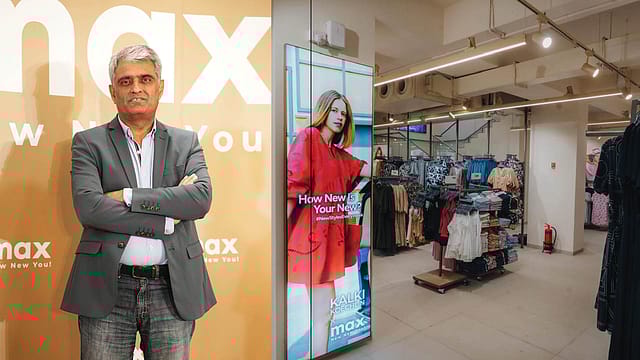
As Max Fashion completes two decades in India, the Landmark Group-owned retailer is leaning into a sharply defined playbook—scale, speed, and sharp value—to stay ahead in a market where fashion cycles are shrinking and consumer aspirations are rapidly converging across geographies.
How is Max Fashion redefining value in a fast-changing retail landscape?
CEO Sumit Chandna describes the brand’s evolution as a shift from a pure value retailer to what he calls a “democratised fashion destination.” The distinction, he explains, lies in how value itself has been redefined. “It’s no longer just about low prices. It’s about delivering the latest fashion, great quality, and an international shopping experience—while staying accessible,” he says.
This repositioning has been underpinned by a dual strategy: leveraging scale to drive efficiencies while investing in design and trend responsiveness to stay relevant. The approach has allowed Max to build a business that caters as much to a Gen Z shopper chasing global trends as to families looking for dependable everyday wear.
The shift is mirrored in the company’s financial performance. As per its latest filings, Max Fashion (Landmark Online India Pvt Ltd) reported revenue of ₹780.5 crore in FY25, up 17% year-on-year, while net profit stood at ₹32.9 crore, marking a turnaround from losses in previous years. Over a longer horizon, revenue has grown from ₹515.3 crore in FY21 to ₹643.5 crore in FY22, ₹646.7 crore in FY23, ₹664.4 crore in FY24 and ₹780.5 crore in FY25, reflecting steady expansion despite market volatility.
Are India’s metro and non-metro consumers becoming more alike?
What has worked in the brand’s favour is a structural shift in the Indian consumer landscape. Chandna is unequivocal that the traditional divide between metros and Tier 2 and Tier 3 markets is fast dissolving.
“Consumers today are far more homogeneous than ever before,” he says.
“They are exposed to the same social media, the same trends, and have similar aspirations. If something like K-fashion is trending, you’ll see its influence across markets.”
For Max, this convergence has simplified the playbook. Instead of sharply differentiated assortments across geographies, the retailer is focusing on democratising access to global trends at affordable prices, regardless of location. Its network—now over 535 stores across 200 cities—has been critical in executing this strategy at scale.
At the same time, the brand is working to sharpen its fashion credentials. Its upcoming showcase at Lakmé Fashion Week, featuring ambassadors Kalki Koechlin, Siddhant Chaturvedi and Alaya F, is part of a broader push to strengthen its positioning as a style-first brand.
“Lakmé Fashion Week is a strategic brand amplifier for us,” Chandna says. “It allows us to bridge high fashion with accessible fashion and reinforces our authority in delivering global styles within reach.” Beyond visibility, the expectation is that such platforms will deepen consumer engagement, enhance brand salience, and drive a halo effect on store traffic and seasonal sales.
What role do speed and omnichannel play in Max’s next growth phase?
The next phase of growth, Chandna notes, will be driven by faster product cycles, continued store expansion, and a stronger digital ecosystem. Central to this is the brand’s “New Styles Every Week” proposition, which requires a high degree of supply chain agility. “We’ve invested significantly in reducing lead times and building flexible sourcing capabilities so that we can respond quickly to trends,” he says.
Parallelly, Max is doubling down on omnichannel capabilities. Its digital platforms—spanning its website and app—are being positioned as discovery engines that complement its store network. “Stores remain the backbone of our business, but digital accelerates reach and conversion, especially among younger consumers,” Chandna explains.
Is ‘affordable premiumisation’ reshaping value fashion?
Even as fashion becomes more trend-driven, value continues to anchor consumption. However, Chandna points to a nuanced shift. “We are seeing signs of what we call ‘affordable premiumisation’—customers are willing to pay slightly more for better design, quality, and brand trust,” he says. The shift is not towards outright premiumisation but towards more considered spending within value segments.
This evolving consumer behaviour is playing out against a backdrop of intensifying competition, particularly from regional and local brands in smaller towns. Chandna, however, remains confident of Max’s differentiation. “Our proposition—latest fashion, great quality, amazing value, and a strong global legacy—is unique in the market,” he says.
He adds that organised players like Max benefit from structural advantages such as the ability to launch new styles frequently, maintain consistent quality, and leverage scale for sourcing efficiencies. The company’s private-label model further strengthens this edge, giving it tighter control over product, pricing, and margins while enabling sharper differentiation through sub-brands like Max Urban and Max Sport.
Driving repeat consumption at scale remains a key focus area. Chandna emphasises that product freshness, combined with an engaging in-store experience and loyalty initiatives such as Max Elite, plays a crucial role in bringing customers back. “When consumers know they will find something new every week, it builds habit and engagement,” he says.
On the category front, menswear and womenswear are currently leading growth, while the kidswear segment continues to deliver consistent performance. At the same time, the company is navigating headwinds such as rising input costs and a discount-heavy retail environment.
Chandna maintains that disciplined merchandising and a focus on full-price sell-through help mitigate these pressures. “We are not just competing on price. We are delivering value, and that’s what drives loyalty,” he says.
Sustainability, often seen as a challenge for fast fashion, is being addressed through incremental changes across the value chain—from denim processing and fabric recycling to packaging and logistics. “We have multiple initiatives in place to move towards a more sustainable future,” Chandna says, while acknowledging the complexity of balancing speed with responsibility.
Looking ahead, the retailer plans a balanced expansion strategy—deepening its presence in existing markets while entering new cities with strong growth potential. Macro tailwinds, including any policy measures that boost disposable incomes, are expected to support consumption. “Anything that puts more money in the hands of consumers is positive for the overall retail story,” Chandna says.
At 20, Max Fashion’s trajectory reflects a broader shift in Indian retail: the blurring of boundaries between value and aspiration, metros and non-metros, and offline and online. If Chandna’s strategy holds, the brand’s biggest strength may lie in its ability to keep pace with a consumer who wants it all—trend, quality, and price—without compromise.