
Nexus Select’s ‘buy, fix, premiumise’ strategy is reshaping mall retail in India
ADVERTISEMENT
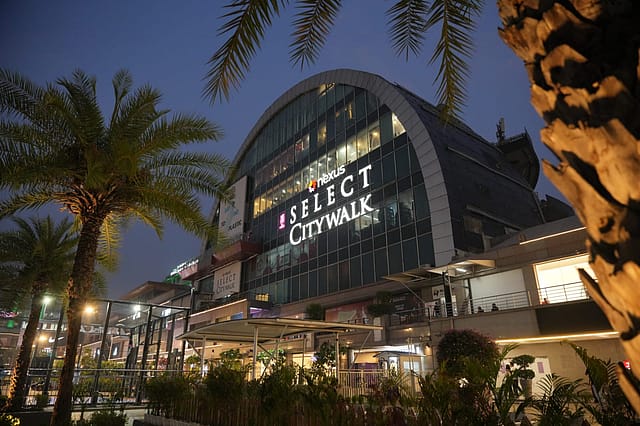
India’s formal retail is still just the tip of the iceberg, but Nexus Select Malls is building to scale fast.
The Blackstone-backed retail REIT, which owns 19 malls across 15 cities, plans to nearly double its portfolio to 20 million square feet and scale up to 30-35 malls over the next five years. The expansion will largely continue through acquisitions, a strategy the company says allows it to unlock faster growth without taking on the risks associated with greenfield development.
“We will continue to buy and fix. Around 80% of future growth will still come from acquisitions. In markets where there’s nothing to buy, we will partner for brownfield, playing to our strengths in leasing, operations and marketing,” said Dalip Sehgal, executive director and CEO.
The model accelerated through COVID, when Nexus acquired eight Prestige malls in one shot in March 2021. “Turning around under-leased or under-operated assets has been our edge,” added Pratik Dantara, chief investor relations officer and head of strategy. “A greenfield mall can take seven years for full revenues to show up. Buying operating assets lets us deploy skill and capital into cash-flow on day one.”
The company, which started with two acquired malls in Ahmedabad and Amritsar in 2016, today sees itself as a play on India’s consumption shift rather than just a real estate business.
“About 8% of India’s consumption is through organised trade. Another 7% is e-commerce. The rest is still traditional retail,” said Sehgal. “India has only about 140 Grade A malls. Singapore alone has more than 140 malls as a city.”
India’s retail growth story now runs through organised formats. Sehgal pegs organised offline at about 8% of consumption, e-commerce at roughly 7%, with the balance dominated by kirana. Against that backdrop, he believes India can eventually support 250-300 quality malls, including in tier 2 and tier 3 markets.
For instance, Bhubaneswar, Amritsar, and Mysore have emerged among the company’s stronger-performing markets, with high occupancy and trading density levels.
Why the acquisition-first playbook
Unlike developers that build malls from scratch, Nexus follows a “buy and fix” model. The company acquires operational but underperforming malls and improves them through better leasing, marketing, operations and premiumisation.
“In this business, you can either do greenfield development or acquire a running mall,” Dantara said. “A greenfield mall takes four to five years to build and then a few more years to stabilise. That means seven years of cash outflows before meaningful inflows.”
By contrast, acquisitions provide immediate cash-generating assets that can be upgraded. Nexus says it identifies under-leased or under-marketed malls where operational improvements can quickly improve yields and rentals.
The company’s operating model has also evolved. While nearly 80% of future growth will still come from acquiring completed malls, Nexus has now begun entering pre-development agreements for malls being constructed by developers.
One such transaction has already been signed with the Runwal Group.
“In some markets, there’s simply nothing to buy,” Sehgal said. “Our core competency is not building malls. Our core competency is buying a mall and fixing it.”
Sehgal pointed to a Bengaluru mall in the Prestige portfolio that had struggled with 70-75% occupancy before Nexus acquired it. “Today that mall is 95% leased and we managed to get the best brands there,” he said.
Premiumisation is rising. Hypermarkets, less so
The company is also consciously increasing its exposure to premium categories such as jewellery and beauty. New jewellery zones have already been added at Elante in Chandigarh and Seawoods in Navi Mumbai. “The whole effort is that once you fix the portfolio, how do you premiumise it. That’s how you get better rentals and create value,” Sehgal added.
He added that while a fully luxury million square feet mall is still not viable in most Indian cities, malls can selectively allocate 100,000–150,000 square feet to premium and grow that share with demand.
The corollary is that older hypermarket-heavy formats are losing relative relevance as consumers trade up in categories like fashion, beauty and dining. Gross merchandising mix is shifting. Food and entertainment already contribute about 15% of Nexus revenues and are growing fastest, with food courts rebooted into central social hubs. In Hyderabad, seat counts were doubled, local F&B heroes added alongside global QSRs, and large-format digital content and live programming layered in to make match screenings and weekend music feel like communal festivals.
From sneaker festivals and beauty masterclasses to concerts, AR-VR events, coffee raves and regional cultural festivals, the company says consumers are spending more time inside malls for reasons beyond retail.
Nishank Joshi, chief marketing officer at Nexus Select Malls, said the company spends upwards of ₹100 crore annually on marketing across digital campaigns, shopping events and in-mall activations. The Nexus One app, recently past one million downloads, combines indoor navigation, car geotagging, promotions and a portfolio-wide loyalty layer. “Around 60% of uploaded bills are from repeat visitors. About 12% of total portfolio consumption is now logged on the app,” Joshi shared. Rewards range from roughly 3% to 5% back, with spikes to 5%–10% during targeted campaigns.
“Our rough estimate is that when we are doing these IPs, we get 10-15% incremental growth,” Sehgal added.
The company has built proprietary retail properties such as GlossBox for beauty, TechNation for electronics, StyleRush for fashion and VacationNation for travel retail.
What this reflects, according to executives, is a broader shift in consumer behaviour which is gravitating towards experiences beyond shopping in malls.
In under-supplied consumption centers, Nexus prefers to anchor the market and then selectively densify. Dantara notes that even after excluding top consolidated owners, India still offers 60–70 buyable Grade A malls, making acquisitions a sustained path. The company also sees whitespace in the East and North-East, citing high per-capita pockets and government capex as tailwinds.
“Our job is to buy well, fix fast, premiumise steadily, and keep every stakeholder happier leaving than when they came in,” Sehgal expressed.