
Precious metals rally up to 4% amid Middle East turmoil; silver tops ₹2.93 lakh/kg, gold nears ₹1.68 lakh
ADVERTISEMENT
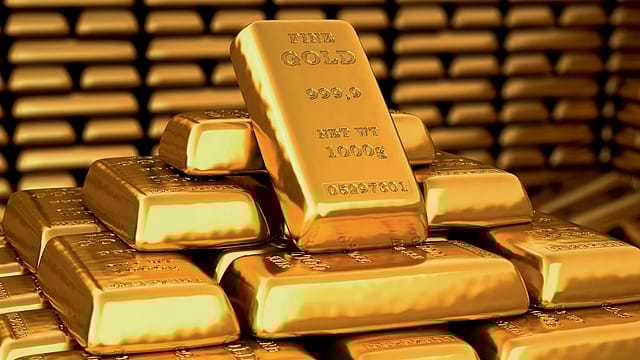
Precious metal prices surged up to 4% in futures trade on Monday, with silver climbing to ₹2.93 lakh per kilogram and gold approaching ₹1.68 lakh per 10 grams on the domestic bourses, as investors flocked to safe-haven assets amid escalating tensions in the Middle East.
Analysts said bullion demand strengthened sharply after the US and Israel jointly launched coordinated military strikes on Iran, reportedly killing Supreme Leader Ayatollah Ali Khamenei and triggering retaliatory attacks by Tehran across the region.
MCX futures jump sharply
On the Multi Commodity Exchange (MCX), silver futures for May delivery soared ₹10,508, or 3.72%, to ₹2,93,152 per kg. Gold futures for the April contract jumped ₹5,811, or 3.6%, to ₹1,67,915 per 10 grams.
Earlier in the session, gold futures were trading at ₹1,60,809, up ₹840 or 0.53% while silver futures were at ₹2,65,886, higher by ₹5,142 or 1.97%. In the physical market, gold was quoted at ₹1,60,360 per 10 grams while silver was priced at ₹2,61,310 per kg.
Global bullion markets react
Internationally, bullion markets witnessed heightened volatility. Reports said the rally accelerated in early Asian trade, with prices jumping over 3% following the strikes on Iran.
On the Comex, gold futures rose $161.8, or 3.08%, to $5,409.7 per ounce while silver futures for May delivery gained $4, or 4.3%, to $97.30 per ounce. However, spot gold later traded 1.35 per cent lower at $5,157.16 per ounce, while spot silver was largely flat at $88.19 per ounce, reflecting profit booking at higher levels.
Safe-haven rush amid geopolitical escalation
Market participants said investors are rotating funds into traditional safe-haven assets such as gold and silver as geopolitical risks intensify.
According to reports, Iran responded to the strikes with missile attacks targeting US-linked assets across neighbouring countries, including the UAE, Bahrain, Kuwait, Qatar, Saudi Arabia, Jordan, Iraq, and Syria, raising fears of a broader regional conflict. Sustained geopolitical uncertainty, coupled with volatility in crude oil prices, and currency markets, could continue to support bullion prices in the near term, as per analysts. However, sharp intraday swings may persist as traders react to incoming developments and global risk sentiment.