
PVR Inox shares fall over 5% despite best-ever financial performance — here's why
ADVERTISEMENT
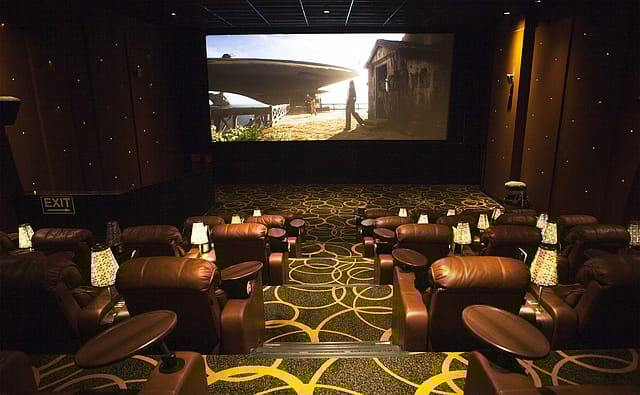
FY26 was, by every headline metric, PVR Inox's strongest year. Revenue hit an all-time high of ₹6,742.6 crore. EBITDA doubled to ₹968 crore. The company swung from a net loss of ₹152.3 crore in FY25 to a profit of ₹386.8 crore. Net debt, which stood at over ₹1,430 crore at the time of the PVR-Inox merger, has been whittled down to a near-negligible ₹161.9 crore. Free cash flow hit an all-time high of ₹790.1 crore.
And yet, the stock fell over 5% on Monday. The market's reaction points to a few structural concerns that the headline numbers don't fully address.
The one-time problem
The Q4 net profit of ₹187 crore looks strong against a loss of ₹126 crore a year ago. But embedded in that number is a one-time exceptional gain of ₹195.2 crore from the sale of the 4700BC popcorn brand (Zea Maize) to Marico. Exclude that, and PAT from continuing operations for Q4 was just ₹7.5 crore. For the full year, continuing operations generated ₹230.6 crore in profit — a genuine recovery, but roughly 40% lower than the headline PAT figure. Markets, which had already priced in a strong quarter, found the operational earnings underwhelming relative to expectations.
Footfalls haven't recovered
The bigger concern is volume. Q4 admissions were 31 million — up just 1.5% YoY. The 25.8% revenue jump was driven almost entirely by price: average ticket price rose 22.4% to ₹315 and food & beverage spend per head jumped 32.3% to ₹165. For the full year, footfalls were 150 million — up 10%, but still below the ~168 million the two companies together were drawing in FY20, before the merger. For context, PVR Cinemas recorded annual footfalls of about 102 million patrons and INOX Leisure recorded 66 million in FY20.
Investors have consistently flagged that PVR Inox's recovery is built more on monetisation than on footfall growth, and that the pricing lever has limits — especially at a time when OTT platforms are aggressively competing for the same audience.
The lease accounting layer
PVR Inox reports two sets of numbers — one as per Ind AS accounting standards (which includes the impact of lease accounting under Ind AS 116) and one adjusted for it. The difference is important.
Under Ind AS 116, long-term cinema lease agreements are treated almost like loans — future rent payments are capitalised onto the balance sheet, and the annual rent gets split into depreciation and finance costs rather than being recorded as a simple rent expense. Since EBITDA is calculated before depreciation and finance costs, the rent effectively disappears from the EBITDA line, making margins look far higher than they are in cash terms.
Q4 EBITDA under Ind AS was ₹528.4 crore at a 32.5% margin. Adjust for lease accounting — treating rent as the operating expense it actually is — and it falls to ₹169.6 crore at a 10.7% margin. The ₹359 crore difference is essentially the quarterly rent PVR Inox pays across its 359 cinema properties. With lease liabilities of ₹6,020.5 crore sitting on the balance sheet — money the company is contractually obligated to pay out over the remaining terms of its cinema leases — the 32.5% margin figure, while technically correct, gives a misleading picture of the underlying business. The 10.7% is the number that tells you how the business is actually performing.
The FY25 reminder
Context matters. FY25 was a bad year — a near-complete collapse of the Bollywood content calendar through much of H1, Hollywood still recovering from the actors' and writers' strikes, and major studios deliberately avoiding the election and IPL window. The result was a ₹152.3 crore full-year loss. The lesson markets took from it: PVR Inox's P&L is only as good as that week's releases. One lean content season and the numbers fall off a cliff.
FY26 was the mirror image — Dhurandhar, Dhurandhar: The Revenge, Border 2, Saiyaara all delivered. But the dependence on the Hindi content calendar remains the stock's most persistent risk.
The structural positives the market may be underweighting
Not everything in the results warrants caution. There are a few developments that don't get enough attention.
South-led expansion. About 45% of new screens added in FY26 were in South India — a deliberate strategic shift. South India currently accounts for 34% of PVR Inox's 1,798-screen network, and the company is leaning into it hard: three new cinemas opened in Hyderabad in Q4 alone, alongside one in Hubli. Southern markets are underpenetrated relative to their film industries, regional content is increasingly pulling pan-India audiences, and occupancy costs are structurally lower than in northern metros.
Mid-budget films are back. Films in the ₹100–200 crore box office range grew their share from 12% to 20% of total India box office in FY26. The share of ₹500 crore-plus blockbusters dropped from 30% to 19% in the same period. For PVR Inox, a broader and more consistent release calendar is healthier than one built around three or four tentpoles a year. Fewer eggs, fewer baskets.
OTT is no longer the enemy. Direct-to-OTT releases have dropped from 105 in CY22 to just 30 in CY25, while theatrical releases rose from 217 to 470 over the same period. OTT platforms have come to recognise that a film's theatrical performance directly drives its streaming licensing value — the better it does in cinemas, the higher the platform pays for it. This is a meaningful structural shift in exhibition's favour, and it's happening quietly.
ROCE has crossed double digits. Return on capital employed went from -0.3% in FY25 to 10.2% in FY26 — the first time since the merger. The long-standing critique that PVR Inox doesn't earn its cost of capital is now on shakier ground.
Premium formats are growing. 286 screens — 16% of the total network — are now premium formats: IMAX, 4DX, ICE, ScreenX, and others. These formats are significantly more resilient to OTT competition and generate far higher revenue per screen than standard auditoriums.
What management says, and what lies ahead
"With a strong content slate ahead, a capital-light expansion strategy and a significantly strengthened balance sheet, we believe the Company is entering its next phase of sustainable growth," managing director Ajay Bijli said in the results commentary.
The FY27 slate backs that confidence. Ramayana Part 1 (Diwali), Avengers: Doomsday, King (SRK, Christmas), Christopher Nolan's The Odyssey, Spider-Man: Brand New Day, Toy Story 5, Jailer 2, Peddi (Ram Charan), Love and War (Bhansali), and Drishyam 3 are among the marquee titles lined up across languages. If the content delivers, FY27 could finally produce the footfall recovery that the operating numbers still lack.
The capital-light pivot is also bearing fruit. Capex fell 24% YoY to ₹254.2 crore as 55% of new screens were opened under asset-light or FOCO formats — where developers bear 40–100% of the fit-out cost. The company has 138 more screens signed in the pipeline, almost all capital-light.
The operational story at PVR Inox has genuinely improved — debt is nearly gone, margins are recovering, and the structural environment for theatrical exhibition is better than it has been in years. But the market wants to see footfall growth, not just higher ticket prices.
Shares of PVR Inox ended 4.73% lower at ₹1,023.00 apiece on the NSE on Monday. Over the past year, however, the stock has delivered over 11% returns, outperforming the Nifty Media index which has slipped nearly 7% in the same period.