
Reed Hastings and operating on the edge of chaos
ADVERTISEMENT
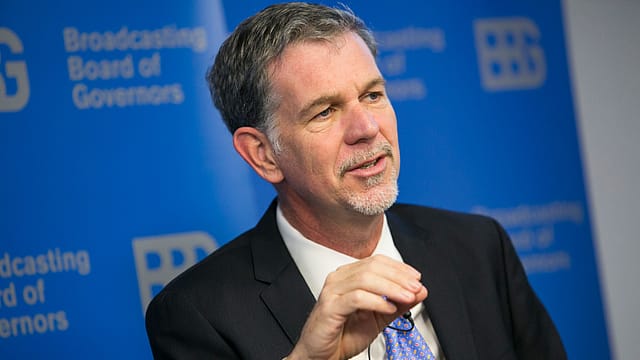
Reed Hastings, Netflix co-founder and chairman, will step down from the streaming giant’s board of directors when his term ends in June. He plans to focus on philanthropy and other pursuits, said the letter to shareholders that Netflix posted while announcing its first quarter results for 2026.
Around five years ago, Hastings, in an exclusive interview to Fortune India, had held forth on a host of topics over a video call from a ski lodge in the Utah mountains, while a storm raged outside.
Explaining his core management philosophy, Hastings said it was to “keep it simple”. Describing how his ‘no rules’ management mantra had evolved, he talked about the experience with his first company, Pure Software. “I’m an engineer by background and we optimised everything as an engineering problem. What happened over time is we were extremely efficient, because we had all these rules. But we were very inflexible because we just had a lot of rules,” he said.
Then, when the market changed, they were unable to adapt and had to sell the company. “And so, my big lesson was the danger of over-optimising for efficiency, with rules and processes. And that it strangely was better to manage on the edge of chaos; where some crazy stuff happens, but also, it’s very fertile. And an organisation is more like an ecosystem with lots of moving parts, than it is like a factory. Now I try to have a healthy ecosystem, but [try] not to over-manage it.”
He also went on to say how managing on the edge of chaos helped creativity and innovation. “That’s allowed us to make many changes from [being a] domestic DVD company, to streaming all titles, to developing our own, to expanding around the world, to becoming a big studio, [and] many hard expansions. We’ve got people who have to think on their feet, because there are no rules. And the people who think on their feet can adapt more easily. And so, we’ve been able to be very flexible and adapt.” But he did sound a warning. “And you do have to be careful, because you are managing on the edge of chaos, you don’t want to actually fall into chaos.”
Hastings had also described how big an impact the rollout of Reliance Jio had been on the streaming platform. “The most remarkable change anywhere in the world has been Reliance Jio. There’s no country that has gone from [having] some of the world’s most expensive data to the world’s most inexpensive data in four years. The transformation of the Indian Internet is phenomenal. In hindsight, our business probably could not have worked five years ago.”
In the interview, Hastings had also talked about how subscribers might want half of the content to be what they can relate to (referring to local shows), and the other half that’s challenging and fresh (content from abroad).
In the letter to shareholders released late on Thursday, Hastings was quoted as saying, “Netflix changed my life in so many ways, and my all‑time favourite memory was January 2016, when we enabled nearly the entire planet to enjoy our service. My real contribution at Netflix wasn’t a single decision; it was a focus on member joy, building a culture that others could inherit and improve, and building a company that could be both beloved by members and wildly successful for generations to come.”