
Room for more: How ixigo is betting on Bharat’s booking gap with Brevistay acquisition
ADVERTISEMENT
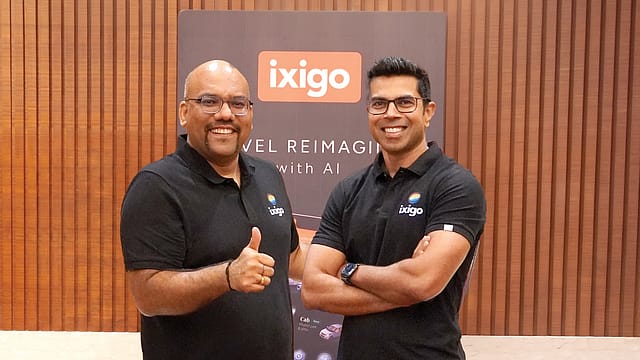
Aloke Bajpai could see it in real time. A surge of people is pouring out of the New Delhi railway station. Families dragging suitcases, porters weaving through the chaos, and voices rising over each other. Phones are buzzing, but not for bookings.
Thousands are arriving, but almost none with a hotel confirmed. All had a destination and a plan to figure it out when they got there. “I am going to Karol Bagh and will book hotels there.” That line kept repeating.
Bajpai and his team stood on one of the railway platforms for hours in Delhi’s sweltering heat last summer, watching what two decades of online travel couldn’t change. Trains were pulling in, platforms were spilling over, and India was moving. But when it came to hotels, a staggering number were still walking in—negotiating at the counter, choosing on instinct.
The behaviour wasn’t hard to decode. The apps were already on their phones—OTA players, all within reach. Awareness wasn’t the problem. Trust was. “We don’t trust what we see online,” customers told Bajpai, chairman, managing director, and group CEO of Le Travenues Technology, parent company of ixigo, AbhiBus, and confirmtkt.
Back on the platform, the list of grievances ran longer than the boarding queue. The photos didn’t match. The rooms disappointed. Sometimes the booking didn’t even exist when they arrived. And sometimes, a better deal waited just outside the app—if you were willing to haggle.

Where discounts failed, trust must work
It’s a pattern the industry has struggled to fix.
For nearly 20 years, India’s online hotel market has been built on a simple promise: more choice, better prices, and deeper discounts. It worked to a point. But it didn’t change behaviour at scale. Even today, out of roughly 2-2.5 million room nights sold daily in India, online platforms account for less than 300,000, points out Bajpai.
This means the real market—the one that matters—still lives offline. And that is the market ixigo is walking into. That said, it is still a battlefield shaped by global and domestic heavyweights—from Booking.com and Agoda to homegrown players like OYO and MakeMyTrip.
On paper, this looks like a familiar play. A challenger stepping into a category where OYO reportedly has 68% market share. A playbook we’ve seen before: raise capital, burn on discounts, and chase market share. Right?
Bajpai, however, frames the competition differently. “It’s not a zero-sum game,” he reckons. The real battle isn’t between apps—it’s between online and offline.
And that distinction changes everything. It explains why ixigo isn’t starting with five-star inventory or glossy experiences. Its natural catchment lies elsewhere—among train and bus users, spread across Tier II and III cities, where 94% of its transactions already originate.
This is Bharat in motion. And Bharat behaves differently. Only about 4–5% of Indians fly. This means that in any given city, the overwhelming majority of travellers arrive by train or bus. They plan differently, book later, and compare harder. They value certainty over convenience and still hesitate before clicking ‘book now.’
ixigo’s bet is deceptively simple: if even a fraction of these users—millions of them—start booking hotels on its platform, the market doesn’t just shift. It expands and explodes.
But that expansion hinges on solving a problem that has outlived every discount, every deal, and every growth hack thrown at it. That problem is ‘trust.’ “The problem worth solving is the trust deficit,” says Bajpai. “It’s definitely an impediment to online adoption,” he adds.
That’s why Bajpai isn’t chasing inventory, pricing or even competition. He’s chasing a behavioural unlock. Why? Because if it works, this won’t be another challenger story. It will be a market rewrite.
Trains to hotels: The edge others don’t have
And for that bet to work, ixigo has one clear advantage: distribution.
For years, the company built quietly—far away from the flashier end of online travel. There was no aggressive discounting or headline-grabbing cash burn. Instead, it went where the bulk of India actually travels: trains and buses.
That base is now massive.
Over 96 million train passengers and 18 million bus users booked through the platform last year. Add to that 82 million monthly active users, hundreds of millions of downloads, and a network that stretches across more than 2,400 towns. Add to it the high transaction volume from Tier II and III cities.
And this is the user Bajpai understands instinctively—the traveller who doesn’t just want a deal, but wants certainty and value. “Gone are the days when people will choose the cheapest room,” he says. “They want value for money,” he reckons. They have a clear ask: An AC that works, a clean bathroom, a room that looks like the photo, and at a price they are willing to pay.
That nuance matters. Why? Because it challenges one of the most persistent assumptions about ixigo’s user base—that train and bus travellers are purely budget seekers.
They aren’t.
Bajpai explains. Some people sit in a third AC train seat and can afford a 4-star hotel, but they are saving on travel and spending on the experience. It’s a trade-off, not a constraint. The idea is simple: Save on the journey and spend on the stay.
That behaviour flips the narrative. ixigo is sitting on a high-intent, underserved travel base—millions of users who are already transacting on its platform for trains, buses, and increasingly flights, but stepping off the app when it comes to hotels.
ixigo’s entire hotel play is about closing that loop. “We have the user base,” says Bajpai. “We have to make them trust us enough to book hotels with us,” he underlines.
That push is now taking a more concrete shape.
Earlier this month, ixigo approved the acquisition of a 54.66% stake through a mix of primary and secondary share purchases in flexible-stay hotel network Brevistay for ₹65.69 crore. Founded in 2016, Brevistay specialises in short-duration and overnight hotel bookings, with a network spanning budget to premium properties across Tier I, II, and III markets. Post-acquisition, ixigo and Brevistay together will have access to over 10,000 directly contracted hotels across India.
The move signals a clear shift: ixigo is no longer just experimenting with hotels—it is starting to build supply depth, distribution control, and differentiated use cases into the business.
For retail, branding, and marketing experts, this isn’t just a category expansion—it’s a far more fundamental play.
Owning the traveller, not the hotel
For ixigo, the budget hotel play is not about entering a new category. It’s about owning a traveller that it understands deeply. “This is not casual traffic. It’s high-intent, habit-driven engagement,” says Ashita Aggarwal, professor of marketing at SP Jain Institute of Management & Research (SPJIMR). “And somewhere in that journey sits an unresolved need: where to stay,” she adds.
Budget hotels in India remain a fragmented, trust-deficient market. Discovery is noisy, expectations are unreliable, and the gap between promise and experience is wide. “This is where ixigo has a real opening,” says Aggarwal, adding that ixigo has built its brand not on discounts but on utility and dependability and getting the basics right, consistently. If that trust can travel from trains to stays, ixigo doesn’t need to win on price. It can win on reassurance. “The promise becomes simple but powerful: if it’s on ixigo, it won’t blindside you,” she adds.
But the challenge begins with a fundamental mismatch: trust does not transfer neatly across categories. Booking a train ticket is a functional, low-risk decision; the outcome is predictable. Booking a hotel, especially in the budget segment, is emotional and uncertain. The downside of a bad experience is far higher. A user may rely on ixigo without hesitation for trains and still switch platforms when it comes to stays. “Habit in one use-case does not automatically create confidence in another,” reckons a venture capitalist (VC), who had invested in one of the online budget hotel players that once tried to wrestle the throne from MakeMyTrip, requesting anonymity.
Then there is the nature of the supply itself. Unlike trains, which are standardised and centrally managed, quality could often vary not just across properties but across days in the fragmented budget hotel segment. “Even players like OYO, which attempted to control and standardise supply, have struggled with maintaining consistency at scale,” the VC says. As a marketplace player, ixigo has even less direct control, which makes delivering a predictable experience significantly harder.
That also clarifies what ixigo is not doing.
Unlike some players that moved into leasing, franchising, or owning inventory, ixigo is staying firmly asset-light. There is no play here to own hotels or lock inventory through long-term contracts. Instead, the focus is on building a marketplace strengthened by direct relationships, tighter supply integration, and better control over discovery and experience.
That choice also shapes how ixigo enters a segment already wired for a very different playbook.
The category is conditioned by aggressive discounting. Competitors like MakeMyTrip and Goibibo offer coupons, flash sales, and cashbacks. Entering this environment risks pulling ixigo into a margin-eroding price war that could dilute its core positioning as a utility-first, trust-led platform. “And if you don’t get into a price war, you can’t compete with the big boys,” says SPJIMR’s Aggarwal.
More critically, hotels carry a ‘last experience bias.’ One bad stay—a hygiene issue, a check-in dispute, a safety concern—can disproportionately damage user trust. Failure points are unlimited as hotels introduce multiple variables outside the platform’s control. The blame, however, still lands on the brand that facilitated the booking. “In this category, trust is fragile and easily reversible,” she adds.
Finally, winning here requires capabilities that go beyond product and technology. It demands operational depth—on-ground audits, quality-control mechanisms, rapid customer support, and tight feedback loops with hotel partners. This is a fundamentally different muscle from ixigo’s current strengths.
When 'what you see' isn't what you get
“What you see versus what you get…the budget hotel space is riddled with this problem,” ixigo underlined in a recent earnings call. Photos are staged, rooms are smaller, amenities don’t match, ratings can’t be trusted, and sometimes, the booking itself doesn’t hold. Customers arrive—confirmation in hand—only to be told the room is no longer available.
And it doesn’t stop there. There are cases where hotels quietly prioritise walk-in customers, bypassing online bookings to avoid commissions. Result? The OTA loses credibility, and the customer loses trust. “Somewhere that trust was lacking on both sides,” says Bajpai. That breakdown runs deeper than bad listings.
For hotel owners, the relationship with platforms has often been transactional—room nights versus commissions. For platforms, inventory became a game of scale: more listings, more coverage, and more choice.
But more didn’t mean better. Consistency, the one thing that matters in an experience-led category, remained elusive.
And attempts to fix this haven’t fully worked. Branded budget chains tried to standardise the experience, and aggregators tried to underwrite quality. Some succeeded in pockets, but none solved it at scale. The complexity was simply too vast.
That’s why, for years, the industry defaulted to something easier to control: Price. But at best, discounts can drive trials; they don’t build trust. And this leaves every online platform with the same unresolved question: how do you sell a room you don’t control, and still guarantee the experience? That’s the problem ixigo has chosen to take on.
Where empathy becomes strategy
For a company stepping into one of the most lucrative corners of online travel, its approach has been almost counterintuitive. When the hotel product went live only in late 2023, Bajpai started probing for answers.
What do users actually book? Where do they drop off? What goes wrong after the booking is made? And more importantly, why do so many not even try? “The last one-and-a-half years have been a learning exercise,” he says. And the biggest takeaway has been one word: empathy. “Until you develop empathy for the problems, you cannot solve them,” reckons Bajpai. How do you build it? He offers a simple mantra: if you can feel a problem the way the user feels it, you will know what the right thing to do is.
The next question follows naturally: where do you find it? Start with the Google Play Store, he says. Read the one-star reviews. “You will see anger, frustration, and discontent. Then listen to angry customer calls. You will hear—and feel—the pain. Then step out and talk to users who don’t use you. That’s where you learn what’s missing.”
In a category driven by discounts, most players are solving for acquisition. ixigo is trying to solve for experience.
There is also a deeper shift underway in how discovery itself is evolving.
With its ixigo NEXT interface, the company is betting that hotel search will move away from filters and lists toward more intuitive, intent-led discovery—where users describe what they want, and the platform does the rest.
“You could literally say show me hotels in Udaipur with views of Lake Pichola and a rooftop restaurant,” Rajnish Kumar, cofounder of ixigo and group co-CEO, noted, describing a future where discovery becomes conversational rather than transactional.
It starts not with price, but with understanding where things break for the traveller. On trains, that meant predicting confirmations. On flights, it meant eliminating last-minute surprises. On buses, it meant telling users not just where they were going—but what they were getting. Each fix looked small. But together, they built trust.
But hotels are harder. But ixigo looks to shift the playbook. Instead of acting as just a distribution layer, ixigo is positioning itself as a demand and technology partner. With its AI-led platform, intent signals from millions of users, and a growing base across trains, buses, and flights, the company is aiming to drive higher occupancy, better targeting, and improved monetisation for hotel partners.
The launch of its AI-powered extranet, HELLO, is designed to accelerate direct onboarding and give hotels more control over inventory, pricing, and visibility. Combined with on-ground supply teams, this creates a tighter feedback loop between platform and property—something traditional OTA relationships have often lacked.
But the real shift lies in how truth is captured. At a time when ratings and reviews can be gamed, photos can be staged, and listings can be optimised, ixigo is leaning on its users to close that gap by building a stronger signal based on what travellers actually encounter, not just what is advertised. “We have to curate… and make sure that we are selling those hotels that actually live up to these expectations,” says Bajpai.
It’s a slower path.
That restraint is deliberate and visible in how the company is choosing to build.
“In hotels, we remain excited but disciplined,” Bajpai said in the latest earnings call, underlining that the company has already begun onboarding hotels directly through its extranet and on-ground teams, but will only scale aggressively once it sees clear product-market fit.
For ixigo, this is not about chasing transaction volume early. Hotels are not about gunning for volume before trust is earned. “It is about solving the peace-of-mind problem,” he underlined.
That approach also means absorbing short-term costs. Investments in supply acquisition, team build-out, and product development are already flowing through the P&L, even if the business itself isn’t yet broken out separately.
Kumar echoed the same caution. The company, he said, will start reporting hotels as a separate vertical only once it has “meaningfully solved the customer problem.”
Even now, the company is clear that it hasn’t cracked product-market fit in hotels. And until that happens, there is no rush to flood the market. Don’t expect a land grab or discount blitz. For now, what’s on the cards is just iteration. Why? Because ixigo has seen this before in trains, buses, and flights. Growth followed only after the experience held up—consistently, predictably, and without surprises.
“We’ve never gone out and spent too much money on a product that hasn’t reached product-market fit,” ixigo’s Kumar pointed out in the last earnings calls. This means a simple thing: In a market trained to respond to discounts, ixigo is choosing to delay gratification. It is working to fix the experience first and scale later.
The hardest problem yet
To understand what that really means, one needs to go back to where this began. It all started at a railway station.
Bajpai and his team stand amid the rush—watching, asking, and listening. Travellers spill out, bags in hand, scanning for autos, calling relatives, and heading toward neighbourhoods they trust more than apps. Then the scene shifts.
A few kilometres away, in Paharganj’s narrow lanes, hotel signs are stacked one above the other. Reception desks are cramped into corners, and the owners are juggling walk-ins and online listings.
Here too, the team listens to hoteliers who don’t trust platforms, to guests who don’t trust hotels, and to a system where everyone hedges and no one guarantees. Hence, the hotel war doesn’t begin in dashboards or metrics. It starts on the ground—in discomfort, in humility. This leaves one question: can empathy do what discounts couldn’t? Can it bring Bharat online?
Bajpai doesn’t pretend to have the answer. “I don’t think I have a magic wand to solve this overnight,” he reiterates. None of the categories ixigo entered were solved in a day. It took time, persistence—and empathy. That’s how ixigo built its playbook.
This time, though, the problem is bigger. Hotels could be Bajpai’s hardest test. They could also be his biggest opportunity. Because if ixigo gets this right, it won’t just win a category—it will change behaviour.
But what if it doesn’t? Simple. The railway stations will keep swelling. Travellers will keep stepping out. And India will keep booking hotels the way it always has: offline.