
War-led cost pressures to be met with discount cuts, not price hikes: Varun Beverages
ADVERTISEMENT
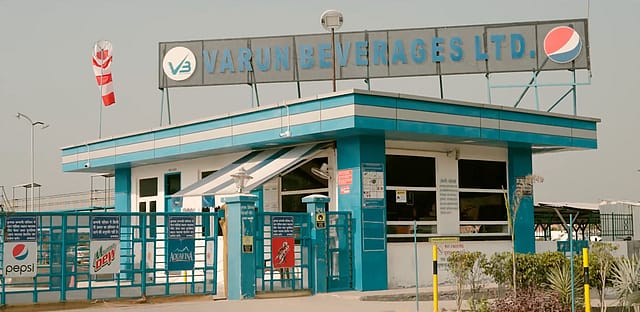
As the West Asia conflict pushes up oil-linked input costs, Varun Beverages will rely less on price hikes and more on discount cuts and operational efficiencies to protect margins next quarter, even as peers may feel sharper pressure.
The PepsiCo bottler said the immediate impact of the geopolitical situation on raw materials remains limited, largely cushioned due to advance stocking. “We normally carry six months inventory in international business. So, our impact will be practically very low, practically zero to a couple of points,” Ravi Jaipuria, chairman – Varun Beverages Limited said in its earnings call, adding, “It gives us an edge over our competition because I don't think competition carries anywhere close to six months.”
That buffer has insulated the company from sudden spikes in packaging costs, especially those linked to crude oil such as PET and other inputs. In international markets, the hit is expected to be negligible to marginal. India, however, could see some pressure in the coming quarter as inventory cover tapers.
However, even long-term, the company expects others “to blink before they do”. Even as aluminium prices are set to surge amid severe supply disruption from major production facilities in the Middle east, aluminium can sales remain less than 2% for Varun Beverages.
“We have tied up a reasonable quantity to more than cover our 2% volumes and maybe a little higher. So, we will be able to get cans. They are slightly more expensive. But then again, as I said, wherever we are finding a large cost up, we are cutting discounts and giving less discounts in the market because the shortage is for everyone,” explained Jaipuria.
Consolidated sales volume rose 16.3% year-on-year to 363.4 million cases in the March quarter, while revenue increased 18.1% to ₹65,742 million. EBITDA grew 21% to ₹15,289 million, showing the company’s ability to absorb cost pressures without significantly impacting profitability.
At the same time, pricing has remained largely stable. In India, realisation per case declined by 1.5% year-on-year, an improvement from the sharper decline seen in the previous quarter. The company attributed this partly to volume-led strategies such as pack upsizing and selective price-point launches, but also to calibrated discounting.
Discounts, not prices, will absorb the shock
Instead of passing on costs through price hikes, the company is adjusting discounts in the market. “We are covering that by reducing our discounts and becoming more efficient and cutting our costs wherever we can,” the chairman said.
This approach is translating into a broader industry trend. With demand holding up and competition intense, companies are wary of raising headline prices. Instead, they are expected to trim trade discounts and promotional spends to offset rising input costs.
“B-brands and other players selling water have not increased the price but they have reduced the discounts. That we are already seeing in the market because the costs are going up. And I feel that will further happen once the gasoline prices go up. So, there will be some pain but I think we are hopefully reasonably covered,” Jaipuria added.
Discounting will remain the first line of defence against margin pressure for the company.
A key reason this will work is the strong demand momentum. “As long as the volumes continue, then there will not be any effect on the bottom line,” the company said, adding that consumption trends remain robust despite inflation concerns.
Beyond packaging materials such as PET, if the war persists and crude hovers around $105–$108 per barrel, transportation costs would be another area of concern. However, the company expects to “be more than able to absorb it and not show any major issue on its P&L” through operational efficiencies and scale benefits.
For now, the focus remains on balancing growth with profitability. “If the demand is there, then we are making sure that overall, our bottom line is not getting affected,” the management said.