
'West Asia conflict has shifted India's EV market from push to pull mode; EV penetration to reach 7-8% in FY27': Tata Motors PV MD Shailesh Chandra
ADVERTISEMENT
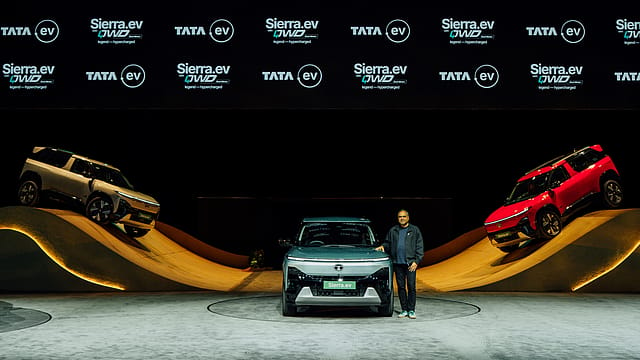
The ongoing conflict in West Asia has emerged as an unexpected catalyst for India's electric vehicle (EV) transition, prompting a noticeable shift in consumer behaviour as concerns over fuel prices and energy security make more buyers consider battery-powered cars, according to Tata Motors Passenger Vehicles Ltd (TMPVL) Managing Director & CEO Shailesh Chandra.
Against this backdrop, the country's largest electric passenger vehicle maker expects EV penetration in the passenger vehicle (PV) industry to rise to 7-8% in FY27 from around 4.5% in FY26, before crossing the 10% mark in FY28.
The company on Tuesday launched the all-electric Sierra.ev at an introductory price between ₹18.79 lakh and ₹24.79 lakh (ex-showroom, India). Bookings opened on Tuesday, while customer deliveries are scheduled to begin from July 15. Tata Motors is positioning the electric SUV in the premium mid-SUV segment, one of the fastest-growing categories in the domestic passenger vehicle market, as it looks to capitalise on rising demand for premium electric offerings.
Geopolitics fuels India's EV adoption
Chandra said the conflict in West Asia has fundamentally changed consumer sentiment towards electric mobility, accelerating a trend that was already being driven by better products, wider charging infrastructure and the entry of more automakers into the segment.
"Around the Middle East crisis, there has been a faster acceptance. If the same customers were reluctant before, say, February 2026, they are now more amenable to considering an EV," he said.
According to Chandra, the industry has moved beyond convincing buyers to adopt EVs.
"The Middle East crisis has shifted the market from a push mode to a pull mode. That has become a force multiplier for an industry that was already growing on the back of strong products and multiple players entering the segment," he said.
He added that rising fuel prices and, in some instances, fears over fuel availability have prompted consumers—particularly those in entry-level passenger vehicle segments, where running costs remain a key purchase consideration—to reassess the economics of owning an electric vehicle.
Industry enters mainstream growth phase
The Tata Motors executive said the domestic EV industry has now crossed the early-adopter stage and is steadily becoming mainstream.
"It is an industry which has transitioned from early adopters to mainstream, and now electric vehicles are becoming more and more mainstream," Chandra said.
He expects passenger vehicle EV penetration to increase to 7-8% during the current fiscal, up sharply from an estimated 4.5% in FY26, with adoption likely to cross 10% in FY28 as product choices expand and consumer confidence strengthens.
Sierra.ev targets premium SUV buyers
Explaining the rationale behind the Sierra.ev launch, Chandra said the vehicle enters the premium mid-SUV category, a segment benefiting from growing consumer preference for premiumisation without moving into luxury price brackets.
He noted that vehicles priced around ₹15 lakh occupy a "sweet spot", sitting just above the industry's median transaction price of around ₹12 lakh while offering a balance of practicality, premium features and accessibility.
On the supply side, Chandra acknowledged that Tata Motors continues to face production constraints due to shortages from certain suppliers, even as customer demand remains ahead of output.
The company is currently producing around 60,000-65,000 passenger vehicles every month and aims to stabilise production at about 70,000 units during the current fiscal. A significant share of the additional capacity, he said, will be earmarked for electric vehicles as the company prepares for the next phase of growth in India's EV market.