
AI adoption may unlock up to $150 bn for manufacturing MSMEs by 2035: PwC-ORF report
ADVERTISEMENT
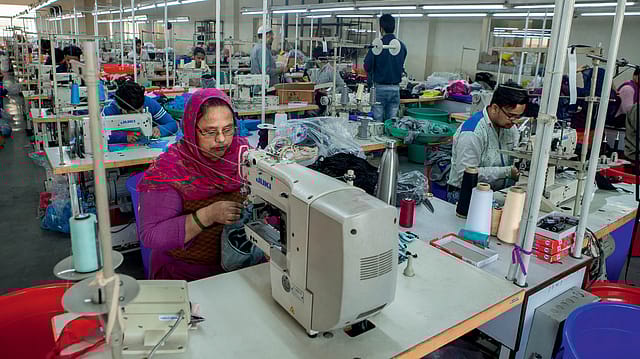
Artificial intelligence (AI) has the potential to contribute $135.6 billion to $149.9 billion to the value creation of India’s manufacturing MSMEs by 2035, according to a report published by PwC India and the Observer Research Foundation.
The report, titled Unlocking the AI Edge for MSMEs, highlighted how AI adoption across shop floors and business processes could significantly boost productivity, competitiveness, and global integration of India’s micro, small and medium enterprises.
According to the report, manufacturing MSMEs currently account for about 35.4% of India’s manufacturing gross value added in FY24 and nearly 48.6% of the country’s exports in FY25, making them a critical component of the industrial ecosystem.
The study notes that wider AI adoption could help MSMEs overcome structural constraints and move up global value chains. Technologies such as predictive maintenance, vision-based quality control, intelligent inventory management, AI-driven credit assessment, and generative design could help firms improve efficiency, enhance product quality, and scale operations.
Researchers estimate that if MSMEs increase their contribution to manufacturing value added to 50% by 2047, while manufacturing expands its share of India’s GDP to 25%, the sector could unlock $3.13–$3.21 trillion in growth opportunities over the next two decades.
“If India succeeds in increasing manufacturing’s share of GDP to 25%, and MSMEs raise their contribution to India’s manufacturing gross value added (GVA) from 35.4% in FY 2023–24 to 50% by 2047, they stand to unlock growth opportunities in the range of $3.13–$3.21 trillion by 2047,” the report highlighted.
“Our analysis, drawing on PwC’s ‘Value in Motion’ research, indicates that AI could contribute between $135.6 billion and $149.9 billion to manufacturing MSMEs’ growth as early as 2035, if they account for 50% of India’s manufacturing value added,” it added.
The report also points out that AI can play multiple roles in transforming MSMEs — acting as a “scaler” by improving productivity and processing speed, an “enricher” by enhancing human decision-making and innovation, and a “reinventor” by reshaping how businesses create and deliver value.
Beyond supply-side benefits, the report highlights emerging demand-side opportunities as well. With NITI Aayog estimating that AI could contribute $1.7 trillion to India’s economy by 2035, the country may require around $500 billion in AI infrastructure investment to realise this potential.
Manufacturing MSMEs could tap into this opportunity by supplying non-tech-intensive components such as harnesses, chambers, cooling equipment, and other equipment needed for AI infrastructure and semiconductor manufacturing, creating a potential demand opportunity of $100–150 billion, the report said.
The findings also build on discussions at the India AI Impact Summit 2026, where Prime Minister Narendra Modi articulated the MANAV vision for AI - a human-centric framework grounded in Moral and ethical systems; Accountable governance; National sovereignty; Accessibility and inclusion; and Verifiable, lawful, and transparent AI.