
Budget 2026: GTRI seeks major revamp of import tariffs and customs administration
ADVERTISEMENT
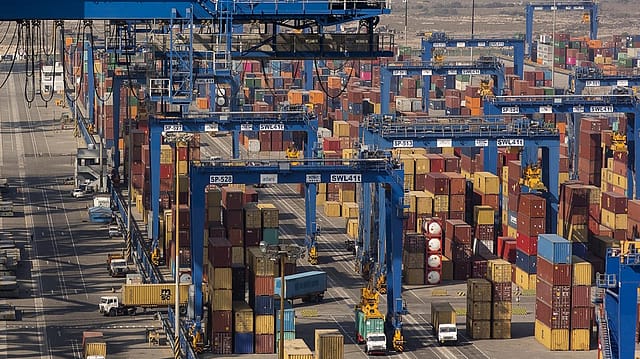
New Delhi-based think tank Global Trade Research Initiative (GTRI) has proposed a sweeping overhaul of India’s import tariff structure and customs administration to cut trade costs, strengthen manufacturing competitiveness and revive export growth.
In a just-released report titled ‘A Blueprint for Modernising India’s Import Tariffs and Customs Regime’, GTRI outlines 23 reforms spanning tariff policy, customs procedures, export incentives and manpower deployment. Taken together, the measures are meant to transform customs from a control-oriented system into a growth-enabling institution aligned with India’s broader manufacturing and supply-chain ambitions, the authors Ajay Srivastava, GTRI founder, and Satish Reddy, a former Indian Revenue Service officer of customs and indirect taxes, say.
A key recommendation is a call to rationalise India’s import tariffs, which the report argues have lost relevance as a revenue instrument while continuing to distort production decisions. Customs duties now account for just 6% of gross tax revenue and average only 3.9% of the value of imports, according to GTRI.
Stating that the distribution of tariff revenue is highly skewed—with nearly 90% of import value concentrated in fewer than 10% of tariff lines, while the bottom 60% of tariff lines generate under 3% of customs revenue—GTRI recommends moving towards zero duty on most industrial raw materials and key intermediates, while adopting a low, standard duty—around 5%—on finished industrial goods over the next three years. It also calls for eliminating inverted duty structures, where inputs are taxed more heavily than finished products, quietly eroding domestic manufacturing competitiveness.
The report says tariff reform should be based on total import duty, not just headline basic customs duty, as importers face a cumulative burden of cesses, surcharges and trade remedies, making the effective tariff far more complex than official rate schedules suggest.
Beyond tariffs, the report takes aim at what it describes as a labyrinthine system of customs notifications, many of which amend decades-old rules and are not self-contained. Traders must navigate hundreds of overlapping notifications to determine applicable duties, often without clear HS-code references.
GTRI urges the government to issue self-contained notifications that clearly state their full impact, and to publish all applicable import duties in a single, unified online schedule. It also calls for greater transparency around the renewal of time-bound duty exemptions, including brief public explanations of why they remain necessary.
On the operational side, the report focuses heavily on restoring trust in risk-based clearance. It recommends making Direct Port Delivery the default for shipments cleared by the Risk Management System, rather than diverting cargo to container freight stations, which add cost and delays.
Risk-based clearance decisions, the report says, should be binding in normal cases, with any overrides recorded in writing and made auditable. It also proposes mandatory CCTV recording of inspections, greater reliance on structured data instead of document uploads, and extending risk management to all border agencies, including plant quarantine and food safety authorities.
The report notes that with India’s merchandise trade crossing $1.16 trillion and nearly 29% of gross domestic product flowing through customs clearances, even modest inefficiencies impose economy-wide costs—raising input prices, delaying shipments and weakening export competitiveness.
Finance Minister Nirmala Sitharaman’s December commitment to overhaul customs procedures has created a rare policy opening, the report says, but warns that piecemeal changes will not be enough.