
Budget session kick starts as India Inc. looks to growth, capex and tax signals
ADVERTISEMENT
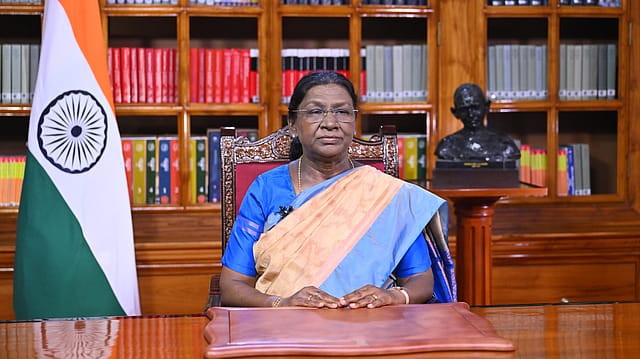
India’s Annual Budget cycle for 2026 formally began on Tuesday with President Droupadi Murmu’s address to a joint sitting of Parliament, marking the opening of the Budget Session and setting the stage for a series of fiscal and economic announcements critical to business planning and investment sentiment in the year ahead.
The Budget Session will continue until 2 April 2026 and will be conducted in two phases, with the first running from 28 January to 13 February and the second from 9 March to 2 April. The government is scheduled to table the Economic Survey on 29 January, followed by the presentation of the Union Budget for 2026–27 on 1 February this year.
Social security expansion and consumption stability
In her address, the President also referred to the widening reach of social security schemes, noting that a large proportion of the population is now covered under various government-backed programmes. From an economic perspective, broader social protection is increasingly viewed as a buffer for household consumption, particularly at the lower end of the income spectrum.
Economists note that wider coverage can stabilise spending patterns during periods of uncertainty, supporting demand for consumer goods, housing, and basic financial products, with indirect benefits for sectors such as FMCG, retail, microfinance and affordable housing.
Fiscal priorities and capex focus
The address set the tone for discussions on fiscal management, government spending and taxation, themes that will dominate the Union Budget. Public capital expenditure has been a central growth driver in recent years, with central government capex more than doubling since FY21, boosting infrastructure, construction, manufacturing and allied sectors.
Markets will watch closely whether this momentum is sustained in FY27, even as the government continues its medium-term fiscal consolidation after steadily narrowing the deficit from pandemic-era peaks.
Economic survey to frame growth and risk assessment
The Economic Survey will provide the first official assessment of macroeconomic conditions, including growth trends, inflation, fiscal metrics and external sector dynamics. India remains one of the fastest-growing major economies globally, with GDP growth projected at 6.5–7%, supported by steady domestic consumption, public investment, and gradual recovery in private capital expenditure.
Implications for corporate India
Corporate India will monitor signals on tax stability, sector-specific incentives, infrastructure and logistics spending, and policy support for manufacturing, energy transition, and digital infrastructure. Budget measures on asset monetisation, disinvestment, and public-private partnerships will also be key for capital formation and investment flows.