
Coal gasification can save India ₹60,000–90,000 crore per year in import substitution
ADVERTISEMENT
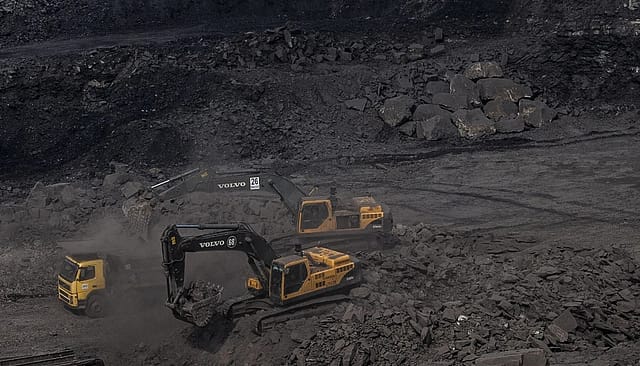
India’s target of achieving 100 million tonnes of coal gasification capacity by 2030, with a total investment of over ₹85,000 crore, is gaining momentum as numerous projects are set to move from the blueprint stage to construction. The mission has the potential to create a low-carbon chemicals and fertiliser economy for India worth ₹60,000–90,000 crore per year through import substitution, Atanu Mukherjee, CEO of US-based new energy expert firm Dastur Energy, told Fortune India.
Coal gasification is a process that converts solid coal into a synthetic gas called syngas, which is a mixture of carbon monoxide, hydrogen, carbon dioxide, and methane. This is achieved by reacting coal at high temperatures with a controlled amount of oxygen and steam, rather than complete combustion. Syngas can then be used to produce electricity, liquid fuels such as gasoline and diesel, and chemicals like fertilisers, methane, and ammonia.
The initiative is part of the country’s broader strategy to enhance energy independence and maximise the utility of its abundant coal reserves, besides reducing India’s heavy reliance on imported commodities such as oil, methanol, and ammonia. India imports approximately 83% of its oil, over 90% of its methanol, and 13% of its ammonia requirements.
Projects coming up
Two projects, out of seven gasification projects under construction, will start soon in the country, Minister of State for Coal Satish Chandra Dubey recently said in the Lok Sabha.
Bharat Coal Gasification & Chemicals Limited (BCGCL), a joint venture of Coal India (CIL) and Bharat Heavy Electricals Limited (BHEL), is building India’s first indigenous coal-to-chemical plant at Lakhanpur, Odisha, using surface coal gasification (SCG) to produce about 2,000 tonnes of ammonium nitrate per annum.
A CIL and GAIL Ltd joint venture is setting up a project in Sonepur Bazari, West Bengal, with a capacity to produce 1.83 MMSMD of synthetic natural gas (SNG), at a cost of over ₹13,000 crore. Both projects are expected to be commissioned in FY29.
Similarly, a CIL–Steel Authority of India (SAIL) joint venture at Durgapur in West Bengal is targeting syngas production to support direct reduced iron (DRI) in steelmaking. NLC India Ltd is also planning to develop lignite-to-methanol projects. Reports say NTPC Ltd is also planning to enter the coal gasification business for power and chemicals.
The government, in January 2024, launched a financial incentive scheme with an outlay of ₹8,500 crore to provide viability gap funding (VGF) to promote coal and lignite gasification projects for public sector undertakings and the private sector across three categories. Jindal Steel and Power Limited, New Era Cleantech Solution, and Greta Energy have been selected from the private sector.
Jindal Steel and Power (JSPL, now Jindal Steel) operates coal gasification plants in Angul, Odisha, which are claimed to be the first in the world to use coal-based syngas for DRI production in a steel plant, reducing costs and environmental impact compared to natural gas. New Era Cleantech Solution Private Limited is setting up a 5-MTPA coal gasification project in Chandrapur, Maharashtra.
A time-tested technology
Coal gasification is not a new technology. During World War II, Germany used coal gasification to make fuels such as petrol, diesel, and kerosene using the Fischer–Tropsch process.
Globally, coal gasification gained traction in the United States after the Arab oil embargo in the 1980s, when the country faced shortages of oil and gas. Large projects such as the Wabash River project produced power, while others produced ammonia and chemicals using petcoke and coal. The Coffeyville project in the US has been operating for about 30 years, producing ammonia. The Dakota Gasification Company has been operational since 1985, producing various chemicals from gasified coal.
Many coal gasification plants shut down after 2007, when the shale gas revolution dramatically increased the availability of low-cost natural gas in the United States. Once natural gas became abundant and cheap, coal gasification lost economic competitiveness in the US.
South Africa began coal gasification around 1955, when it faced apartheid-related embargoes on fuel imports. It relied heavily on coal gasification to produce gasoline, diesel, and chemical derivatives. To this day, South Africa hosts one of the largest gasification complexes in the world. Another major global example is Saudi Arabia, whose large-scale gasification facilities, built since 2012, form part of its industrial ecosystem.
China — leader in coal gasification
The largest gasification footprint in the world today is in China. Every year, China gasifies around 340–350 million tonnes of coal, converting it into methanol, ammonia, hydrogen, synthetic natural gas, and a range of chemical derivatives. From methanol, China produces olefins, plastic products, and other petrochemicals.
“The success of gasification depends on economics, geography, resource endowments, and geopolitical context. That is why China — which, like India, does not have abundant oil or natural gas — has become the world’s largest gasifier,” says Mukherjee.
He says that for a 2-million-tonne-per-annum coal gasification facility, capital investment — if executed correctly with the right technology and scale — could be around ₹600 crore, or broadly between ₹600 crore and ₹2,000 crore depending on configuration. However, the same facility built using the wrong technology could cost ₹1,500 crore or more.
“The economic range is very wide, and it depends entirely on technology selection, scale of deployment, and the type of coal used,” he says, noting that Indian coal, with its higher ash content, differs significantly from US or South African coal.
A technology that works well for US coal will, in all likelihood, not work for Indian coal. Similarly, the technology ecosystem that China developed over 15 years beginning around 2000 cannot simply be transplanted into India. Indian coal requires gasification technologies that do not melt ash, such as fluidised-bed gasifiers operating in a dry-ash regime, or moving-bed, dry-ash, non-slagging gasifiers, Mukherjee says.