
Considerable downside likely to FY27 GDP growth forecast of 7%-7.4% due to West Asian crisis: CEA Nageswaran
ADVERTISEMENT
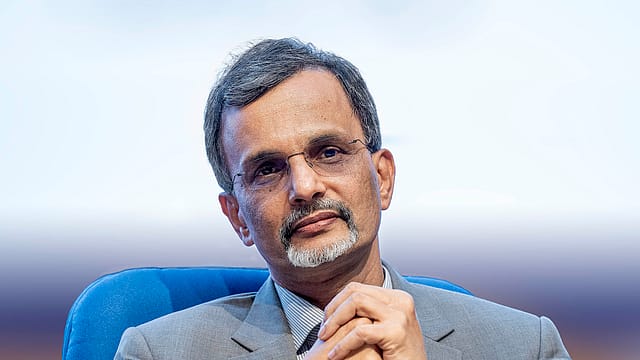
Chief Economic Advisor V. Anantha Nageswaran today said there will be a "considerable downside" to the GDP growth projection of 7% -7.4% for FY27 due to the crisis in West Asia.
"On the 27th February, we upgraded India’s growth estimate (at constant prices) for FY27 to a range of 7.0 per cent to 7.4 per cent. Clearly, there is considerable downside to this number," Nageswaran said in the monthly economic review report for March, issued today by ministry of finance.
"Data for March will not reveal much, since businesses are trying to meet full-year targets for FY26. High-frequency data for April and possibly May may give us a better handle on the likely growth rate for the new financial year," it added.
"Similarly, the current account deficit too will widen significantly in FY27. At the same time, in the current and the preceding financial years, net capital flows to India have been sharply lower, although gross foreign direct investment flows have remained steady," the report said.
"Continued efforts to lower manufacturing costs — such as reducing tariffs on industrial power, allowing employers and employees to agree on averaging labour hours over a quarter or half year and reducing overtime rates — will further enhance India’s already-strong attractiveness as an investment destination, given its market size," it said.
The report called for more reform measures in the current situation." In the current circumstances, credible assurances of tax policy certainty, stability and continuity will matter more than ever," it said.
"Given the considerable impact of the conflict on India’s economy, we should leverage the fallout to redouble our recent reform efforts to enhance India’s competitiveness and preparedness," it added.
The report said the impact will be four pronged. "The impact of the conflict on India will be felt through four channels: (a)
supply disruptions to oil, gas and fertilisers and more importantly, to exports as well, (b) higher import prices, (c) higher logistics costs (e.g., freight and insurance) and (d) a possible decline in remittances by Indians in the Gulf countries. (The slowdown in exports to Gulf countries may not be particularly consequential for overall exports.)," the ministry said in the report.
"The combined impact across the four channels on growth, inflation, the fiscal balance, and external balances is likely to be significant," it said.
"India will need to provide immediate relief to the most affected and vulnerable businesses and households, and at the same time, generate fiscal space to meet strategic and long-term needs that this conflict has underscored, such as the need to build long-term buffers in several commodities and materials, not just energy-related ones."
" This calls for re-prioritisation of spending and targeted relief for the most affected and vulnerable businesses and households," it said.