
Economic Survey 2026: Why India’s concert economy is finally on the policy radar
ADVERTISEMENT
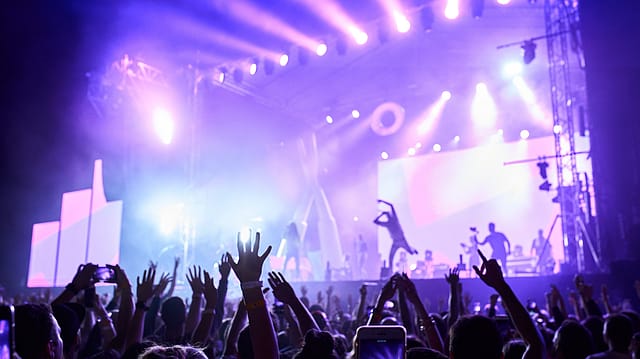
Live concerts and large-scale entertainment events are no longer being viewed merely as cultural indulgences. In the Economic Survey 2025-26, the government has formally repositioned live entertainment as part of the “orange economy”—a services-led growth segment driven by creativity, culture, and intellectual property, with the potential to generate significant urban economic spillovers.
The survey marks one of the clearest policy acknowledgements yet of concerts, festivals, and live shows as economic multipliers, feeding into tourism, hospitality, transport, logistics, advertising, and local services. The shift comes as India’s services sector continues to anchor growth amid global uncertainty, contributing more than half of the country’s gross value added.
A fast-growing segment
According to the survey, India’s live entertainment segment crossed ₹10,000 crore in revenue in 2024, rebounding strongly after the pandemic. The segment forms part of the broader media and entertainment industry, estimated at around ₹2.5 lakh crore, which has been undergoing a structural shift towards digital platforms and experience-led consumption.
Globally, live music accounts for roughly one-third of total music revenues. In the U.S., the live entertainment industry generated over $130 billion and supported more than 900,000 jobs in 2019. In the U.K., music tourism alone contributed £6.6 billion to the economy in 2022—about 0.3% of GDP—illustrating the sector’s spillover effects on hospitality, transport, and retail.
The survey notes that such events are labour-intensive and create employment across a wide value chain, including event operations, security, logistics, hospitality, and media production, particularly benefiting young workers and creative professionals.
Demand exists, governance lags
India’s demand-side fundamentals—its young population, rising incomes, and expanding digital ticketing platforms—are supportive of a scaled-up concert economy. However, the survey flags structural bottlenecks that continue to constrain growth.
Organising a live event in India can require anywhere between 10 and 15 separate approvals, cutting across multiple authorities at the central, state, and city levels. These include permissions related to law and order, municipal bodies, fire safety, excise regulations, and local administration. In addition, restrictions on foreign exchange payments and visa approvals for international artists add further friction.
To address this, the Ministry of Information and Broadcasting is working on a single window mechanism for live entertainment permissions, aimed at reducing approval timelines and improving coordination with state governments. The initiative is intended to address one of the industry’s most persistent pain points: regulatory fragmentation.
Further, the lack of purpose-built, world-class live event venues in major cities remains another constraint, limiting India’s ability to host large international acts and multi-day festivals at scale. International experience, the survey notes, shows that the economic gains from live entertainment depend heavily on urban readiness—streamlined permissions, predictable regulations, efficient crowd management, last-mile connectivity, and coordination across city authorities and tourism bodies.
The survey also points to policy options under consideration, including opening up heritage monuments for curated live events and easing visa and foreign exchange permissions for foreign performers. These measures, if implemented, would mark a shift from a control-heavy framework to a facilitative approach.
Urban growth lever
Concerts and festivals, the survey argues, act as short-duration tourism demand amplifiers, boosting hotel occupancy, restaurant revenues, transport usage, and local services within a concentrated time frame.
As Indian cities look for new growth engines beyond construction and real estate, live entertainment offers a services-intensive alternative that can strengthen tourism, enhance city branding and support night-time urban economies.