
Economy Outlook 2026: Centre’s macro reforms bandwagon to continue to roll, base year changes a key event to watch
ADVERTISEMENT
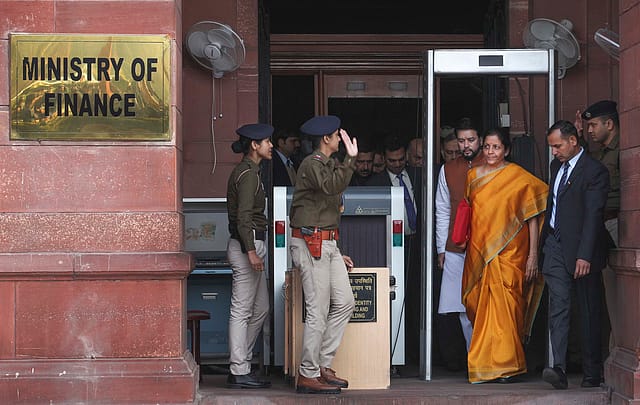
As 2025 draws to an end, it won’t be an exaggeration to call it a year of macro-economic reforms, which have eventually propelled GDP growth over 8%, even amidst colossal external challenges throughout the year. Coming on the heels of the mega GST cuts, a sub -one percent retail inflation has only helped the domestic economy boosting consumption, while at the same time providing space for monetary easing.
As the year began, concerns regarding high inflation-especially food prices and tepid consumption, were the key policy discourses. And as the year progressed, it was nothing less than a whirlwind with the US imposing 50% penal tariffs on India for Russian oil purchase, H1B restrictions and ultimately the Russian sanctions, which completely dried up the concessional oil pipeline from Kremlin.
Going into the next year, at least four major events in the economy will unfold early on and will have to be watched out for – continued monetary policy support to growth, revision of base year for GDP calculation, continued reforms, and the possible finalisation of the US-India trade deal.
Monetary Policy Support
Firstly, given the benign inflation, RBI will have more elbow room for monetary policy maneuverability and support to growth. RBI has hinted at it, as per the minutes of the monetary policy committee meeting held between December 3 and December 5.
“The MPC noted that headline inflation has eased significantly and is likely to be softer than the earlier projections, primarily on account of the exceptionally benign food prices. Reflecting these favourable conditions, the projections for average headline inflation in 2025-26 and Q1, 2026-27 have been further revised downwards,” the MPC minutes noted.
“Core inflation, which had been rising steadily since Q1:2024-25, eased at the margin in Q2:2025-26 and is expected to remain anchored in the period ahead. Both headline and core inflation are expected to be around the 4 per cent target during the first half of 2026-27. The underlying inflation pressures are even lower as the impact of increase in price of precious metals is about 50 bps. Growth, while remaining resilient, is expected to soften somewhat,” it added.
“Thus, the growth-inflation balance, especially the benign inflation outlook on both headline and core, continues to provide the policy space to support the growth momentum. Accordingly, the MPC unanimously voted to reduce the policy repo rate by 25 bps to 5.25 per cent. The MPC also decided to continue with the neutral stance,” the
GDP Base Revision
Secondly, another key macro event in 2026 will be a major shake-up in the calculation of the GDP, retail inflation, and IIP numbers as the base year will change. Ministry of statistics and programme implementation has held several stakeholders’ meetings on this, with recent one in Delhi on December 23.
“New series of National Accounts and IIP with FY 2022-23 as base year are scheduled to be released on 27th February, 2026 and 28th May, 2026 respectively, whereas the new series of CPI with base year 2024 is scheduled to be released 12th February, 2026, the statistics ministry said after a pre-release consultative workshop on the base revision of GDP, CPI and IIP on 23rd December in New Delhi.
Data accuracy is one of the key factors the entire exercise is focused on. “Measuring informal sector is relatively more challenging. However, a methodology which is transparent, enables generation of consistent estimates over a period of time and helps capture real picture of economy can be considered as a reasonably sound methodology,” said Chief economic advisor V. Anantha Nageswaran in his address during the meeting.
Tracking e-commerce platforms
The new GDP and IIP series with base of year of 2022-23, and CPI inflation series with 2024 as the base year, are likely to see significant improvements in data collection over the current methodology. New inflation series is likely to track prices of items on e-commerce platforms for the purpose of ascertaining inflation data, as per indications from the ministry of statistics.
“In the proposed changes in CPI, MoSPI highlighted the enhancement in coverage in terms of markets, towns and items, adoption of Classification of Individual Consumption by Purpose (COICOP) 2018, refinement in methodology of index compilation, inclusion of new data sources including administrative and online data, use of latest technology and more granular data dissemination,” the ministry said earlier.
Global Benchmarks
Adoption of Classification of Individual Consumption by Purpose (COICOP) 2018 – an international framework for classifying household consumption – for purpose inflation calculation in the new series is a very significant step as it will facilitate global comparison of consumption, living standards and price movements. COICOP was issued by the Department of Economic and Social Affairs of the United Nations in 2018.
For GDP calculation, GST data will be explored for corroborating frame of private corporations and regional allocation of GVA across industries, the ministry said. “GVA estimates of the unincorporated sector will be compiled using industry-wise productivity information from Annual Survey of Unincorporated Sector Enterprises (ASUSE) and corresponding workforce estimates from Periodic Labour Force Survey (PLFS),” the release said.
IBC 2.0 and US Trade Deal
Apart from the new GDP series, some of the ongoing reforms which are likely to fructify next year are amendments to the Insolvency Code for which the centre tabled The Insolvency And Bankruptcy Code (Amendment) Bill, 2025 in the monsoon session of the parliament and referred it to a select committee.
The Select of the Parliament presented the report on the Bill on December 17. The Committee has proposed fixing a three month time limit for the National Company Law Tribunal to decide the insolvency appeals.
On the free trade agreement front, this year has been quite eventful with India finalizing the key agreements with UK, Oman and New Zealand. The US bilateral trade agreement too is under works, despite the disruptions faced earlier this year.
Earlier this month a USTR delegation visited New Delhi and held "productive exchanges" on economic ties and mutually-beneficial trade deal, according to sources in the ministry of commerce. "The delegation led by Deputy US Trade Representative Ambassador Rick Switzer, visited India from December 9-11, 2025. The visit was Ambassador Switzer’s first to India after assuming his current office," sources pointed out.
"During the visit, Ambassador Switzer met with Commerce and Industries Minister Piyush Goyal, Commerce Secretary Rajesh Agrawal, and other senior Indian officials," sources said.
"The visit served as an opportunity for both sides to have productive exchanges on a wide gamut of items related to India-US trade and economic ties, including the ongoing negotiations for a mutually beneficial India-US Bilateral Trade Agreement," sources said about the visit.
"Both sides agreed to continue the current purposeful and positive engagements," they pointed out.