
Govt attempts to soothe raw nerves as concerns persist on VB-G RAM G Act
ADVERTISEMENT
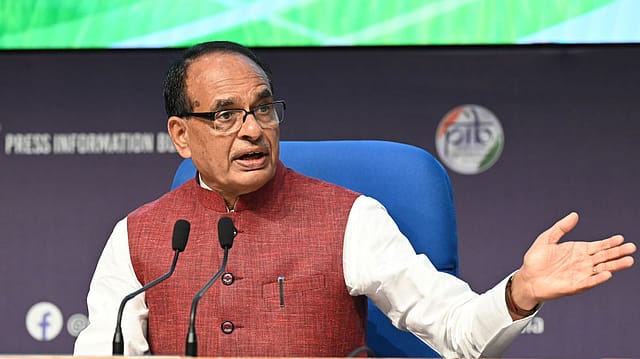
Parliament approved the VB-G RAM G Bill on December 18, replacing the Mahatma Gandhi National Rural Employment Guarantee Act (MGNREGA) of 2005. In his address to Parliament, Union Rural Development Minister Shivraj Singh Chouhan said that the Bill is a “progressive step” and “pro-poor”.
Later, Chouhan even went on to say that rumours are being spread about the provisions of the Act. However, experts seem to disagree with the government’s claims about the new Bill. They suggest that the government needs to revisit the structure of the scheme. In their view, the new Bill compromises employment guarantees to the poor, a point that Chouhan has rebutted in an article published today.
“The Act retains the statutory and justifiable character of the employment guarantee and its enforceability. Far from being curtailed, the entitlement has been expanded from 100 to 125 days,” Chouhan said in the article.
Changes and their implications
However, while the new Act has positively increased the guaranteed workdays, other aspects of the Bill have come under criticism. According to Aruna Sharma, former secretary to the Government of India, the clause making the Bill a centrally-sponsored one is a concern, as it may make the employment guarantee subject to availability of funds in the hands of the states.
“This effectively caps employment and does not adhere to the spirit of the right to work, as work may be provided only if funds are available,” she said. Under the MGNREGA scheme, it was a demand-driven right. For example, if a household asked for work, the law said work must be provided or an unemployment allowance paid.
Chouhan has tried to address this concern as well in the article. “Demand for work continues to originate from workers. What changes is that demand is no longer addressed only after the distress has set in. By anchoring execution in advance, participatory village-level planning, the reform ensures that when workers seek employment, work is actually available rather than denied due to administrative unpreparedness,” Chouhan said in the article.
That said provisions have also been made for unemployment allowance in the Act. “If an applicant for employment under the Scheme is not provided such employment within fifteen days of receipt of his application seeking employment or from the date on which the employment has been sought in the case of an advance application, whichever is later, he shall be entitled to a daily unemployment allowance in accordance with the provision of this section,” the Act says.
Under MGNREGA, local gram panchayats and communities had the power to identify work based on their needs. The works covered a variety of categories such as water conservation, irrigation, land development, and flood control. However, under the new bill, the four focus areas of work will be water security, core rural infrastructure, livelihood assets, and climate resilience, and all the power will rest with the Centre.
“The new scheme’s shift to only select areas and kinds of work, and its centralisation, has removed local need identification and universal application,” Sharma said.
Notably, the VB RAM G Bill also includes a provision to pause work for up to 60 days during peak agricultural sowing and harvest seasons. According to the government, this is intended to ensure labour availability for farming. However, experts say it may reduce wages during the agricultural season due to lower competition.
“The closure of execution by the Centre during the agricultural season dilutes workers’ bargaining power for better wages, as the old scheme helped raise agricultural wages,” Sharma added.
Now states to pay upto 40%
Under MGNREGA, the Centre paid 100% of the wages and a large share of material costs, while states contributed smaller shares for materials and administrative costs. The VB RAM G Bill now introduces a Centre–State cost-sharing model in which the states’ share has increased to up to 40%.
“The most worrisome aspect of the new scenario is not just the increase in the state contribution to 40%, which was earlier only 10% of material costs. This will put an additional burden on state resources. States with fewer resources will fail to provide this 40%, leading to delays in wage payments or no work at all,” Sharma explained.