
India-EU FTA to unlock $4-4.5 bn export potential for India’s RMG sector: CareEdge
ADVERTISEMENT
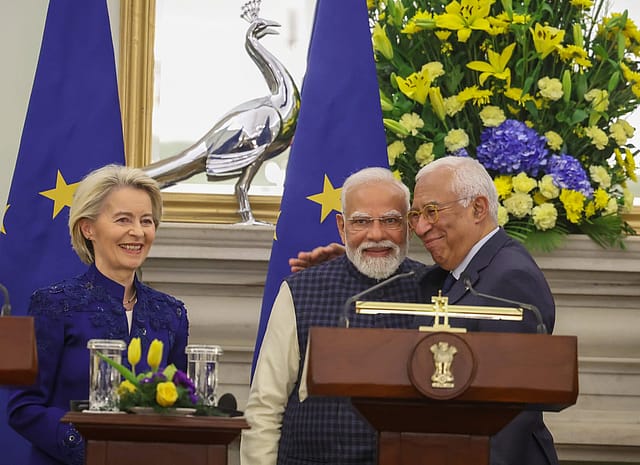
The proposed India-European Union Free Trade Agreement (FTA) could unlock an incremental annual export opportunity of $4-4.5 billion for India’s ready-made garment (RMG) sector over the medium term, as the country stands to gain a significant tariff advantage in the world’s largest apparel market, according to the latest report by CareEdge Ratings.
The European Union, the world’s biggest RMG importer, accounted for nearly $84 billion of apparel imports in CY24, excluding intra-EU trade, and is expected to expand to about $105 billion shortly, having already reached $94 billion in 11M CY25.

India, which has historically faced a relative tariff disadvantage in the EU market, currently exports $4.5-5 billion worth of garments to the EU, holding a market share of around 5%. It faces a tariff disadvantage against key competitors such as Bangladesh, Turkey, Vietnam, Pakistan and Cambodia, which enjoy duty-free access.
India’s competitiveness in the EU market has been further impacted following the suspension of Generalised Scheme of Preferences (GSP) benefits from January 1, 2026, which raised duties on Indian apparel exports to the EU from 9.6% to 12%.
“This has widened the existing tariff gap with duty-free competitors and made the India–EU FTA both timely and essential,” CareEdge Ratings said.
In contrast, China, which continues to hold the largest share of nearly 30% in the EU’s RMG imports, faces a 12% most-favoured nation (MFN) tariff, but remains competitive due to scale, productivity and strong capabilities in man-made fibres (MMF).
India to gain duty edge over China
CareEdge noted that once the India-EU FTA is fully implemented by 2027, India will gain a 12% duty advantage over China, creating a level playing field with other major exporting nations and significantly improving India’s price competitiveness.
“India is expected to gradually increase its market share in the EU’s RMG imports from 5% to 8-9% over the medium term,” the report said, translating into incremental annual exports of $4-4.5 billion.
The agreement has been dubbed the “Mother of All Trade Deals”, given the scale of opportunity it opens up in the EU, the single largest apparel market globally.
Global sourcing shifts favour India
CareEdge highlighted that global apparel brands and retailers are increasingly adopting a ‘China Plus One’ sourcing strategy, which is likely to erode China’s dominance in the EU market. In addition, socio-political uncertainties in Bangladesh, a major duty-free supplier to the EU, could prompt brands to diversify sourcing, benefiting India among other alternatives.
Vietnam’s experience under its FTA with the EU offers a useful parallel. Following the Vietnam–EU FTA, which came into effect in August 2020, Vietnam’s share in EU RMG imports rose from 3.9% in CY20 to 4.84% in 11M CY25, although gains were capped by limited backward integration and the EU’s ‘fabric-forward’ rule.
Capacity expansion key to capturing opportunity
CareEdge cautioned that to fully capitalise on the opportunity created by duty removal, Indian manufacturers will need to expand capacities and strengthen supply-chain integration.
India’s competitiveness is expected to be supported by favourable domestic policy measures, including the PM Mega Integrated Textile Region and Apparel (PM MITRA) parks, the Production Linked Incentive (PLI) scheme, and the removal of the Quality Control Order (QCO) on polyester yarn, which should help lower input costs.
Export outlook despite U.S. tariff headwinds
Commenting on the broader export outlook, Krunal Modi, Director at CareEdge Ratings, said India’s RMG exports showed resilience despite tariff headwinds in the US market.
“India’s RMG exports grew by around 4% in CY25 to $16.26 billion despite the imposition of a 50% US tariff, largely due to front-loading of orders and geographical diversification,” Modi said.
He added that while exports to the US could decline by 10–15% in CY26 if tariffs persist, overall RMG exports may fall only marginally by about 5%, supported by diversification into newer markets and benefits from trade agreements such as the India-UK FTA.
He further said that India is expected to surpass RMG exports of $20 billion in CY27 even if elevated US tariffs are sustained, as benefits kick in from various bilateral trade deals with the UAE, Australia, the European Free Trade Association (EFTA), the UK, Oman, New Zealand and the EU.
Long-term growth prospects
According to Ranjan Sharma, Senior Director at CareEdge Ratings, India is well positioned for sustained growth in the EU market.
“With a 12% duty advantage over China post implementation of the India–EU FTA, a level playing field with other competing nations, and uncertainties in Bangladesh, India can gradually increase its market share in the EU’s RMG market to 8–9%,” Sharma said.
“The India–EU FTA is expected to unlock nearly $4–4.5 billion of incremental annual export opportunities for the RMG sector and act as a catalyst for large-scale investments across the textile value chain, generating employment, particularly for women, and enhancing foreign exchange earnings for the country,” he added.