
India ‘riding the reform express’: FM Nirmala Sitharaman pitches trust-based tax regime, MSME push in Finance Bill 2026
ADVERTISEMENT
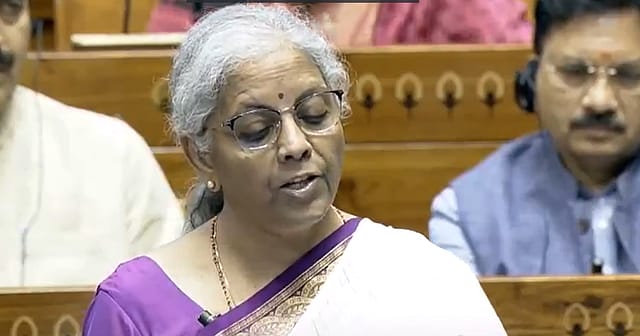
Finance Minister Nirmala Sitharaman on Wednesday asserted that India’s economic policy framework is being driven by conviction-led reforms, as she defended the Finance Bill 2026 in the Lok Sabha, positioning it as a continuation of structural changes aimed at boosting growth, investment and employment.
Replying to the debate, Sitharaman said, “Reform is not happening out of compulsion, but out of conviction, with clarity, confidence and commitment. India is riding on the reform express under the leadership of Prime Minister Narendra Modi.” The remarks come at a time when the government is seeking to sustain growth momentum while balancing fiscal consolidation and private investment revival.
Here statement comes close on the heels of Lok Sabha introducing the Corporate Laws (Amendment) Bill.
Trust-based tax regime takes centre stage
A key plank of the Finance Bill is the continued shift towards a trust-based tax administration. Sitharaman highlighted that efforts are underway to reduce friction for compliant taxpayers, signalling a policy pivot from enforcement-heavy systems to facilitation-led governance.
“There is a trust-based tax administration that is being improved by reducing unnecessary hardship for honest taxpayers,” she said, underlining measures aimed at simplifying procedures and lowering litigation risks. The approach is expected to improve voluntary compliance and widen the tax base over the medium term, a critical lever for sustaining revenue buoyancy.
MSMEs, farmers and cooperatives in policy focus
The Finance Minister reiterated that micro, small and medium enterprises (MSMEs), along with farmers and cooperatives, remain central to the government’s economic strategy, particularly in driving employment and production.
“The government has taken various steps to empower MSMEs, farmers, and cooperatives because they are at the heart of creation of employment… and for the overall development of India,” Sitharaman said. The Finance Bill, she added, seeks to enhance liquidity support while reducing compliance burdens, enabling these segments to scale operations and contribute more meaningfully to GDP.
Policy support for MSMEs assumes significance as the sector accounts for nearly 30% of India’s GDP and over 45% of exports, making it a critical engine for inclusive growth.
Customs reforms to boost trade facilitation
Sitharaman also flagged a set of customs-related changes embedded in the Bill, aimed at streamlining trade processes and improving ease of doing business. “Customs reforms have been proposed by altering many provisions with the objective to promote trade facilitation,” she said.
According to her, these changes are expected to reduce transaction costs for exporters and importers, align procedures with global best practices, and support India’s ambitions of integrating deeper into global value chains. (With inputs from PTI)