
Iran war impact: Economists call for MSME support, dollar purchase incentives, credit to vulnerable sections as govt draws war relief package
ADVERTISEMENT
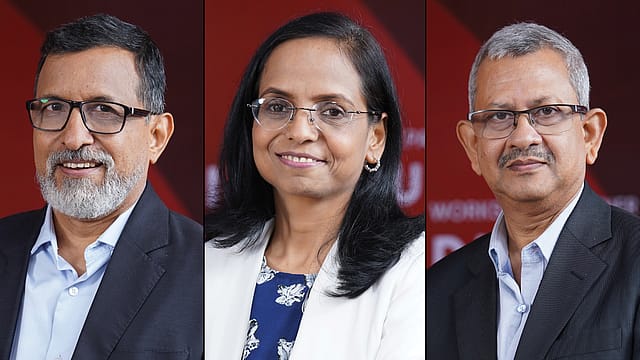
The West Asia crisis has come up as a challenge for the Indian economy with possibility of subdued growth, high inflation, tight monetary policy and an overall supply chain distress. Even as finance minister Nirmala Sitharaman has suggested that the government is working on measures to hand hold the businesses and industries suffering in the wake of the crisis, economists suggest a slew of measures that could be taken to tide over the crisis.
The measures include sourcing energy needs from alternative sources, handholding the MSMEs, credit flows to the vulnerable segments, incentives to the institutions to incentivize dollar purchase and overall policy agility in the short term, while taking measures for energy and food security in the long term.
“In the short term, energy procurement from alternative global sources needs to be looked at so that it eases the supply pressures domestically. We also need to see how the MSMEs are performing because MSMEs are the ones who work on a very short inventory cycle. And they would have been the very first ones to have been impacted by the higher commodity prices,” said Indranil Pan, chief economist, Yes Bank.
“So, credit flow to the MSME segment needs to be carefully understood and analysed and the micro small and medium segment needs to be ring fenced. These are some of the micro issues the government needs to take care of the immediate run,” Pan told fortune India.
Economist Anubhuti Sahay, head of India economics research at Standard Chartered is also of the view that the policy makers have certain options to wade through the current crisis due to the Middle East war.
“There can be range of measures that the government and the RBI can take whether it is about increasing oil prices or incentivising companies and banks to raise Dollar from abroad by reducing witholding tax or subsidising certain part of the cost gap between Dollar rate and India rate,” said Sahay.
Policy agility is one of the aspects on which the economist stressed on. “We live in a geopolitically fragmented but economically very integrated world. And we are seeing since the pandemic that the shocks have been rising in frequency. So, in this environment, there are a couple of things policy makers need to keep in mind.
Number one policy agility becomes very important. How quickly you respond to the issues become quite critical,” Dharmakirti Joshi, chief economist, Crisil told Fortune India.
For the longer term, the economists said India needs to think in terms of energy and food security. “For the longer term, I think, energy security and food security are very important and there has to be much greater R&D spend out of the budget. The share of the R&D has to be greater to ring fence the economy from future global shocks,” Pan said.
“The current crisis has brought back the energy security issue into the forefront. And here we will have to rethink the entire energy security playbook. How are we going to reduce our import dependence and shore up domestic production? Then, it has also brought up the issue of food security,” said Joshi.
“We believe the Indian economy will come out of the crisis quite successfully very similar to the way it happened during the Russia Ukraine war,” said Sahay adding that the core challenges for the country remain sourcing investments. “The core challenges remain, and that includes bringing back the FDI flow to $30 - $40 billion on an annual basis, from almost negligible at this particular juncture, securing energy supply. That is extremely important,” she said.