
Jonnagiri mine begins production, India’s only large private gold project targets nearly 1 tonne annual output
ADVERTISEMENT
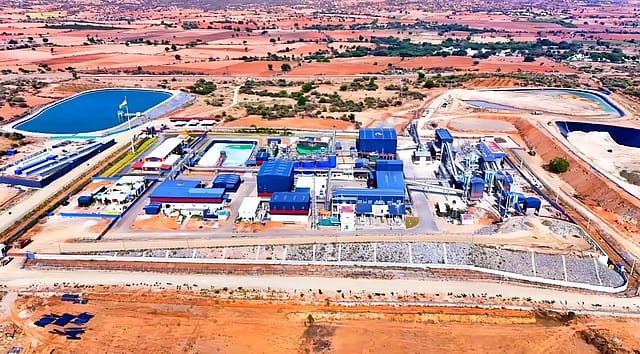
India’s most significant private gold mining project in decades has begun production at Jonnagiri in Andhra Pradesh’s Kurnool district, marking a rare addition to the country’s domestic output base. The mine, inaugurated by chief minister N. Chandrababu Naidu on June 24, is currently the only operating large-scale private gold mine in India.
Developed by Geomysore Services India Pvt Ltd, associated with Deccan Gold Mines Ltd, the open-pit project spans 597.82 hectares in Tuggali mandal. It lies on the Jonnagiri greenstone belt, part of the Dharwar geological formation that also hosts historic mines such as Kolar and Hutti.
The project is expected to produce around 400 kg of gold in 2026–27 in its initial phase, with output projected to gradually scale towards nearly 1,000 kg (1 tonne) annually as expansion plans are implemented. Current processing capacity stands at around 1,000 tonnes of ore per day, with further scale-up planned.
Small output versus heavy import dependence
Even at full ramp-up, Jonnagiri’s contribution will remain marginal in India’s gold ecosystem. The country imported about 722 tonnes of gold in 2025–26, valued at nearly $72 billion, according to commerce ministry data, underscoring the structural gap between domestic production and consumption.
Against this backdrop, even a 1 tonne annual output would account for a fraction of total demand, highlighting the long gestation and limited scale of domestic mining operations.
Policy shift opens private mining route
The project reflects a broader regulatory shift in India’s mining framework. Since 2015, mineral blocks have been auctioned, while a 2021 amendment enabled private explorers who establish deposits to retain and commercially develop them.
Geomysore, promoted by Thriveni Earthmovers and partly held by Deccan Gold Mines, secured rights to the asset in the 1990s, obtained its mining lease in 2006, and invested about ₹405 crore before commencing production.
Andhra Pradesh will earn a 4% royalty on gold production, estimated at about ₹57 crore in the first year, rising to around ₹144 crore as output scales. Additional funds will flow to the District Mineral Foundation, mandated for development in mining-affected regions.
The project is estimated to generate about 300 direct and 300 indirect jobs, along with local infrastructure support in surrounding villages, including water supply and basic amenities.
Commenting on the project, Deccan Gold Mines managing director Hanuma Prasad Modali said: “Jonnagiri is a landmark achievement for India’s mining sector and a powerful example of how responsible resource development can unlock long-term value for communities and the nation.”
“At a time when India remains heavily dependent on gold imports, projects like Jonnagiri demonstrate the strategic importance of developing domestic mineral resources,” he added.
Resource base and long-term outlook
Company filings indicate an estimated resource of about 8.2 million tonnes of ore at 1.49 grams per tonne, translating to roughly 12 tonnes of contained gold, with a mine life of around eight to nine years for the main pit.
The state has also proposed renaming Jonnagiri village as “Swarnagiri”, as part of its broader “Swarna Andhra 2047” development vision.