
Middle East conflict may cut India’s city gas sales 8–10%, PNG industrial segment to bear the brunt: Crisil
ADVERTISEMENT
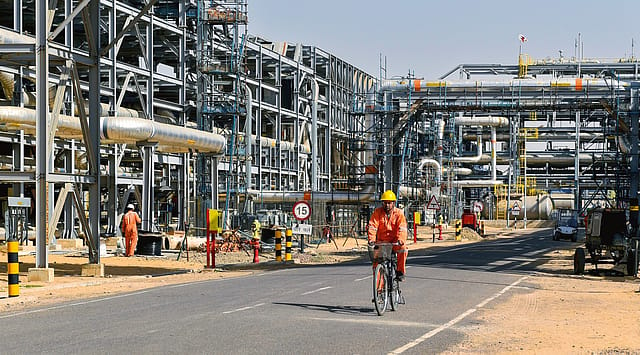
India’s city gas distribution (CGD) industry could see daily sales volumes decline by 8–10% in the near term as supply disruptions linked to the ongoing Middle East conflict squeeze liquefied natural gas (LNG) imports, according to a report by CRISIL Ratings.
The impact will largely be felt in the piped natural gas–industrial and commercial (PNG I&C) segment, which depends heavily on imported LNG. However, CGD companies are expected to maintain profitability as most players can pass higher input costs on to customers.
The assessment is based on seven CGD companies that together accounted for about 70% of the industry’s sales volume last fiscal, the rating agency said.
LNG disruption squeezes gas availability
The disruption stems from supply constraints in the global LNG market. Qatar, which supplies about 45% of India’s LNG imports, has declared force majeure on international deliveries after production halted at its Ras Laffan facility due to regional instability.
This has had cascading effects across the gas supply chain, with several international traders invoking force majeure as they struggle to secure scheduled cargoes.
“The industry's daily sales volume is expected to decline by 8–10% primarily due to curtailment of natural gas supply to I&C customers,” said Ankit Hakhu, Director, Crisil Ratings. “This is despite likely government support to CGD companies to reduce curtailment to I&C customers from the current level of 40–50%.”
Hakhu added that traders are exploring alternative LNG sources, but tight global supply and elevated spot prices could limit relief in the near term.
Priority sectors shield CNG, household supply
The impact on compressed natural gas (CNG) and piped natural gas for households (PNG-D) is expected to be limited. These segments together account for nearly 70% of the industry’s sales volumes and rely largely on domestically produced gas.
The government has also designated these segments as high-priority sectors under the Essential Commodities Act, ensuring continued allocation of domestic gas.
Margins resilient despite higher LNG prices
Although supply disruptions could tighten volumes, CGD companies are expected to protect their margins.
Spot LNG prices in Asia have risen sharply to $19–20 per MMBtu from about $10–11 per MMBtu in February, raising input costs for players dependent on imported gas. However, pricing contracts linked to crude benchmarks allow companies to pass on higher costs to industrial customers.
“While the impact on operating margins is expected to be limited, the operating cash accruals of CGD players may moderate due to impact on volumes,” said Gauri Gupta, Team Leader, CRISIL Ratings. “However, credit profiles will be cushioned by healthy balance sheets of the players.”
According to CRISIL, the sector’s debt-to-EBITDA ratio is expected to remain around 1 time, supported by strong sponsors, healthy liquidity and staggered capital expenditure commitments.