
NITI Aayog begins stakeholder consultations on SHANTI Act 2025, focuses on FDI, nuclear supply chains and manufacturing ecosystem
ADVERTISEMENT
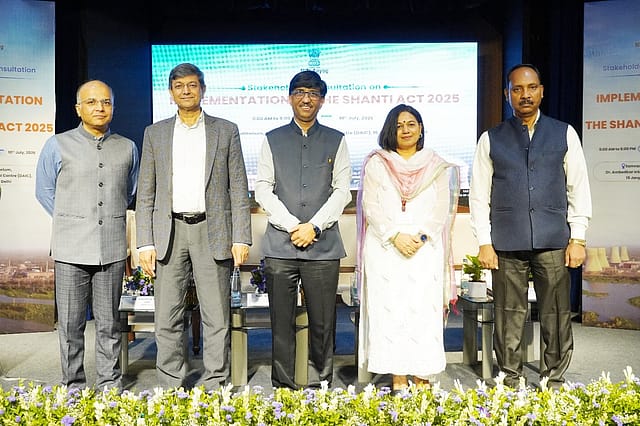
Government think tank NITI Aayog has initiated stakeholder consultations for the implementation of the SHANTI Act, 2025, bringing together senior government officials, regulators, public sector executives, researchers and industry representatives to shape the operational roadmap for one of India's most significant nuclear energy reforms. The discussions centred on creating a robust regulatory framework, attracting foreign investment, strengthening domestic manufacturing and developing the financial and institutional ecosystem required for the Act's successful rollout.
The consultation, held at the Dr. Ambedkar International Centre in New Delhi on July 10, was chaired by NITI Aayog Member Prof. Abhay Karandikar. Senior officials, including Power Secretary Pankaj Agrawal, Central Electricity Authority Chairperson Ghanshyam Prasad, NTPC Chairman and Managing Director Gurdeep Singh, along with representatives from the Department of Atomic Energy, the Atomic Energy Regulatory Board (AERB) and NITI Aayog, deliberated on policy, financing and implementation priorities associated with the landmark legislation.
Focus on regulatory clarity and foreign investment
A key area of discussion was the legislative and regulatory architecture required to operationalise the SHANTI Act, 2025. Stakeholders reviewed draft rules and regulations, statutory compliance mechanisms and proposed foreign direct investment (FDI) policy provisions designed to attract global capital while safeguarding India's strategic and domestic interests.
The consultation underscored the need for a transparent regulatory framework that provides certainty to investors without compromising national security or regulatory oversight. Participants also discussed measures to streamline implementation and create a conducive environment for long-term investments in the nuclear energy sector.
Financing, insurance and public confidence in nuclear projects
Another major focus was the financial ecosystem needed to support nuclear energy projects under the SHANTI Act. Participants examined financing models, risk-mitigation mechanisms and insurance frameworks necessary for projects that typically involve long investment horizons and substantial capital commitments.
The discussions also highlighted the importance of improving public awareness and strengthening community engagement to build confidence and wider acceptance of nuclear energy projects. Stakeholders noted that effective communication and public outreach would be critical for ensuring smoother implementation of future projects.
Strengthening manufacturing ecosystem and skilled workforce
The consultation also emphasised expanding India's domestic manufacturing capabilities and building resilient supply chains to support the nuclear energy ecosystem. Participants stressed the importance of enhancing operational readiness, encouraging industrial participation and reducing dependence on imports for critical components.
Capacity building emerged as another priority area, with stakeholders calling for dedicated skill development programmes to create a highly trained workforce capable of supporting the sector's long-term growth. According to NITI Aayog, the recommendations and feedback received across the three thematic pillars will help strengthen the implementation framework of the SHANTI Act, 2025, while supporting the development of a competitive, self-reliant and investment-friendly nuclear energy ecosystem in India.