
Pune tops metro rankings, Thane leads overall: Dun & Bradstreet CVI shows shift in India’s urban growth
ADVERTISEMENT
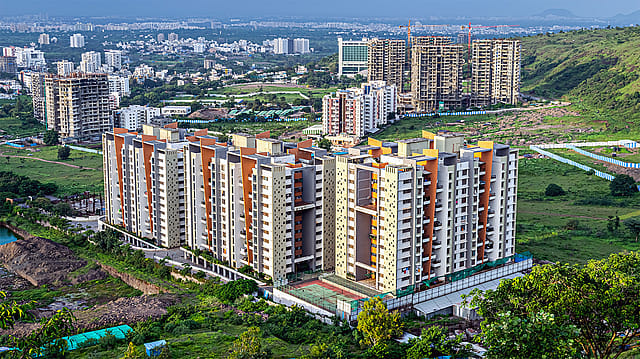
India’s urban growth trajectory is becoming increasingly decentralised, with smaller districts steadily gaining ground alongside established metros, according to Dun & Bradstreet’s City Vitality Index (CVI) – Q2 2026.
The latest Index, which maps economic activity across 800+ districts using Earth Observation (EO) data, highlights a clear structural shift toward multi-nodal urban expansion, where growth is no longer concentrated in a few large cities.
Pune leads Metros, Thane tops overall rankings
Among metropolitan centres (Class X cities), Pune emerged as the top performer, securing Rank 1 and improving four positions quarter-on-quarter. Bengaluru followed at Rank 2, while Hyderabad ranked third, underscoring the continued strength of India’s leading tech and industrial hubs.
In the non-metro (Class Y) category, Thane led the overall rankings, followed by Jaipur and Dhanbad, reflecting the rising economic relevance of fast-growing urban districts outside traditional metro clusters.
Commenting on the findings, Dr. Arun Singh, Chief Economist at Dun & Bradstreet, said the data points to a structural transformation in India’s urban economy.
“The Q2 2026 readings reinforce a key structural shift underway in India’s urban economy—growth is increasingly multi-nodal,” Dr. Singh said. “While large metros continue to anchor national output, the strongest momentum is being generated by a widening set of Class Y districts, where improvements in connectivity, industrial clustering, and services-led expansion are translating into measurable gains in economic activity.”

Sharp gains across emerging districts
The Index also captured strong quarterly movements across several emerging districts. Kanpur Nagar surged 42 positions, while Solapur rose 33 places and Kancheepuram improved by 32 ranks. Guntur and Nashik recorded gains of 28 and 22 positions respectively, while Rangareddy advanced by 21 ranks, reflecting strong industrial and services-led expansion in the Hyderabad region.
In Uttar Pradesh, Lucknow and Varanasi each improved by 13 ranks, signalling steady momentum across key administrative and commercial centres. Gonda stood out in the growth rankings, securing the second position nationally, supported by agriculture-led strength and improving connectivity.
Long-term winners emerge beyond metros
A longer-term analysis of CVI data since Q2 2012 highlights several consistently high-performing districts, including Jagatsinghpur and Angul (Odisha); Gonda, Etah, Auraiya and Ayodhya (Uttar Pradesh); Sheikhpura (Bihar); Puducherry; Mandya (Karnataka); and Singrauli (Madhya Pradesh). These locations are emerging as durable growth centres beyond India’s traditional metro-driven narrative.
Dr. Singh added that the Index offers a high-frequency lens into India’s evolving economic landscape. “CVI combines satellite-based insights with economic fundamentals, enabling sharper analysis of growth pockets and resilience. Its correlation of over 85% with nominal GDP—and nearly 99% in highly urbanised districts—makes it a powerful indicator for policymakers, businesses, and investors,” he said.
As India’s growth engines diversify, the CVI continues to underscore a clear trend: economic momentum is widening beyond metros, with new urban centres increasingly shaping the country’s next phase of expansion.