
RBI Governor Sanjay Malhotra flags private credit opacity, AI uncertainty as emerging global risks
ADVERTISEMENT
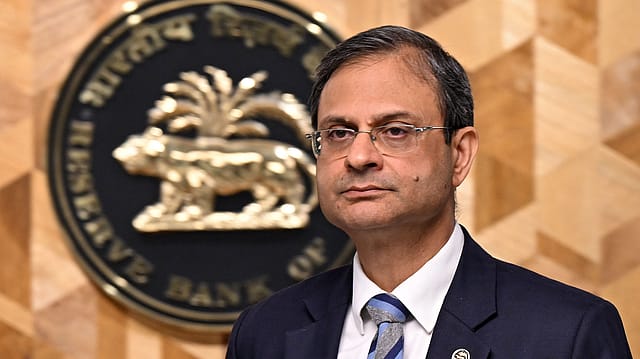
Reserve Bank of India Governor Sanjay Malhotra has flagged the rapid expansion of private credit markets and uncertainty around artificial intelligence as emerging risks for the global financial system, while noting that India remains resilient amid a challenging global macroeconomic environment.
Delivering the keynote address at the 25th FIMMDA-PDAI Annual Conference in Amsterdam on May 1, Malhotra said the global financial system is currently navigating a period of “elevated uncertainty and challenges”, with implications for both the real economy and financial markets.
Private credit, AI among new risk areas
Among the risks flagged by the Governor was the rapid growth of private credit markets globally. He said, “The rapid expansion of private credit markets globally has introduced new areas of opacity and potential systemic risk through increasing interconnectedness with regulated segments.”
The comments come at a time when private credit has grown rapidly as an alternative financing channel across global markets. However, its expansion has also raised concerns among regulators due to limited transparency, complex linkages with banks and other regulated entities, and the possibility of risk build-up outside the traditional banking system.
Malhotra also pointed to artificial intelligence as another source of uncertainty. While acknowledging its productivity-enhancing potential, he said, “AI is another source of uncertainty. While AI holds promise to enhance productivity, concerns remain about viability of certain business propositions, the level of efficiency gains, the speed of change and its impact on jobs.”
Global economy faces multiple headwinds
The Governor said geo-economic fragmentation caused by tariffs, trade restrictions and industrial policies is reshaping global supply chains and affecting capital flows. He also flagged high public debt levels in major economies, noting that continued fiscal expansion and rising defence spending could create challenges for fiscal sustainability.
Malhotra further warned that stretched valuations in certain asset classes, particularly equities and a few technology stocks, could have implications across markets and geographies.
He also referred to the escalation of geopolitical tensions in West Asia, saying energy prices had risen sharply amid damage to energy infrastructure and supply-chain disruptions. “If the crisis persists longer, it may also translate into second order inflationary pressures,” he said.
India remains resilient
Against this backdrop, Malhotra said the Indian economy has shown “remarkable resilience”, supported by strong macroeconomic fundamentals, structural reforms and prudent macroeconomic management.
He said India has consistently remained among the fastest-growing major economies since the pandemic. The country recorded an average growth of 8.2% during 2021-25, while the economy is estimated to have grown by 7.6% in 2025-26. Growth for 2026-27 has been projected at 6.9%.
On inflation, the Governor said the flexible inflation targeting framework has provided a credible anchor for managing expectations. He noted that headline inflation has recently remained below the 4% target, while average CPI inflation for FY27 is projected at 4.6%.
Banking, corporate balance sheets strengthen
The Governor also highlighted the improvement in India’s banking and non-banking financial sectors. He said their balance sheets have strengthened substantially, with improvements in capital adequacy, asset quality and profitability.
Corporate balance sheets, too, have improved on the back of stronger earnings. Malhotra noted that fund mobilisation by Indian corporates through public markets, especially corporate bond markets, has remained strong over the last two financial years, indicating a steady broadening of financing channels beyond traditional bank credit.
On the external front, he said India’s foreign exchange reserves remain comfortable, with 11 months of import cover, while the current account deficit remains sustainable. Gross FDI, he added, increased from about $71 billion to more than $80 billion during 2024-25 and is expected to have risen further to about $90 billion in 2025-26.
RBI pushes market deepening
The speech also laid out the RBI’s broader agenda for financial market development. Malhotra cited reforms across money markets, government securities, derivatives, market infrastructure, central clearing and foreign investor access.
However, he said more needs to be done. The Governor identified five key areas for improvement: better liquidity across government securities, broader interest-rate derivatives, onshoring of the global INR market, wider usage of the FX Retail platform and development of credit derivatives.
He also reminded banks and primary dealers that market privileges come with responsibilities. These include ensuring easy access to financial markets, fair and transparent terms for users, adherence to regulatory objectives and protection of market integrity.
Malhotra said RBI’s priorities remain clear: “We will continue to deepen financial markets, broaden participation, and further strengthen institutional frameworks.”