
RBI MPC: Central bank keeps repo rate unchanged at 5.25%, maintains neutral stance
ADVERTISEMENT
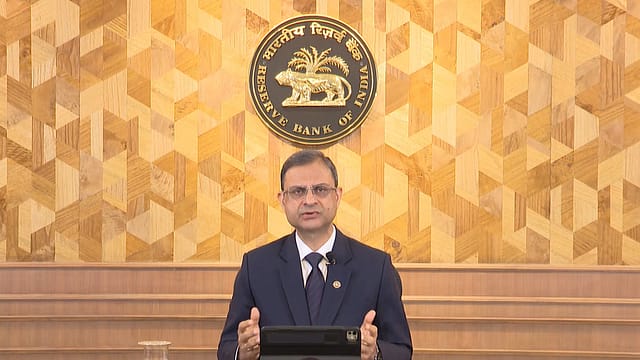
The Reserve Bank of India (RBI) on Wednesday kept key policy rates unchanged, while retaining a “neutral” stance to balance economic growth with emerging inflation risks.
At the first meeting of the financial year 2026-27, held from April 6 to 8, the monetary policy committee (MPC), chaired by RBI governor Sanjay Malhotra, unanimously voted to keep the repo rate unchanged at 5.25%. The standing deposit facility (SDF) rate was also maintained at 5.0%, while the marginal standing facility (MSF) rate and the bank rate were kept steady at 5.50%.
The central bank had last reduced the repo rate by 25 basis points (from 5.50%) in December 2025. In the previous bi-monthly policy meeting in February 2026, the apex bank had left rates unchanged and maintained a “neutral” stance.
The policy decision was broadly in line with Street expectations, as economists had anticipated that the RBI would hold rates and adopt a wait-and-watch approach amid the evolving West Asia conflict. With no clear signs of a ceasefire and inflationary pressures building up, economists noted that it remains difficult to assess the full impact of the conflict on both inflation and growth going forward. The U.S.-Israel-Iran conflict has pushed crude oil prices above $100 per barrel and put pressure on the Indian rupee.
While announcing the MPC decision, Malhotra said the global economy is currently facing unprecedented challenges due to heightened geopolitical tensions, particularly the ongoing conflict in West Asia, for which a temporary ceasefire has been announced. He also noted that global supply chains were already under strain even before the escalation.
“The global economy is facing unprecedented challenges from heightened geopolitical tensions and disruptions to supply chains,” Malhotra said.
Macro fundamentals remain strong
Despite these headwinds, he emphasised that India’s macroeconomic fundamentals remain strong.“The fundamentals of the Indian economy are on a stronger footing at the current juncture, providing it with greater resilience to withstand shocks,” he noted.
He highlighted that global growth faces increasing downside risks due to elevated energy prices and supply shortages, which have stoked inflation concerns and increased volatility in financial markets. “Heightened uncertainty has pushed up geopolitical risk premiums in oil markets and weighed on the global growth outlook,” he said.
“Against this backdrop, the MPC decided to keep the policy repo rate unchanged while continuing with the neutral stance, retaining flexibility to respond to evolving conditions,” Malhotra said.
Explaining the rationale, he said that while headline inflation remains contained, risks are rising.
“Upside risks to inflation have increased due to higher energy prices and potential weather-related disruptions,” he said, adding that “core inflation pressures remain muted, but uncertainties persist.”
Vivek Iyer, Partner and Financial Services Risk Leader, Grant Thornton Bharat, on the MPC, said, "Given the global uncertainty associated with the evolving geopolitical crisis, especially in West Asia, there are upside risks to inflation on account of supply chain dependencies around energy, fertiliser and other commodities. The MPC has therefore rightly decided unanimously to keep the interest rate unchanged with a neutral stance. Fuel inflation and food inflation, particularly on account of weather risks, could weigh heavily on the inflation outlook. Inflation risks are not evenly balanced and there is an upward risk to the same. The RBI has therefore taken a prudent wait and watch approach. Currency risk also plays a significant factor given the global turmoil the world is currently witnessing. Keeping the interest rate unchanged was therefore the most appropriate approach, as any change could have magnified currency risks. The RBI has to walk a difficult tightrope in its monetary policy. Interestingly, the RBI has started providing core inflation projections this time along with headline inflation projections, which is a departure from the earlier methodology of only providing headline inflation. We believe this will provide greater transparency around MPC decisions to the market, thereby supporting greater financial stability. If rate increases are made to mitigate the impact of rising food and fuel prices, it signals that the RBI’s decisions are aimed at anchoring inflation expectations rather than reducing aggregate demand. In his speech, the Governor also spoke significantly about the government’s fiscal policies and how they remain a long term positive for the Indian economy, reflecting the government and regulatory commitment to navigating the prevailing global uncertainty."
Sudipta Roy, Managing Director & CEO, L&T Finance Ltd., said, “RBI’s first credit policy for the new Fiscal year 2026-27 stood out for its balanced and prudent tone. Given the evolving global conditions, status quo on rate action and neutral stance were along expected lines. However, incrementally higher growth projection to 6.9% and relatively small increase in headline inflation projection to 4.6% for FY27 is noteworthy. Monetary Policy response to the West Asia conflict is measured and reflects no policy panic. Both fiscal and monetary policies aligning on protecting domestic momentum, in face of global disruptions, reinforces stable credit conditions going forward.”