
Union Budget 2026: Allocation for Indian Railways likely to remain range-bound, says ICRA
ADVERTISEMENT
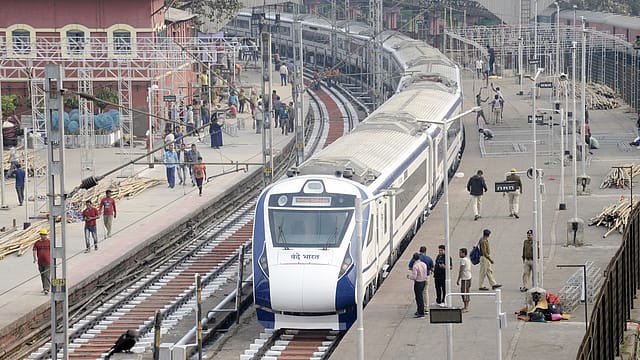
Ahead of the Union Budget 2026, credit rating agency ICRA expects the increase in budgetary allocation for the railways to remain range bound. The agency said capacity expansion will continue to be a key focus, with economic corridors, along with the accelerated rollout of Kavach 4.0 and advanced signalling systems across the rail network, likely to dominate both budget priorities and execution strategies.
“ICRA anticipates a range-bound increase in Railways’ budgetary allocation for FY2026–27, given the trend seen over the past two years. With electrification nearly complete, focus will remain on decongestion through capacity augmentation—new routes, gauge conversion, track doubling, and dedicated freight corridors. Infrastructure modernisation, including rolling stock upgrades and station redevelopment, alongside safety enhancements, will remain critical,” Suprio Banerjee, Vice President and Co-Group Head, ICRA, said.
The railways saw a 5% on-year increase in the FY26 budget estimates, with the total allocation rising to Rs 2.65 lakh crore. This includes Rs 10,000 crore raised through extra-budgetary resources.
The contribution of the Indian Railways, through its core activities of freight and passenger services, to the country's GDP lies roughly in the range of 1 to 1.5%.
The wider economic contribution of the railways goes beyond this share to include jobs, supply chains, logistics, and support to industries such as mining, manufacturing, and agriculture. If one adds these indirect effects, the total contribution can easily be about 3 to 4% of GDP.
Cement demand to grow by 6%-7%
ICRA anticipates cement demand to grow by 6% to 7% in FY2027, driven mainly by higher infrastructure spending, a pickup in the rural economy, and continued demand for affordable housing.
“Currently, rural housing and infrastructure together account for 50–55% of cement consumption, underscoring their importance to the sector. Increased government allocations towards roads, railways, metro projects, and urban infrastructure should translate into healthy volume visibility for cement manufacturers. While the full impact of GST rate rationalisation remains to be seen, sustained infrastructure spending and policy stability are expected to provide earnings visibility for cement companies,” Maitri Vira, Assistant Vice President and Sector Head, ICRA, said.
India’s cement sector is one of the largest in the world and plays a key role in infrastructure and housing. In recent years, the sector has seen steady growth, supported by housing demand, consolidation among big players, and rising capacity additions.