
U.S. slaps sanctions on Chinese refinery, 40 shippers in Iran oil crackdown
ADVERTISEMENT
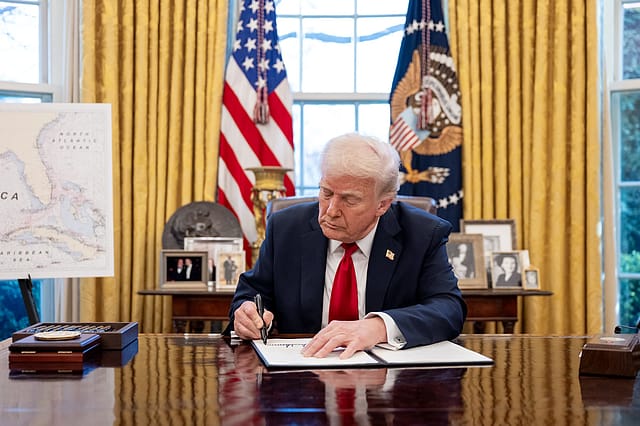
The United States has reportedly imposed fresh sanctions on a China-based oil refinery and around 40 shipping companies and tankers for their alleged role in transporting Iranian oil, in a move that escalates pressure on Tehran’s energy exports.
The action, taken by the administration of Donald Trump on Friday, is part of a broader push to enforce secondary sanctions on entities doing business with Iran, according to a report by The Associated Press.
Besides, the U.S. has also tightened its grip on the Strait of Hormuz, a strategically vital route for global energy shipments, heightening concerns over potential supply disruptions.
The sanctions come just weeks ahead of a planned meeting between Donald Trump and his Chinese counterpart Xi Jinping in China.
Among those targeted is a key facility operated by Hengli Petrochemical in Dalian. With a crude processing capacity of around 400,000 barrels per day, it is among China’s largest independent, or “teapot,” refineries.
Earlier this week, Trump announced an extension of the ceasefire with Iran amid ongoing negotiations. “I have therefore directed our military to continue the blockade and, in all other respects, remain ready and able, and will extend the ceasefire until such time as their proposal is submitted and discussions are concluded, one way or the other,” he wrote on his social media platform, Truth Social.
In a separate post, Trump claimed that Iran is facing severe financial strain due to the U.S. blockade of its ports and oil shipments. “Iran is collapsing financially! They want the Strait of Hormuz opened immediately—starving for cash! Losing $500 million a day. Military and police complaining that they are not getting paid,” he said.
However, Iran has pushed back, rejecting any immediate participation in peace talks in Islamabad. Tehran has set a key precondition, stating it will only engage in negotiations once the U.S. lifts its blockade on Iranian ports.
Iran’s UN envoy, Amir Saeid Iravani, said talks could move forward once Washington ends what Tehran describes as a “violation of the ceasefire.” In remarks to Iranian media outlets IRNA and Tasnim News Agency, he said, “As soon as Washington ends the naval blockade, the next round of negotiations can be held in Islamabad.”