
West Bengal Budget 2026: Govt announces 1 lakh jobs, DA hike, and ₹36,000-crore Annapurna Scheme
ADVERTISEMENT
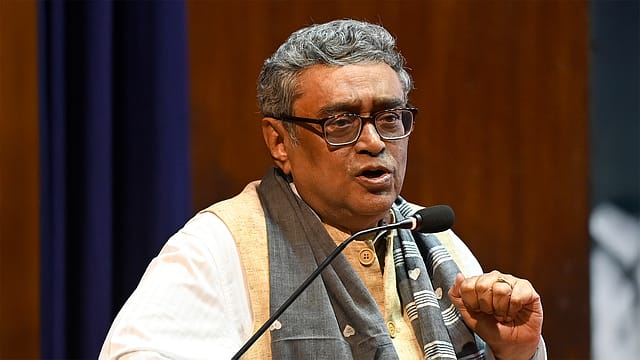
West Bengal Finance Minister Swapan Dasgupta on Monday presented the first Budget of the BJP government in the state, unveiling a mix of employment generation, welfare expansion, and infrastructure initiatives while pledging to restore fiscal discipline.
Among the key announcements were plans to fill one lakh government vacancies, a 20-percentage-point increase in dearness allowance (DA) for state employees and pensioners, and an allocation of ₹36,000 crore for the Annapurna Yojana aimed at providing direct financial assistance to women.
Presenting the Budget, Dasgupta announced that DA for state government employees and dearness relief (DR) for pensioners would be increased by 20 percentage points from October 1, taking the total to 38%.
The move significantly reduces the gap between DA received by state government employees and their counterparts in the central government by 22 percentage points—a politically key step given longstanding demands by employees under the previous administration.
The finance minister said the government inherited a debt burden of ₹8.15 lakh crore and stressed that restoring fiscal discipline and rebuilding public confidence in governance would remain key priorities.
“Building a corruption-free administrative structure is a cornerstone of our vision. We have to restore people’s trust in governance,” Dasgupta said. He added that the Budget had been prepared “drawing inspiration from awakened national strength.”
Employment push and reservation measures
The government announced that one lakh vacancies would be filled in phases, including 20,000 positions in the police force and 50,000 teaching and non-teaching posts in schools.
As part of the recruitment policy, 33% of government jobs will be reserved for women while 10% reservation will be extended to Agniveers wherever applicable.
Dasgupta also announced that the existing five-year relaxation in the upper age limit for government recruitment would continue for the next two years.
Welfare outlay expanded
The minister said all existing social welfare schemes would continue, with reforms introduced where necessary to improve delivery. “Our objective is to ensure that benefits of government schemes reach the weakest sections of society,” he said.
A major welfare announcement was the allocation of ₹36,000 crore for the Annapurna Yojana, under which women aged 25 to 60 years will receive direct financial assistance in their bank accounts.
The Budget also allocated ₹550 crore for free bus travel for women. A “Pink Card” system will be introduced to facilitate access to the scheme.
Other welfare measures included a monthly increase of ₹5,000 for anganwadi and ASHA workers. Civic volunteers, Green Police personnel, NVF workers, Prani Bandhu, and Prani Mitra workers will receive an additional ₹2,000 per month from August.
The government also announced a monthly pension of ₹5,000 for retired journalists and ₹10,000 for individuals who had served jail terms in cases described by the government as politically motivated or false.
Infrastructure and development focus
The Budget proposed increasing the MLA Local Area Development Fund from ₹70 lakh to ₹1 crore. Among infrastructure projects announced were an elevated corridor connecting Chingrighata and New Town in Kolkata, a deep-sea port at Dadanpatrabar, and a four-lane bridge over the Mayurakshi river in Birbhum.
The government also proposed conducting studies for metro rail projects in Durgapur, Asansol and Siliguri.
To strengthen food security measures, the state plans to expand the Maa Aahar programme by opening additional centres in urban areas offering subsidised meals, including rice and fish.
Allocations under the 125-day VB G-Ram-G employment scheme were increased, with 25 lakh new beneficiaries set to be added.
Dasgupta announced the establishment of a Tribal University in Jhargram and the launch of an Artificial Intelligence Mission to promote innovation and emerging technologies in the state. Special facilities for gig workers, including free charging points and drinking water arrangements, were also proposed.
The finance minister said the government’s vision was aligned with the national objective of “Viksit Bharat”. “People expect transparency about the state’s finances. We have to maintain a balance while creating opportunities for employment, industrial growth and a modern, progressive Bengal,” he added.
Harshavardhan Neotia, Chairman, Ambuja Neotia Group, said, "What is particularly encouraging about this Budget is that it looks at growth as an ecosystem rather than a collection of individual initiatives. Investments in regional connectivity through new airports and infrastructure, the focus on education and healthcare capacity, the proposed industrial development initiatives, and the emphasis on employment generation together have the potential to expand economic activity well beyond the traditional growth centres of the state. If implemented effectively, these measures can help unlock new aspirations, attract investment and create a broader growth narrative for West Bengal."