
Health-first meals claim a growing slice of Swiggy orders
ADVERTISEMENT
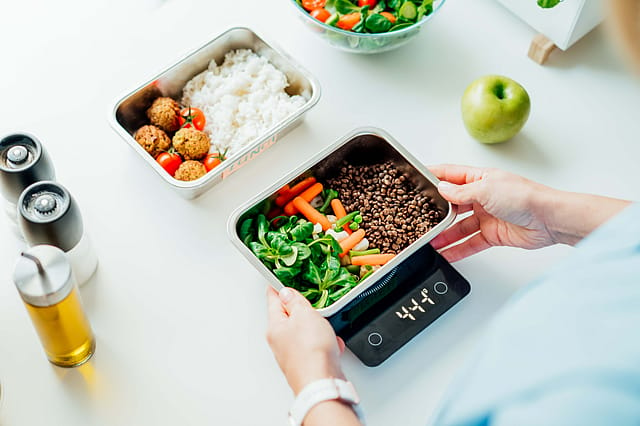
Healthy eating is no longer a niche or episodic behaviour on food delivery platforms. It is fast becoming routine. Data shared by Swiggy shows that every ninth food order placed on the platform in January 2026 came from its EatRight category, underscoring a structural shift in consumer preferences towards mindful eating.
Commenting on the trend, Deepak Maloo, Vice President – Food Strategy, Customer Experience & New Initiatives at Swiggy, said EatRight was aimed at integrating healthier choices into everyday ordering. “Today, every ninth order on Swiggy is an EatRight order. The adoption points to a shift in consumer behaviour—from occasional healthy choices to eating consciously on a daily basis. Consumers increasingly want food that delivers on taste, nutrition and convenience together, rather than as trade-offs,” he said.
Launched earlier this month as a consolidated category, EatRight brings together high-protein, low-calorie and no-added-sugar options under a single interface. The category today spans 180,000 restaurants, over 2 million menu items, and more than 150 dish families, including everyday formats such as biryanis, rolls, sandwiches, kebabs and North Indian meals.
Swiggy’s internal data suggests that nutrition-led choices are increasingly being driven by clear functional markers rather than abstract health claims. Meals with 45 grams or more protein are seeing the strongest traction, growing nearly 3.5 times faster than the overall EatRight category. At the same time, dishes in the 400–500 calorie range have emerged as the most preferred low-calorie options, pointing to a consumer mindset focused on balance rather than extreme restriction.
This shift is also reshaping product formats. Rolls, sandwiches and salads are leading EatRight orders, while mini and single-serve high-protein biryanis are seeing rapid adoption—reflecting demand for portion-controlled comfort food that aligns with daily health goals.
Restaurants recalibrate menus as demand scales up
Supply-side response has been swift. In January alone, more than 34,000 new EatRight items were added by restaurant partners. Brands across cuisines have recalibrated menus by improving protein-to-calorie ratios, introducing multigrain bases and rolling out sugar-free or protein-enriched beverages. This includes changes to staples such as rotis, pizzas, biryanis, coffees and teas, signalling that health-led innovation is moving into mainstream menus rather than remaining a premium add-on.
Beyond metros: habits, not phases
Geographically, the trend is no longer confined to large metros. While Bengaluru, Mumbai and Delhi NCR continue to see EatRight grow faster than platform averages, Swiggy reports strong momentum in cities such as Ahmedabad, Bhubaneswar, Goa, Mysore, Coimbatore and Vadodara, indicating that health-conscious food ordering is gaining traction beyond tier-1 markets.
Ordering patterns also suggest habit formation. EatRight orders peak on Wednesdays and Fridays, highlighting that consumers are integrating healthier meals into regular workweek routines instead of treating them as occasional resets.
To reinforce repeat behaviour, Swiggy has introduced EatRight Streaks, a rewards-led initiative that incentivises consecutive EatRight orders. The company says 1.3 million users participated in the programme in its first week, with customers eligible to earn up to ₹400 in cashback. The campaign runs until January 31, 2026.
For Swiggy, the growing share of EatRight orders marks a strategic broadening of its food delivery proposition—from pure convenience to everyday nutrition. More broadly, it reflects a maturing Indian food-tech market, where consumers increasingly expect taste, health and convenience to coexist, rather than compete, on the same plate.