
Exclusive: Crypto reality check: CoinDCX’s Sumit Gupta on fraud ordeal and market maturity
ADVERTISEMENT
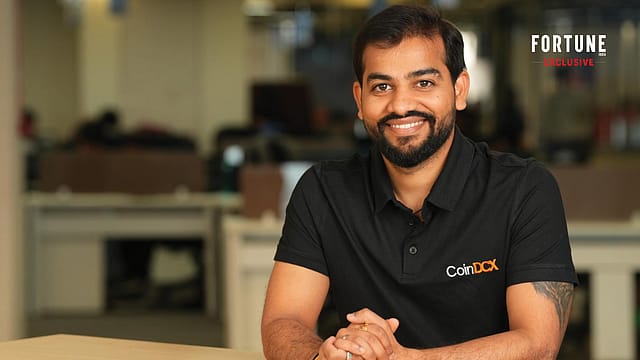
“Every online user in India is a potential victim. Every WhatsApp group is a potential attack vector. And the infrastructure to protect 1.4 billion Indians from this does not yet exist.”
For Sumit Gupta and Neeraj Khandelwal, that realisation became personal after an unexpected brush with the law late last month. The co-founders of cryptocurrency exchange platform CoinDCX were briefly taken into police custody on March 21 in connection with a ₹71.6 lakh fraud case, before being granted bail by a Thane court on March 24, which noted that “no prima facie case” was made out against them.
At the centre of the episode was a fake website - coindcx.pro - created by unknown actors to impersonate the platform. “No money moved through CoinDCX. No transaction occurred on our exchange,” the company clarified. It added that complainant had confirmed no direct interaction with either the founders or the official platform.
Building a cyber safety net for digital finance
Rather than treating the incident as an isolated case, the founders have turned it into a catalyst for action. On March 30, CoinDCX announced the Digital Suraksha Network (DSN), committing ₹100 crore towards building a shared cyber-safety infrastructure for India’s digital finance ecosystem.
The initiative is aimed at tackling rising threats such as brand impersonation and AI-driven fraud through tools like a fraud intelligence platform, multilingual awareness campaigns, and financial literacy programmes. The broader objective, the company said, is not just to protect a single platform but to build a collaborative safety framework involving regulators, platforms, and users—one that can help prevent fraud at scale.
The episode not only highlights the rising risks of digital fraud but also comes at a time when the crypto industry is being forced to evolve beyond its early, loosely regulated phase.
Crypto markets show signs of maturing
After years of sharp boom-and-bust cycles, the crypto market is beginning to show early signs of stability, with volatility easing as institutional participation rises and liquidity deepens. The transition, according to Gupta, the co-founder and CEO of CoinDCX, signals a gradual move from a speculative asset class towards a more mature financial market.
“Volatility in crypto markets has been gradually declining, indicating growing maturity and investor confidence,” Gupta said in an exclusive interview with Fortune India, adding that the trend is likely to continue as the ecosystem evolves.
He noted that the extreme price swings that once defined crypto are moderating, with assets like Bitcoin increasingly mirroring broader financial market behaviour, even as they continue to respond swiftly to global developments.
Over the past 12 months, Bitcoin has remained volatile, declining around 13%–20% depending on the exchange and currency pair. Prices have slipped from $82,000–$86,000 levels a year ago to about $69,000–$72,000 currently, after surging to an all-time high of $126,198 in October 2025 on the back of record ETF inflows and strong institutional demand.
On the recent volatility triggered by Middle East tensions, Gupta said crypto markets tend to react faster than traditional assets. “Crypto trades 24/7, making it the first to reflect shifts in global sentiment,” he said.
While geopolitical shocks may drive short-term swings, they rarely alter long-term fundamentals. “Investors should focus less on near-term price moves and more on macro factors such as inflation, liquidity, and interest rates, which have a more lasting impact on risk assets, including crypto,” he added.
CoinDCX itself has scaled rapidly alongside the broader crypto market, with the total cryptocurrency market capitalisation surging multifold, from just $0.004 trillion in 2015 to around $3 trillion by end of 2025.
Scaling up amid regulation and global ambitions
Founded eight years ago, CoinDCX has scaled from a two-member startup in Mumbai to a 700-strong organisation with operations across India and the Middle East. The platform has onboarded over 20 million users and claims a dominant position in the domestic crypto market, while also building a regulated presence in the UAE.
Last valued at $2.45 billion in October 25 when U.S.-based Coinbase made an undisclosed investment, the company competes with CoinSwitch and Unocoin in India and Binance and Gemini globally. It has raised a total of $247 million in seven funding rounds till date and entered the unicorn club in 2021.
As of July 2025, CoinDCX reported annualised group revenue of ₹1,179 crore ($141 million), transaction volumes of ₹13.7 lakh crore ($165 billion) across its platforms, and assets under custody exceeding ₹10,000 crore ($1.2 billion).
Gupta notes that despite regulatory uncertainty in India, the company is focused on strengthening its core, expanding product offerings, and building global scale. “This is still early days. While regulations are evolving, our focus remains on deepening our presence in India, diversifying product lines, and expanding internationally,” he says, adding that the firm is doubling down on crypto and Web3 opportunities.
On its recent funding round involving Coinbase, Gupta describes the association as a strategic partnership driven by shared values of compliance and customer-first thinking. While financial details remain undisclosed, he says the collaboration will help CoinDCX learn from Coinbase’s experience in areas such as policy, education, and category building.
The company recently announced a ₹111 crore ESOP buyback programme, extending benefits to both current and former employees—an unusual move in India’s startup ecosystem. Gupta says the initiative was aimed at rewarding contributors and reinforcing trust. “A large number of startup employees never get to realise value from ESOPs. This is our way of giving back and building confidence in the ecosystem,” he says.
Roadmap ahead
Looking ahead, CoinDCX’s roadmap is anchored around three priorities - deepening its India business, scaling its regulated Middle East operations, and expanding beyond trading into a broader financial ecosystem. India currently contributes nearly 80% of the company’s revenue, though international markets are expected to gain traction over time. The firm is also investing in new product areas such as tokenisation, decentralised finance (DeFi), and applications at the intersection of crypto and AI.
Gupta says the company is positioning itself as a full-stack financial platform built on blockchain rails. Beyond trading, it offers services such as staking, SIP-like investment options in crypto assets, and access to tokenised products, while also backing early-stage Web3 startups through its venture arm.
On the regulatory front, Gupta acknowledges that while discussions are ongoing, a comprehensive framework in India could still take time to materialise. He points out that the current taxation regime remains a key challenge, potentially pushing talent and capital offshore. “There is progress, but a full-fledged licensing regime may take a couple of years. Rationalising taxes will be important for the ecosystem to grow,” he says.
Despite near-term uncertainties, Gupta maintains that the long-term outlook for crypto remains intact. As volatility declines and institutional participation increases, he believes the asset class will continue to mature, strengthening its role in the global financial system.