
Kitex, Gokaldas, Welspun, and others: Why these textile stocks tumbled 5-10% today
ADVERTISEMENT
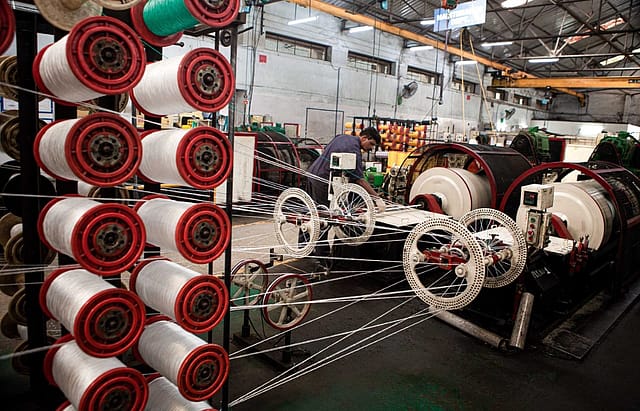
The Indian textile sector, which had been on a victory lap just last week, hit a major roadblock today. Shares of export heavyweights, including Kitex Garments , Gokaldas Exports , and Welspun Living , tumbled as much as 8-10% during intraday trade, wiping out a major portion of the massive gains seen earlier this month.
The sharp reversal came as a reality check for investors who had bet on India gaining an undisputed edge in the American market following the India-US interim trade deal announced on February 6.
US-Bangladesh trade pact becomes catalyst
The primary driver behind today's sell-off was the announcement of a reciprocal trade agreement between the United States and Bangladesh. On the surface, the deal seemed manageable, with headline tariffs for Bangladeshi goods set at 19%—slightly higher than India’s newly negotiated 18%. However, it was the "fine print" regarding duty exemptions that shook market confidence.
The US has committed to a specific "quota-linked" mechanism that allows a substantial volume of Bangladeshi textile and apparel exports to enter the US at a zero reciprocal tariff. This effectively creates a tiered system where, despite a higher base rate, a large portion of Bangladesh's exports will be much cheaper than India's.
Cost advantage erosion
Indian exporters are currently slated to pay a flat 18% tariff under the updated trade framework. If Bangladesh can successfully ship a major chunk at 0%, the cost advantage tilts heavily back toward Dhaka. Market analysts fear this price gap will cause major US retailers—such as Walmart, Target, and GAP—to reconsider their sourcing strategies, potentially diverting large-scale orders away from Indian textile hubs like Tiruppur, Surat, and Ahmedabad.
Cotton clause and raw material risks
Adding to the industry's woes is the "cotton clause" included in the US-Bangladesh deal. The zero-tariff benefit for Bangladesh is strictly linked to the use of US-sourced cotton and man-made fibres.
This presents a dual threat to the Indian textile ecosystem. First, it makes finished Bangladeshi garments more competitive in the US. Second, it incentivises Bangladesh—historically the largest buyer of Indian raw cotton—to shift its sourcing to the United States to qualify for the duty-free status. This could lead to a domestic glut and falling prices for Indian cotton farmers and spinning mills like Vardhman Textiles and Nitin Spinners, both of which saw their stock prices drag today.
Profit booking after rally
Beyond the fundamental trade concerns, technical factors could've also played a role in today's correction. Many of these stocks, particularly Gokaldas Exports and Indo Count, had surged over 30% in just a few trading sessions following the initial India-US deal. For many institutional and retail investors, the news of the Bangladesh pact provided the perfect trigger to sell and lock in profits.