
Can private dairy deliver India’s nutrition shift?
ADVERTISEMENT
India’s nutrition security challenge is not primarily a production problem. With output reaching 247.87 million metric tonnes in 2024–25, the country is the world’s largest milk producer by a considerable margin, and per-capita availability already stands at around 471 gm per day, well above the ICMR-recommended 300 gm.
The more urgent and underexamined question is one of conversion: how does a country with this much milk still carry such a disproportionate burden of what public health experts call “hidden hunger”—the pervasive deficiencies in iron, vitamin A, B12, zinc, and folate—that continue to affect millions of women and children across every income bracket and geography?
The answer, in large part, is a quality, safety, and distribution problem, and it is precisely here that the private dairy sector's contribution to India's nutrition story becomes not just relevant but indispensable.
The structural reality of India’s dairy market helps frame why organised private players carry such outsized responsibility. Roughly 60% of the country’s milk still flows through informal channels with no meaningful oversight on adulteration, cold chain integrity, or nutritional content, which means that for a vast portion of consumers, the milk they buy offers no reliable guarantee of the nutritional value they believe they are receiving.
The organised sector, cooperatives, and private processors combined address only about 40% of the marketed milk surplus, and within that segment, private processors account for roughly 60% of all processing capacity. That concentration of organised capacity is not simply a commercial fact; it is the leverage point through which India can most rapidly convert raw milk abundance into dependable, measurable nutrition delivery.
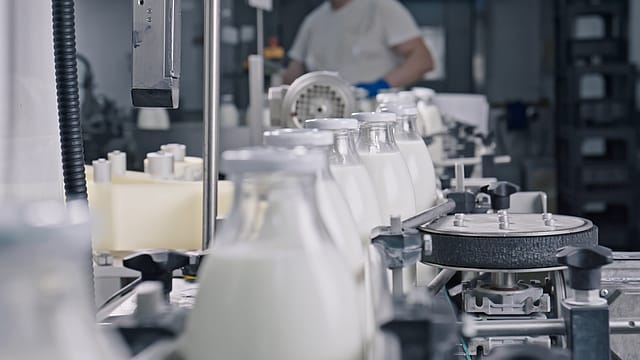
Private dairy’s most direct contribution to nutrition security lies in what it does to milk before it reaches the consumer. Investment in ultra-high-temperature processing and cold chain logistics does not merely extend shelf life; it preserves the micronutrient content of milk across the supply chain, ensuring that the vitamins and minerals present at procurement are not degraded by the time the product reaches a household in a Tier-III town or a remote district.
Fortification then layers additional nutritional value on top of that preserved base, with vitamins A, D, and B12 delivered through a food vehicle that families already purchase, trust, and integrate into their daily diets without requiring any behaviour change whatsoever. This combination of preservation and fortification, executed at the scale that only organised private players can sustain, is among the most cost-effective public health interventions available to India today.
The benefits extend well beyond the consumer. Private players’ expansion into rural procurement networks has integrated millions of smallholder farmers into formal market systems, giving them access to price stability, veterinary support, and quality incentives that gradually improve herd productivity and farm incomes.
When farmer incomes rise and productivity improves, the upstream supply of high-quality milk strengthens, which, in turn, makes fortification and quality assurance downstream more viable and more consistent. This virtuous cycle, where commercial investment in supply chain quality simultaneously serves farmer welfare, consumer nutrition, and public health goals, is the structural argument for treating private dairy not as a profit-seeking participant in India’s food economy but as an active co-architect of its nutrition infrastructure.
What makes private dairy’s nutrition contribution structurally distinct from other interventions is that its impact compounds over time rather than plateauing at the limits of public expenditure.
Every rupee invested in processing infrastructure, quality systems, and cold chain reach simultaneously serves commercial returns and public health outcomes, creating an alignment of incentives that no subsidy-driven model can replicate at equivalent scale or sustainability.
As consumption growth continues to outpace production growth, the organised private sector's ability to channel that rising demand toward higher-quality, more nutritious products will determine not just the industry's own trajectory but the nutritional profile of an increasingly aspirational, health-conscious Indian consumer base.
India’s nutrition transition demands a delivery mechanism that is simultaneously affordable, accessible, culturally embedded, and nutritionally dense. Private dairy is now capable of meeting all four criteria at the national scale that the challenge demands, and the sector's task now is to invest in quality, fortification, and last-mile reach with the same urgency that India's hidden hunger crisis deserves.
(The author is executive director, Heritage Foods Ltd. Views are personal.)