
Zen and the art of boardroom warfare
ADVERTISEMENT
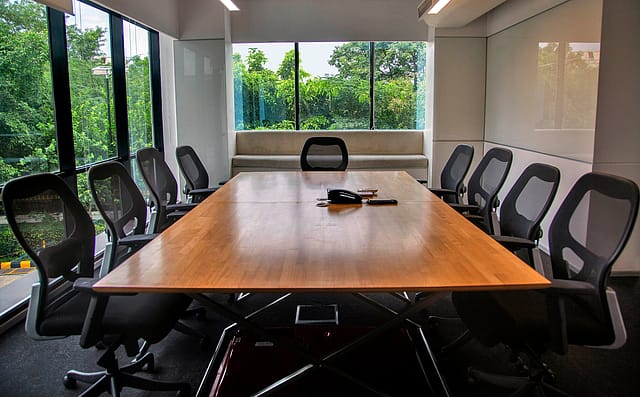
Imagine that you were inducted into a board, before all that globalisation had happened. A mahogany table appeared. A leather folder materialised. Someone handed you sparkling water in a glass heavy enough to anchor a yacht. You mastered the ceremonial nod (slow, grave, mildly concerned), perfected the strategic sigh, and developed the rare ability to say, “We should explore options in totality” while meaning “Absolutely not.” You can now disagree in full sentences without raising your pulse and support a proposal you secretly hope is quietly euthanised in subcommittee.
In most western boardrooms, debate is a competitive sport. Interruptions are cardio. “Robust discussion” is both compliment and warning label. Hierarchy exists, certainly… but it’s flexible, like airline boarding groups. Yes, there’s a chair. Yes, there are senior directors. But the newest appointee can still challenge a legacy titan before dessert is served.
Then globalisation crashed the party.
Companies wanted insights from Shanghai, Seoul, Surat. Zoom made it possible to govern across hemispheres without changing out of house slippers. And suddenly, your comfortable boardroom choreography required a cultural software update.
Welcome to the Asian boardroom, where the rules are not louder, just sharper.
Hierarchy: Not a mood, a monument
In the West, hierarchy is usually politely-acknowledged and then enthusiastically-tested. Titles are impressive. Experience is admired. But everyone gets a swing at the piñata.
In many Asian boardrooms, hierarchy is less of a vibe and more of a load-bearing wall. Tenure matters. Age matters. Rank matters. The director who joined when fax machines were cutting-edge is not merely senior; they are institutional bedrock.
If you are accustomed to opening with, “Let me challenge that assumption,” pause. Observe who speaks first. Notice who speaks last. Track whose comments trigger nods versus frantic note-taking. There is always an invisible operating system running beneath the visible agenda. Hack it at your peril. You need not become silent. But your inner debate gladiator may need to swap the sword for a silk fan.
Seating: A game of thrones, with better manners
In many western companies, especially those featuring exposed brick and beverages brewed from mysterious botanicals, board seating is casual. You sit where you land. Name cards are for weddings and awkward networking events.
In parts of Asia, seating is geometry with meaning. Proximity to the board leader signals influence. Distance is not random but a data point. The table is a map. Study it.
And then comes the great existential moment: sitting down. In some settings, the leader sits first. Always. You may hover, unsure whether gravity has been authorised. It has. Eventually. Just not before the chair. Think of it as synchronised governance.
The meeting before the meeting (Spoiler: That’s the real meeting)
If you believe decisions are forged in the fiery crucible of the official board session, brace yourself. In many Asian contexts, the real debate occurs beforehand… through discreet, one-on-one conversations where concerns are aired, objections softened, and consensus gently molded. By the time the formal meeting begins, the heavy lifting is done. What remains is confirmation. Ceremonial alignment.
To a professional exective used to the western ways, this can feel like watching the final act of a play whose first two acts were missed. Where is the dramatic showdown? The slide-by-slide quizzing? The heroic dissent? It already happened. Quietly.
Attempting to resurrect a settled issue during the official meeting may not spark fireworks, but can cause discomfort. Public confrontation risks loss of face, a consequence far weightier than losing an argument. What you consider transparency may be received as unnecessary spectacle.
The savvy move? Influence early. Influence privately. Governance, it turns out, prefers hallways to spotlights.
Silence: The loudest sound in the room
Professional board culture frequently equates engagement with decibels. If no one interrupts, are we even alive? In many Asian boardrooms, presentations proceed with minimal interruption. Questions wait patiently until the end. Silence is not awkward; it is attentive. It is the sound of thinking.
Should you observe a director with eyes closed, resist the urge to dispatch medical assistance. They are likely concentrating. In some cultures, stillness signals respect. The absence of chatter doesn’t indicate the absence of thought.
Agendas may also meander with purpose. What appears to be a tangent may actually be context-building. The scenic route to consensus can be more efficient than the expressway to confrontation.
And disagreement? It rarely arrives wearing boxing gloves. Instead of “I fundamentally oppose this,” you may hear, “That may be challenging,” or “Perhaps we revisit this later.” Translation: a polite, elegant, immovable no. Leadership direction may also arrive gift-wrapped in humility. A gentle suggestion may in fact be a fully formed decision wearing a silk robe.
None of this suggests a lack of rigour. Quite the opposite. The discipline lies in preparation, choreography, and collective alignment. Authority is exercised. Debate occurs… just not always at the table.
For a seasoned director used to the western culture, the adjustment is about recalibrating delivery, not a dimming intellect or surrendering conviction. Influence here is more about timing, respect, and cultural fluency.
The global boardroom is expanding, and with it the definition of leadership. You may still bring your strategy, your insight, your carefully sharpened questions. Just remember: in some rooms, the boldest move is restraint, the sharpest comment is implied, and the real decision was made long before you found your seat.
(Muneer is a Fortune 500 advisor, startup investor and co-founder of the non-profit Medici Institute for Innovation. Ward is global board advisor, coach, and publisher. Views are personal)