
RBI’s ECL norms may impact banks’ CET-1 ratios by up to 120 bps: Crisil
ADVERTISEMENT
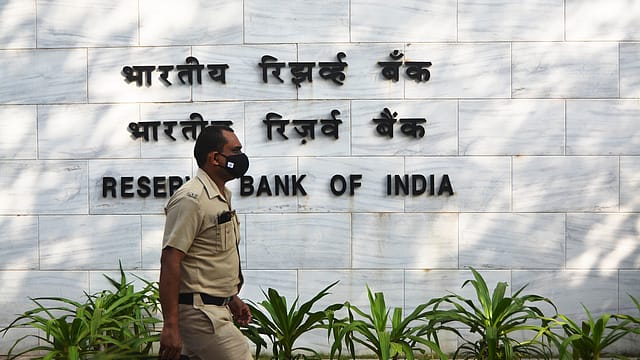
The Reserve Bank of India’s (RBI) final directions mandating a transition to the Expected Credit Loss (ECL) provisioning regime for domestic banks could lead to a one-time net impact of up to 120 basis points (bps) on their Common Equity Tier 1 (CET-1) ratio, according to a report by Crisil Ratings.
However, the report noted that banks will be allowed to spread the impact over four financial years, while additional advance provisioning could further soften the hit. Given the healthy capitalisation buffers across the banking system, the credit profiles of banks are unlikely to be materially affected, Crisil said.
Three-stage asset classification framework
The RBI’s new directions introduce a three-stage asset classification framework for provisioning, based on Probability of Default (PD), Loss Given Default (LGD), and Exposure at Default (EAD). The norms also prescribe minimum provisioning thresholds across asset classes to ensure prudence.
The directions, largely in line with the draft guidelines issued in October 2025, will come into effect from April 1, 2027. The four-year glide path is expected to help banks absorb incremental provisioning requirements through retained earnings.
Subha Sri Narayanan, Director, Crisil Ratings, said, “As banks migrate from the existing incurred-loss-based model to a forward looking ECL framework for provisioning, the gross impact on their CET-1 ratio is expected to be up to 170 bps for most, varying based on portfolio composition, past asset quality track record and existing provisioning levels. However, with a few large banks having sizeable contingency provisioning and some others bolstering theirs, the net impact factoring in provisions made till date is expected to be significantly lower at up to 120 bps.”
According to the report, the gross impact of up to 170 bps reflects the total differential in provisioning between the current IRAC norms and the new ECL framework across asset categories.
For Stage I assets, minimum provisioning thresholds are broadly similar to existing norms, though actual requirements may be higher depending on risk assessment.
For Stage III assets, the transition impact is expected to be limited, as current provisioning levels for non-performing assets, at around 76 per cent, are already relatively high.
The largest impact is expected in Stage II assets, where the minimum provisioning requirement could rise sharply. For most asset classes, provisioning may increase by 4.6 percentage points, from 0.4 per cent to 5 per cent.
However, Crisil noted that the impact would remain contained because Special Mention Accounts (SMA 1+2) currently account for only around 2 to 2.2 per cent of the banking system’s assets. The ECL framework will also cover off-balance-sheet exposures and sanctioned but undisbursed credit limits, increasing provisioning needs further.
Despite this, banks are considered well-positioned to absorb the transition impact, supported by a banking system CET-1 ratio of around 14% as of March 31, 2026, and a return on assets of 1.25–1.3% in the last fiscal year.
Crisil added that the recent revision in risk weights for certain asset classes, also effective from April 1, 2027, could release some capital and offset part of the impact on capital adequacy buffers.
Vani Ojasvi, Associate Director, Crisil Ratings, said, “The new ECL directions will have not only a one-time transition impact but also lead to a structural increase in credit costs for the banking system to some extent. This is because banks will have to provide more for incremental Stage III assets compared with the current 15% mandate for sub-standard assets. Additionally, provisions will be higher even for delinquent assets that haven't yet reached Stage III. While banks are currently in an improved profitability cycle, they will need to proactively focus on bolstering their net interest margins and controlling operating expenses to mitigate this impact.”
Overall, Crisil said the final ECL guidelines would strengthen the resilience of banks against unforeseen shocks, align India’s provisioning norms with global financial reporting standards, and improve transparency, comparability, and accountability in credit risk management.