
Why HDFC Bank’s “all is well” narrative is not flying
ADVERTISEMENT
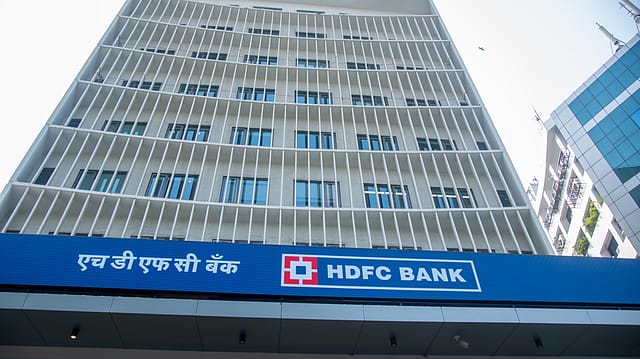
Concalls with analysts, by design, are an exercise in controlled disclosure, with the management having the home advantage on the narrative. HDFC Bank 's emergency analyst call held on Thursday to address the sudden resignation of part-time chairman Atanu Chakraborty was no different.
The new interim chairman Keki Mistry's opening comments were literally Shakespearean in their tone: "I would not have taken on this responsibility at the age of 71 if it did not align with my principles and the level of integrity that I would expect from the bank." CEO Sashidhar Jagdishan followed: "We will not do anything that will bring in ignominy."
But such reassurances are not usually necessary unless something has destabilised the baseline assumption of integrity and ethics, which was what Chakraborty’s letter had invoked. “Certain happenings and practices within the bank, that I have observed over the last two years, are not in congruence with my personal values and ethics. This is the basis of my aforementioned decision,” he cited and resigned with immediate effect, rather than serve out his tenure ending in May 2027.
Why is Atanu Chakraborty silent?
Yet the management on the call said Chakraborty had "nothing specific to respond to". On what really drove the exit, the response was: "There could be a relationship issue between him and management that may have been manifested over a period of time."
What’s baffling is that when a news agency reached out to Chakraborty for reactions, he replied: "That's (resignation) on the exchange website. Nothing worth discussion. It's quite routine." Whether Chakraborty wanted to deflect or stay mum, the “routine” comment was dismissive and, to a certain degree, callous. Having led as the part-time chairman of the country’s most important banking institution, one cannot drop a bombshell and walk away.
Chakraborty noted in his letter that "the benefits of merger are yet to fully fructify," a pointed remark about the post-HDFC-merger integration that the bank has been navigating since 2023. Net interest margins remain under pressure. Post-merger balance sheet adjustments continue. His reference to "happenings and practices" over the past two years aligns with this integration window, though it’s not clear if his concerns were operational, cultural, or ethical.
The RBI in a statement said: "Basis our periodical assessment, there are no material concerns on record as regards its conduct or governance." The regulator explicitly stated that India's largest private sector lender “remains well-capitalised and the financial position of the bank remains satisfactory with sufficient liquidity.”
Why are analysts not convinced?
But some analysts on the call were far from convinced.
When Prashant Poddar, a portfolio manager at Abu Dhabi Investment Authority, one of the world's largest sovereign wealth funds, got his turn to speak on the call on Wednesday morning, he was to the point. "It's quite strange that we are getting these kind of letters from the chairman of the largest private bank in India…This is a reputation-maligning kind of letter. That's all we felt after seeing it," said Poddar. He suggested the bank ask the RBI to investigate to clear the air. "Banking business is that of reputation… this is reputation-maligning," he added.
Shiva Natarajan, analyst with Principal Asset Management, remarked: "The outgoing chairman has written some strong words, “happenings at the bank for two years, not in congruence with personal values and ethics.” These are very, very strong words. And all I'm hearing is there was nothing specific. It just seems very difficult to believe."
The management’s response was : "I agree with you. It is a little baffling at this point of time."
The missing DMD
Interestingly, the deputy managing director, Kaizad Bharucha, the man who runs the entire asset book of India's largest private lender and who had just got a fresh three-year term, was not on the call. The explanation offered: "Kaizad has had to go for a health checkup, his routine health checkup today, which was pre-organised... he will be probably on the call, if at all, we have other calls from tomorrow onwards."
That’s odd.
On the most critical day in the bank’s history, the DMD being absent for a routine health checkup does not pass muster. While Jagdishan spoke on the excellent relationship shared between him and bigger roles for Bharucha in the future, his absence was glaring. According to unconfirmed reports and tweets, Bharucha and Chakraborty were in favour of MUFG buying a stake in the bank’s subsidiary HDB Financial, but instead it went public. The stock is now languishing at ₹634 below the IPO price of ₹740.
Incidentally, Jagdishan’s tenure is due to end by October this year and the nomination and remuneration committee is expected to meet in a month's time before taking the proposal to the board later.
Though the management on the call kept talking about institutional unity, Chakraborty left citing ethics. The question of what specifically he saw, over two years that compelled a former Economic Affairs Secretary to resign with immediate effect remains entirely unanswered.
The confidence, unsettled by a chairman's ethics letter, cannot be fully restored by a well-managed 42-minute analyst call.
With the stock languishing at ₹782 levels, it goes to show that the Street is not buying into the management narrative.