
No walking back: Warsh delivers first Fed hike since 2023, upending Trump’s rate-cut hopes
ADVERTISEMENT
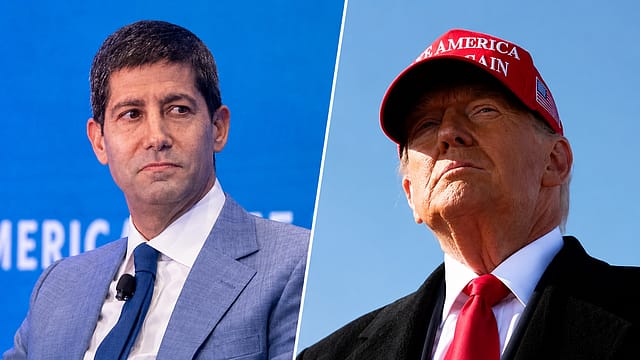
The U.S. Federal Reserve raised interest rates by 25 basis points on Wednesday citing inflation concerns despite President Donald Trump’s repeated demands for lower borrowing costs as new Fed Chair Kevin Warsh put inflation firmly back at the centre of US monetary policy.
The Federal Open Market Committee voted 12-0 to raise the federal funds target range to 3.75%-4%, marking the first US rate hike since July 2023. The unanimous decision came despite Trump having publicly pressed the central bank for lower rates and having selected Warsh earlier this year amid expectations that the new chair would favour easier monetary policy.
Instead, Warsh used his first major policy decision to underline the Fed’s commitment to price stability.
“Inflation is too high and has been for too long,” Warsh said at his post-meeting press conference.
The Fed's policy statement said the rate increase would support a “timelier return” to its 2% inflation goal and ended with a blunt declaration: “The Committee will deliver price stability.”
Warsh said the Fed had established a standard for action — policymakers needed to be confident that underlying inflation was moving towards the 2% target “clearly, and at sufficient speed”.
“Today, the FOMC decided that this standard has not been satisfied,” he said.
Trump wanted cuts; Warsh delivers a hike
The decision comes against a backdrop of mounting pressure from Trump for lower interest rates.
Trump said earlier this month that the US should have the “LOWEST RATE” and warned that he could stop trading with countries with which the US runs a trade deficit if the Fed did not cut rates.
The Fed has now done the opposite.
Warsh, who was chosen by Trump to lead the central bank, said the Fed had no intention of stepping back from its statutory responsibilities.
“No walking back from our responsibilities,” he said.
He also said there was broad agreement within the FOMC over the objective of delivering price stability, although policymakers differed over the best strategy and timing.
Warsh described the discussion at the two-day meeting as a “real family fight”, saying policymakers had engaged in vigorous debate over inflation, economic shocks, the Fed’s policy tools and the effects of AI-related investment.
But he said the disagreements did not represent a retreat from the Fed's inflation objective.
“My own judgement is ... this is the right team to win the battle against high inflation,” Warsh said.
Fed leaves door open to another hike
The Fed's latest projections point to another 25-basis-point rate increase this year.
Reuters reported that 16 of the 18 policymakers who submitted rate projections expect at least one more hike by the end of 2026, while only two see rates remaining at the current level.
The median projection puts the federal funds rate at about 4.1% at the end of this year, with rates remaining around that level through 2027 before declining in 2028.
The Fed raised its inflation forecast, with median projections showing headline PCE inflation at 3.7% this year and 2.3% next year. GDP growth is projected at 2.3% in 2026 and 2.4% in 2027, while unemployment is expected to remain around 4.1%.
Warsh said the labour-market side of the Fed's dual mandate was “in good shape”, with unemployment around 4.1%, rising job openings and weekly hours, and jobless claims consistent with full employment.
That leaves inflation as the Fed's predominant concern.
“We will deliver the 2% inflation target,” Warsh said, describing that level as the committee's definition of price stability.
Warsh wants markets to ‘play the ball, not the referee’
Warsh also defended his decision to reduce the Fed's use of forward guidance, arguing that markets should respond to economic developments rather than trying to anticipate the central bank's next communication.
“Market participants are learning to play the ball, not the referee,” he said.
He pointed to a material rise in both nominal and real Treasury yields since the previous FOMC meeting, saying some of the moves in market interest rates ranked among the most significant of the past two decades.
“The markets have done quite a bit,” Warsh said, adding that the Fed was observing those movements rather than attempting to dictate them.
AI boom complicates inflation picture
Warsh also highlighted the strength of business investment, particularly spending linked to artificial intelligence.
He said high-tech equipment and software investment was growing at a four-quarter rate of nearly 20%, helping sustain manufacturing output and potentially laying the groundwork for future economic growth.
But he cautioned that the timing and scale of the impact of the investment boom on the economy's supply side remained difficult to determine.
“The surge in AI-related investment has been remarkable,” Warsh said.