India’s online travel market to reach ₹3.84 lakh crore by FY28, growing twice as fast as global peers
/ 3 min read
India’s online travel penetration is also expected to deepen, with online channels accounting for 65% of the market by FY28, up from 54% currently, depicting rapid migration from offline bookings to digital platforms.
Credits: Shutterstock
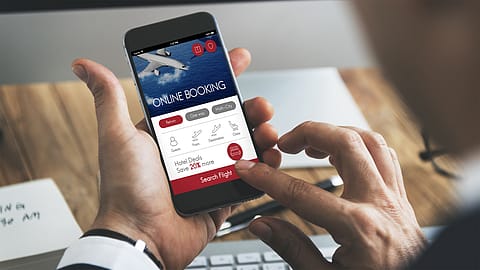
India's online travel market is on track to become one of the world's fastest-growing digital travel ecosystems, with the market expected to expand to ₹3.84 lakh crore by FY28, growing at more than twice the pace of the global online travel agency industry.
According to a report by Motilal Oswal Financial Services (MOFSL), India’s online travel agency (OTA) market will expand from ₹2.08 lakh crore in FY23 to ₹3.84 lakh crore by FY28, translating into a compound annual growth rate of about 13%. In comparison, the global OTA market is expected to grow at 6.1% annually, rising from about $938 billion in 2025 to $1.19 trillion by 2029. The growth is driven by rising digital adoption, shifting consumer preferences and an increasingly consolidated travel ecosystem.
India’s online travel penetration is also expected to deepen, with online channels accounting for 65% of the market by FY28, up from 54% currently, depicting rapid migration from offline bookings to digital platforms.
The report says that the travel industry is entering a new phase, moving beyond traditional online booking platforms toward AI-enabled travel ecosystems capable of offering personalised recommendations, dynamic packaging and assisted trip planning.
Globally, major players such as Booking Holdings, Expedia Group, Airbnb and Trip.com dominate online travel bookings across flights, hotels and experiences. In India, the market is led by MakeMyTrip, Ixigo, Yatra Online, Cleartrip and TBO Tek.
According to MOFSL, India remains significantly underpenetrated relative to global markets despite favourable structural drivers such as rising disposable incomes, improving connectivity, growing domestic tourism and increasing digital adoption across smaller cities. The report also highlights emerging travel trends ranging from spiritual tourism to event-led travel, noting that flight bookings in some cities surged more than 350% year-on-year during major concert weekends.
M&A emerges as industry playbook
Consolidation has become a defining feature of the global travel technology sector. MOFSL noted that mergers and acquisitions have consistently been used by travel platforms to expand inventory, strengthen technology capabilities and deepen customer reach.
Among global leaders, Booking Holdings has acquired businesses including Etraveli Group, OpenTable, Kayak and Agoda, while Expedia has expanded through deals such as HomeAway, Orbitz, Travelocity and Hotels.com.
"Indian OTAs have mirrored the strategies of global OTAs by adapting them to local market dynamics and using them for adjacency expansions," says the report.
Indian players have adopted a similar approach. MakeMyTrip has acquired businesses ranging from Ibibo Group and Happay to Flamingo Transworld, helping it expand into corporate travel, forex and international leisure segments. Ixigo has built its rail and bus ecosystem through acquisitions including ConfirmTkt, AbhiBus and FreshBus, while Yatra has focused on enterprise travel and MICE services through multiple acquisitions.
Valuations remain attractive, but risks persist
Despite its positive outlook on the sector, MOFSL cautioned that travel technology remains closely tied to broader economic activity and consumer sentiment. Any prolonged slowdown in discretionary spending, corporate travel budgets or global economic growth could weigh on booking volumes and revenue growth.
{{#most-powerful-women-snapshot-individual.slug}} {{/most-powerful-women-snapshot-individual.slug}} {{^most-powerful-women-snapshot-individual.slug}} {{/most-powerful-women-snapshot-individual.slug}} {{#showRanking}} {{current-rank}} {{/showRanking}} {{#photo.0.url}}
{{name}}
The brokerage also flagged intense competition across the online travel ecosystem. As airlines, hotel chains and supplier-owned booking platforms increasingly push direct bookings, travel intermediaries could face pressure on commissions and margins. "Higher customer acquisition costs, promotional spending, and pricing competition may moderate margin expansion across the sector" may further limit profitability gains.
Geopolitical tensions, health-related disruptions, fuel price volatility and regulatory restrictions can quickly alter travel patterns and demand. The report noted that recent disruptions in the Middle East affected booking volumes across key travel corridors, highlighting the sector's vulnerability to external shocks.
As travel platforms increasingly position themselves as technology companies, execution risks are also rising. MOFSL noted that "sustained growth depends on continuous investment in technology platforms, AI-led innovation, and a seamless customer experience," while warning that platform outages, cybersecurity incidents or delays in adapting to evolving customer preferences could hurt competitiveness and brand perception.
On valuations, the brokerage maintained a Buy rating on TBO Tek and initiated coverage on Ixigo and Yatra with Buy recommendations. It assigned a target price of ₹1,765 to TBO Tek, implying 30% upside, ₹217 to Ixigo, indicating 24% upside, and ₹125 to Yatra, suggesting 21% upside from current levels.
As travel platforms evolve from booking engines into AI-powered travel companions, MOFSL believes the sector remains well positioned to benefit from India's long-term shift toward digital and experience-led consumption.
Follow Fortune India
NEXT STORY