Iran war impact: Hotels flag LPG supply risks as West Asia conflict disrupts energy flows
/ 3 min read
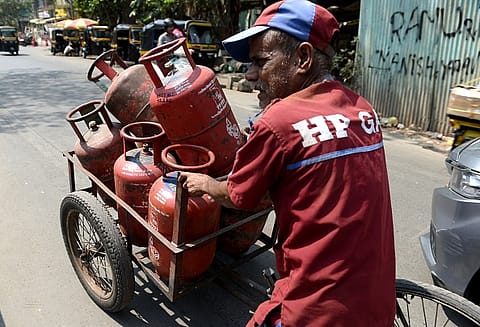
Credits: Getty Images
Iran war impact: Hotels flag LPG supply risks as West Asia conflict disrupts energy flows
India's hospitality sector is on alert as LPG supply disruptions linked to the West Asia conflict threaten business continuity. The government has prioritized domestic consumption and increased LPG production, but industry leaders warn that prolonged shortages could impact smaller establishments. Hotels are taking contingency measures, including diversifying suppliers and exploring alternative cooking solutions.
This summary is AI-generated, and Fortune India is not responsible for its content or any associated copyright issues.
Industry leaders say hotel and restaurant kitchens depend heavily on LPG, and prolonged supply disruptions could affect business continuity across the sector, particularly for smaller establishments.
Credits: Getty Images
India’s hospitality sector is closely watching the supply of commercial LPG after disruptions linked to the widening West Asia conflict began affecting energy flows, prompting the government to step in with measures to prioritise domestic consumption and stabilise supply.
Industry leaders say hotel and restaurant kitchens depend heavily on LPG, and prolonged supply disruptions could affect business continuity across the sector, particularly for smaller establishments.
Despite government intervention, hospitality industry executives say they remain cautious.
“Restaurant and hotel kitchens rely heavily on LPG for their operations, and any supply shortages or price hikes could disrupt their functioning across the country,” said KB Kachru, president of the Hotel Association of India (HAI) and chairman – South Asia at Radisson Hotel Group.
While the industry understands the circumstances behind the energy shortage and price pressures, Kachru said the situation could become difficult if irregular supply persists. “Such disruptions pose a threat to industry as many small and medium-sized establishments may be constrained to temporarily shut down on account of continued shortage of LPG,” he added.
Could LPG supply disruptions affect hospitality operations?
For now, large hotel chains say they are taking contingency measures to avoid disruptions to guests.
Arjun Baljee, founder of ICONIQA and president of Royal Orchid Hotels Ltd., pointed out that while commercial LPG accounts for about 10% of India’s total LPG consumption, the hospitality sector supports a much larger ecosystem.
“From hotel and restaurant employees to gig delivery workers, farmers, and food suppliers, the sector has a long value chain that could feel the impact if supply disruptions persist,” Baljee said.
He said operations across Royal Orchid Hotels remain fully functional, with the company diversifying suppliers, optimising kitchen fuel usage, and deploying electrical cooking equipment where possible.
{{#most-powerful-women-snapshot-individual.slug}} {{/most-powerful-women-snapshot-individual.slug}} {{^most-powerful-women-snapshot-individual.slug}} {{/most-powerful-women-snapshot-individual.slug}} {{#showRanking}} {{current-rank}} {{/showRanking}} {{#photo.0.url}}
{{name}}
“The hospitality industry is closely monitoring the situation and working with distributors to ensure continuity, while also exploring alternative and energy-efficient cooking solutions to minimise any potential disruption to guest services,” Baljee added.
Companies that supply to hotels say they are also keeping a close watch on developments.
“We are closely monitoring the commercial LPG supply situation as it continues to evolve nationally,” said Nathan Andrews, business head – hospitality at DS Group. The DS Group has a growing hospitality portfolio with six key properties as of late 2025. “While industry reports indicate widespread disruptions in some regions, our current operations remain stable,” he adds.
The industry has welcomed the government’s decision to set up a 24/7 control room to track petroleum product supply and stock levels across the country. However, hotel operators say maintaining consistent LPG availability will be crucial in the coming weeks, especially as demand from restaurants, catering services, and tourism-linked businesses continues to rise.
The government recently revised natural gas allocation priorities to ensure uninterrupted supply of cooking gas and CNG. The move comes as geopolitical tensions in West Asia threaten to disrupt global energy supply chains. As part of the response, oil refineries have increased LPG production by about 10% to improve availability in the domestic market.
Authorities have also tightened monitoring to prevent hoarding and diversion. The monitoring period for LPG distribution has been extended from 21 days to 25 days, and officials clarified that the action has been taken under the Essential Commodities Act, not the Essential Services Maintenance Act.
Follow Fortune India
NEXT STORY