


The FAQs are AI-generated, and Fortune India is not responsible for its content or any associated copyright issues.
Rising costs, AI disruption, and West Asia conflict may slow India Inc’s growth: Moody’s
/ 3 min read
The report stated that the ongoing US-Iran war has exposed India’s vulnerability to imported inflation because of its heavy dependence on overseas supplies of crude oil, natural gas, LPG, and fertilisers.
THIS STORY FEATURES
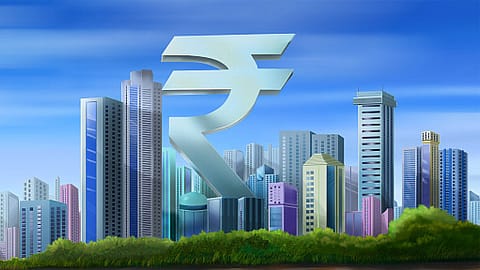
Despite the slump, investment activity is expected to remain substantial, with rated companies projected to spend nearly ₹4.6 lakh crore annually. | Credits: Getty Images
Escalating geopolitical tensions, rising commodity prices, rupee depreciation, and rapid technological disruption are emerging as major risks for India’s non-financial corporate sector, according to a report by Moody's Ratings.
The report stated that the ongoing US-Iran war has exposed India’s vulnerability to imported inflation because of its heavy dependence on overseas supplies of crude oil, natural gas, LPG, and fertilisers. Higher import costs, combined with a weakening rupee, are expected to push up energy inflation, weaken consumer sentiment, and slow discretionary spending across sectors ranging from automobiles and retail to hospitality and housing.
Moody’s said rising input costs, supply chain disruptions, and growing uncertainty are likely to constrain business investments and moderate demand growth for industrial products such as steel, metals, and cement.
The agency also flagged the growing impact of artificial intelligence (AI) and automation on India’s labour market, especially in services and white-collar jobs. While AI adoption may improve productivity, it could simultaneously increase job displacement risks and skill mismatches, affecting income growth and consumer spending over the next few years.
Companies may defer capital expenditure
According to the report, companies are likely to defer capital expenditure and prioritise liquidity preservation over aggressive expansion plans amid an uncertain global environment. Moody’s expects annual capital spending growth by rated Indian companies to slow sharply to around 4% over the next two years, compared with an 11% compound annual growth rate recorded between FY22 and FY26.
Despite the slump, investment activity is expected to remain substantial, with rated companies projected to spend nearly ₹4.6 lakh crore annually.
Risks to airlines and automobiles
The report noted that higher crude oil prices pose major risks for sectors such as airlines and automobiles. Airlines are already struggling to balance fare increases with passenger demand as aviation fuel costs rise. A prolonged increase in jet fuel prices would raise operating costs and hurt ticket affordability, negatively affecting carriers such as InterGlobe Aviation Ltd, which operates IndiGo.
Similarly, automobile manufacturers could face pressure if higher fuel prices weaken demand for internal combustion engine vehicles. Moody’s said the Indian operations of Tata Motors Passenger Vehicles Ltd remain exposed to this risk, although a gradual shift toward electric vehicles may partly offset the impact over time.
State-run fuel retailers such as Indian Oil Corporation Ltd, Bharat Petroleum Corporation Ltd, and Hindustan Petroleum Corporation Ltd are also facing earnings pressure because domestic fuel prices have not risen fully in line with global crude prices.
The report further warned that prolonged supply disruptions could reduce imports of fertilisers, natural gas and LPG, hurting agrochemical producers and increasing inflationary pressure on rural households. Higher cooking fuel costs and weaker farm incomes are likely to reduce discretionary spending in rural and semi-urban markets, affecting consumer goods companies, retailers, and hospitality firms.
Retail and hospitality businesses, including Reliance Retail Ventures Ltd and Oravel Stays Ltd, could see weaker demand as consumers turn cautious amid rising living costs and economic uncertainty.
{{#most-powerful-women-snapshot-individual.slug}} {{/most-powerful-women-snapshot-individual.slug}} {{^most-powerful-women-snapshot-individual.slug}} {{/most-powerful-women-snapshot-individual.slug}} {{#showRanking}} {{current-rank}} {{/showRanking}} {{#photo.0.url}}
{{name}}
Realty, construction sectors may see slower activity
Moody’s also said the real estate and construction sectors could witness slower activity as high inflation, weaker consumer confidence and elevated borrowing costs delay home purchases and commercial investments. This, in turn, may reduce demand for industrial materials such as steel, non-ferrous metals and cement, affecting companies, including Tata Steel Ltd, JSW Steel Ltd, Vedanta Resources Ltd, and UltraTech Cement Ltd.
On the technology front, Moody’s said India is particularly exposed to AI-led labour market disruption because of its large working-age population and heavy reliance on the services sector for urban employment. Large IT companies such as Tata Consultancy Services Ltd and Infosys Ltd are increasingly automating operations and restructuring workforce composition to reduce costs and maintain competitiveness.
The report warned that slower hiring, weaker wage growth and rising job insecurity may encourage precautionary savings and reduce discretionary consumption over the next 12 to 18 months. However, Moody’s said India’s corporate balance sheets remain significantly stronger than they were a few years ago. Aggregate leverage among rated non-financial companies is estimated to decline to around 2.5 times debt-to-EBITDA in fiscal 2026 from 3.9 times in fiscal 2021, providing companies with a stronger cushion to absorb cyclical pressures.
The agency expects overall credit quality among rated companies to remain broadly stable over the next 12 to 18 months, although sectors heavily dependent on imported energy inputs are likely to face greater pressure on earnings and cash flows.
Frequently Asked Questions
NEXT STORY