
Fortune India Explainer: Govt proposes E85, E100 fuels after E20 rollout — what it means for your car, mileage and fuel costs
ADVERTISEMENT
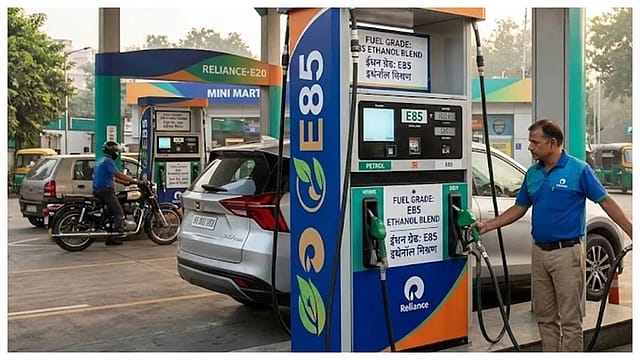
India’s ethanol push is entering its next phase. Weeks after the nationwide rollout of E20 fuel, the central government has proposed draft rules to introduce E85 (85% ethanol) and E100 (near-pure ethanol) into the fuel mix. While the move is aimed at cutting oil imports and utilising surplus ethanol, it also raises practical questions for everyday vehicle owners.
The draft amendments to the Central Motor Vehicles Rules (CMVR) formally bring higher ethanol blends into the regulatory framework. They also lay the groundwork for vehicles that can run on these fuels—something that is still largely absent in today’s mass market.
Supply is ready, pumps are not
India’s ethanol production capacity has risen to about 20 billion litres, nearly double the current demand. Higher blends could help absorb this surplus and support farm incomes linked to sugarcane and maize.
The bigger gap is at the retail end. E85 and E100 will need separate storage and dispensing systems at fuel stations, something that will take time to scale up.
For now, E20 remains the fuel most consumers will use. The shift to higher ethanol blends is clearly underway—but for drivers, it’s still some distance from the daily commute.
Mileage hit vs cost savings
There is also a trade-off on efficiency. Ethanol has lower energy content than petrol, which means vehicles running on E100 could see a noticeable drop in mileage—industry estimates suggest up to 30%.
That said, ethanol is typically cheaper to produce domestically. If priced lower at the pump, it could offset part of the higher consumption. Whether that translates into real savings for consumers will depend on how fuel pricing evolves.
Is your current vehicle compatible with E85/E100?
For most consumers, the immediate takeaway is simple: existing vehicles are not compatible with E85 or E100. Cars and two-wheelers sold over the past few years are tuned for E10 or, more recently, E20. Higher ethanol content can corrode fuel systems, damage rubber components and affect engine performance.
What is the way ahead?
The transition phase is where Flex-Fuel Vehicles (FFVs) come in. These are designed to handle varying ethanol blends, with sensors that adjust engine settings automatically. A few automakers have showcased such models, but they are yet to become mainstream—and are expected to cost more than conventional petrol vehicles.
Over time, wider availability of FFVs, clearer pricing signals and expansion of fuel station infrastructure will determine how quickly E85 and E100 move from policy to practice. Until then, for most consumers, the shift remains a gradual one rather than an immediate change at the pump.