
Hyundai Motor India to invest ₹7,500 crore capex in FY27, lines up SUVs and EVs amid push to regain second spot
ADVERTISEMENT
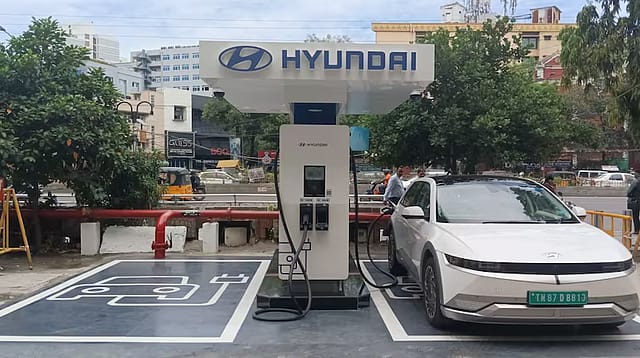
Hyundai Motor India Ltd. (HMIL) has announced a significant expansion plan for FY27, committing around ₹7,500 crore in capital expenditure and lining up two new models—including a locally developed electric SUV—as it seeks to regain its position as India’s second-largest passenger vehicle maker.
Announcing the plans during the Q4 FY26 post-earnings virtual call with the media, HMIL Managing Director & CEO Tarun Garg stated, “Our growth ambition plans will be fuelled by aggressive investments of around ₹7,500 crore in fiscal 2026-27, marking the highest capex in recent years.”
SUV-led product push to drive next growth phase
Hyundai will introduce two all-new nameplates in FY27, both positioned in high-demand SUV segments. Garg said, “During this financial year, we shall be introducing two completely new nameplates… both these launches are expected to meaningfully boost our volumes and act as powerful catalysts for our next phase of growth.”
One of the launches will be a locally manufactured compact SUV EV, marking Hyundai’s entry into a dedicated electric SUV segment. The second will be a mid-size ICE SUV aimed at strengthening its internal combustion engine portfolio.
₹7,500 crore capex split between products and capacity expansion
HMIL plans to deploy 45–50% of the ₹7,500 crore capex towards new product development, while the remaining will be directed towards manufacturing upgrades at its Chennai and Pune plants. The company will expand Pune capacity by 70,000 units post Phase II, taking total installed capacity to 1.14 million units by 2030.
FY26 profit declines amid mix shift, higher costs
Hyundai reported a 22.2% YoY decline in consolidated net profit to ₹1,255.63 crore in Q4 FY26, while full-year PAT stood at ₹5,431.52 crore. Revenue, however, rose to ₹70,763 crore, supported by strong export growth of 16.36% to 1.90 lakh units.
Garg attributed margin pressure to an “unfavourable volume mix” after GST-led demand recovery boosted hatchbacks and sedans. “We saw growth across segments after GST rationalisation, unlike earlier when demand was skewed more towards SUVs,” he said.
No. 2 comeback strategy, 8–10% growth outlook
After slipping to fourth position in FY26 domestic PV rankings, Hyundai reaffirmed its intent to regain the number two spot. “We have every intention to come back to the number two position… we are very passionate about our position, and we will get it back sooner than later,” Garg said.
The company expects both domestic sales and exports to grow in the 8–10% range in FY27, supported by new launches, capacity expansion and improving demand sentiment. April domestic volumes already grew 17% YoY, indicating early momentum.
With a sharper SUV-led portfolio, EV entry and one of its highest-ever investment cycles, Hyundai is positioning FY27 as a pivotal turnaround year in India’s increasingly competitive passenger vehicle market