
25% LPG gap pressures F&B; shortfall may hit 60%
ADVERTISEMENT
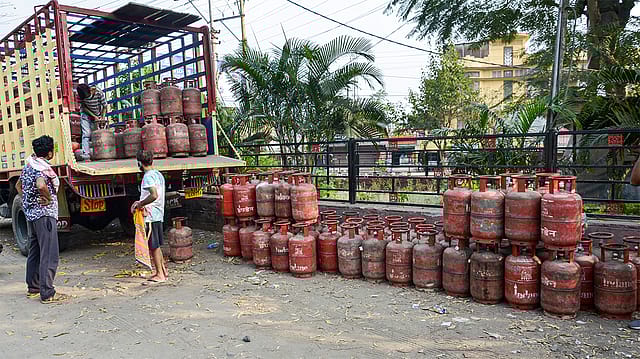
A supply crunch in commercial LPG is beginning to show up as a structural risk for India’s food services and food delivery ecosystem, with independent restaurants likely to bear the brunt.
Areport by Elara Capital flags that India’s F&B sector requires about 23 million commercial LPG cylinders a month, against current availability of roughly 17 million; a staggering gap of nearly 25%. If allocations tilt further toward households, that shortfall could widen sharply to 40–60%.
“India’s F&B ecosystem requires nearly 23 million cylinders per month… against sectoral availability of around 17million, implying a near to 25% shortfall,” said Karan Taurani, executive vice president at Elara Capital, noting that the mismatch is already meaningful even before any policy tightening.
Can restaurants absorb a deeper supply squeeze?
The pressure point lies in the structure of India’s food services market. Of roughly 4 million outlets, about 3.2 million (or 80%) rely on LPG as their primary cooking fuel. This dependence is highest among small, unorganised players, which typically consume 3–5 cylinders per month, versus 10–15 cylinders for organised outlets.
Accounting for steady consumption and episodic demand from weddings and events, total monthly requirement rises to around 23 million cylinders. However, under current allocation norms, only about 20% of overall commercial LPG supply is earmarked for F&B, translating into the 17 million figure.
Taurani points out that any increase in house hold demand could force a reallocation. “A reduction in F&B allocation to 15% or 10% could widen the mismatch to ~40–60%,” he said. That said, he adds that if the current 20% allocation holds, “the ~25% shortfall appears broadly manageable at industry level.”
The real vulnerability, however, sits with food delivery platforms such as Swiggy and Zomato, where a large share of orders comes from independent restaurants.
These smaller outlets are more exposed to supply disruptions and potential shutdowns. According to industry inputs cited in the report, up to 5% of organised restaurants have already shut operations, while nearly 80% of organised chains remain LPG-dependent .
In a worst-case scenario - assuming a 12% decline in net order value (NOV) over a 30-day disruption - the effective impact on platforms moderates to about 4%, after adjusting for merchant mix. Even so, Taurani estimates this could translate into an 8–9% decline in quarterly adjusted EBITDA.
“We model a worst-case effective NOV impact of 4%, translating into 8–9% decline in quarterly adj. EBITDA,” he said, adding that this implies a limited downside of about 0.7% and 1.7% to target prices for Eternal and Swiggy, respectively.
Not all segments are equally exposed. Quick service restaurant chains, particularly in burger and fried chicken categories, are relatively insulated as 60–80% of their operations are electric-based and backed by stronger procurement systems. This could allow them to capture incremental demand if consumers shift away from smaller, LPG-dependent outlets.
What this really means is the current supply imbalance may not cripple the industry outright, but it could accelerate a shift away from fragmented independents toward organised, better-equipped chains.