
Iran war impact: LPG disruption could hit 28% of food delivery volumes; QSRs may gain
ADVERTISEMENT
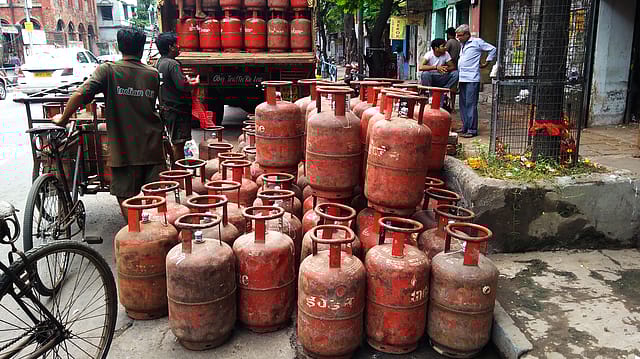
A potential disruption in LPG supplies could strain restaurant operations and ripple through food delivery platforms, but quick service restaurant (QSR) chains may emerge as relative beneficiaries if consumers shift their ordering patterns.
Elara Capital flagged that constrained cooking fuel availability, highlighted recently by the National Restaurant Association of India (NRAI), could reduce restaurant operating capacity and affect order fulfilment across food delivery platforms. Many independent restaurants depend heavily on LPG for cooking, making them vulnerable to any supply shock.
“Constrained cooking fuel availability could reduce restaurant operating capacity and, in turn, impact order fulfilment on food delivery platforms,” said Karan Taurani, senior vice-president at Elara Capital.
Based on Elara’s estimates, around 28% of gross order value (GOV) across food delivery platforms could be exposed if LPG shortages persist. The brokerage assumes that about 40% of the roughly 70% of GOV coming from non-QSR chains relies primarily on gas-based cooking.
However, Taurani noted that the overall impact may be partly offset by a shift in consumer behaviour.
“If LPG-dependent cuisines such as Indian, Chinese and similar formats face disruptions, customers could redirect orders toward QSR chains that largely operate on electric ovens and fryers,” he said.
Could consumer shifts cushion the blow?
QSR chains, both global and domestic, currently account for around 25% of platform order volumes and roughly 30% of GOV, according to Elara. Categories such as pizza, burgers and fried snacks rely mainly on electric cooking equipment and have limited dependence on LPG, meaning operations are likely to continue largely unaffected.
Additionally, the brokerage estimates that about 60% of the 70% GOV generated by non-QSR chains already uses electricity-based cooking appliances. Taken together, this leaves around 72% of total GOV relatively insulated from an LPG disruption.
The more vulnerable segment comprises unorganised Indian, South Indian and Chinese cuisine outlets, which rely heavily on flame-based cooking for dishes such as dal, curries, wok-based items and biryani. These operators represent about 75% of total order volumes and 70% of GOV, though Elara estimates that only about 40% of them are fully dependent on LPG, translating into roughly 30% of orders and 28% of GOV at risk.
So far, there are no immediate signs of disruption.
“Based on our real-time primary checks, the industry has not witnessed any impact on order volumes over the past two days, likely supported by existing LPG inventory with restaurants,” Taurani said, adding that the situation remains a key monitorable.
Elara also outlined a downside scenario. If the disruption lasts 20 days and the affected restaurant segment sees a 60% decline in new order volumes (NOV), Zomato’s food delivery business could see a 3.7% impact on Q4FY26 NOV and a 7.1% hit to adjusted EBITDA. Under similar assumptions, Swiggy’s GOV could fall by about 3.6%, with adjusted EBITDA impacted by 8.5%.
Beyond fuel supply, Taurani pointed out another emerging pressure point: edible oil prices have already risen by 2–3%, which could increase raw material costs across the food and beverage sector, including QSR chains.
For now, the industry appears to be operating normally. But if LPG shortages persist, the real test may be how quickly consumers adapt, and whether QSR chains can absorb the shift in demand.