
In first shareholder letter, Manish Tiwary lays out Nestlé India's growth playbook amid food inflation, uneven demand
ADVERTISEMENT
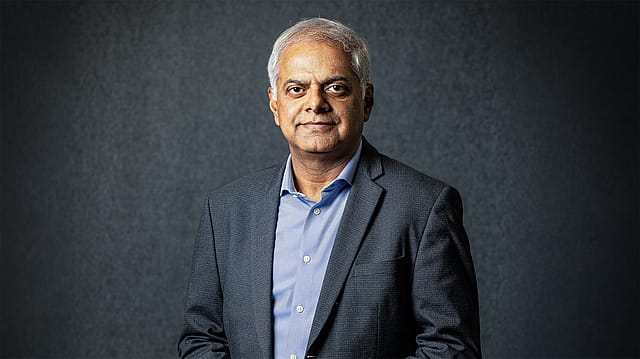
Nestlé India is doubling down on rural expansion, technology-led execution and deeper category penetration as it navigates an operating environment marked by uneven consumption trends, changing consumer preferences and persistent affordability pressures, chairman and managing director Manish Tiwary said in his first letter to shareholders since taking charge last year.
The company delivered "double-digit, volume-led growth with strong market share gains" in FY26, with total sales reaching ₹23,071.5 crore despite a challenging backdrop.
"Food inflation and affordability continued to influence everyday choices. Urban demand remained relatively resilient, while premium segments stayed comparatively stable. Rural recovery was shaped by monsoon outcomes, farm income and government support," Tiwary wrote in the annual report.
The Nestlé India chief noted that geopolitical developments continued to affect energy, freight and key input costs globally, while rising aspirations across India were creating increasingly diverse consumer expectations. "Consumer preferences are shaped by region, culture, habit, life stage and occasion. That creates complexity, but also headroom for growth," he said.
Four priorities drive strategy
Against this backdrop, Nestlé India remained focused on four key priorities during FY26: consumer centricity, penetration-led volume growth, reinvestment behind brands and capacity, and technology-enabled sales and operations.
Tiwary stressed that consumer-first thinking must extend across the company's value chain. "Consumer truth must always outweigh internal opinions," he said, adding that companies should start with consumer needs rather than financial planning.
One area where Nestlé sees growing opportunity is out-of-home consumption. Through Nestlé Professional, the company has expanded its Retail ONE formats, including NESCAFÉ Corners, MAGGI Hotspots and KITKAT Break Zones, across educational institutions, healthcare facilities and airports.
"There are 1,000 Retail ONE kiosks now operational across India," Tiwary said, describing the business as an important channel for increasing brand presence in everyday consumption occasions.
Rural markets and new growth engines
A central pillar of Nestlé India's strategy is penetration-led volume growth, with the company seeking to increase both the number of consumers it reaches and the frequency with which they buy its products.
Alongside core brands such as MAGGI, KITKAT, NESCAFÉ, NAN and CERELAC, Nestlé is also building newer growth engines, including pet food through its Purina PetCare business.
Tiwary highlighted rural India as one of the company's most significant growth opportunities. While Nestlé began its "RUrban" strategy in 2019 to strengthen its presence in smaller towns, the company expanded further into rural markets from 2025.
"Rural India remains one of our most significant growth opportunities, given both the pace of demand expansion and the headroom we still have to deepen our presence," he said.
He also highlighted the need for localised execution, noting that consumption patterns vary significantly across regions. "Operational flexibility is essential because demand can change from one side of the street to the other."
Nestlé India said it delivered its highest-ever operational cost savings during FY26 as part of a broader structural efficiency programme. According to Tiwary, technology helped eliminate costs that did not add value to consumers and customers, creating room for higher investments in advertising, digital initiatives, distribution and brand building.
The company also commissioned new production lines during the year to support future demand growth.
Technology is emerging as another major focus area. Tiwary said Nestlé is embedding data-led decision-making across supply chain, sales and distribution functions while continuing to rely on human judgement. The company's retailer self-ordering application, NesMitra, is helping improve access in semi-urban and rural markets. Tiwary cited examples from rural Assam, where technology is helping strengthen distribution even in remote geographies.
"When used as a human ally, AI can free people from the shackles of busy work so they can focus on what matters most to consumers," he said.
Looking ahead, Tiwary said Nestlé India would continue balancing adaptation with long-term commitments around quality, safety and sustainability.
"The environment will remain dynamic, but our priorities are clear," he said.